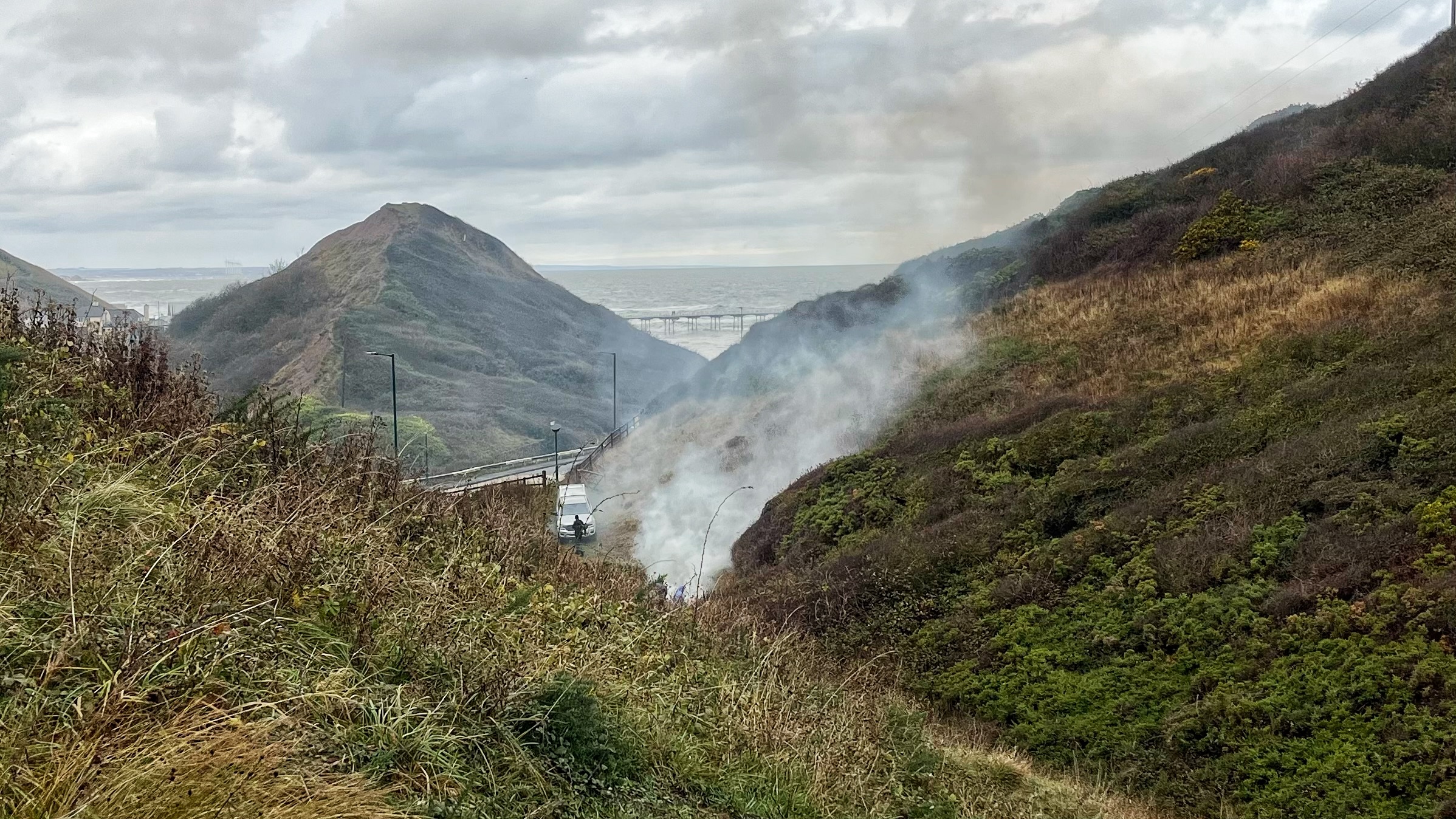
At Littledale in Saltburn, National Trust volunteers are clearing dense brambles, blackthorn, and gorse scrub to open up clearings for diverse grassland plants. Steep valley slopes render mechanical mowing impractical, while hiring expensive mulchers is out of reach for a budget-conscious National Trust. Dedicated volunteer labour provides the most sensible, cost-effective alternative.
Out on the moors, the burning season has also started. Which leaves me with a moral dilemma.
The tactical contrast in burning practices is striking. At Littledale, cut brash is gathered and dragged downhill to a central bonfire pile for disposal. On heather moorlands, gamekeepers burn vegetation in-situ right across the landscape.
While both practices ignite fires, their ecological motives could not be further apart. Volunteer brash burning removes dense scrub to foster botanical variety in localised clearings. In contrast, gamekeepers use widespread rotational burning as the main driver of moorland management to maintain a heather-dominated monoculture for red grouse shooting. This extensive burning roasts reptiles, small mammals, and tree seedlings while drying out vulnerable peat soils. Where volunteer land care uses targeted fire to break up scrub and restore plant diversity, grouse estate burning strips complex habitats down to a single commercial crop.
Leave a Reply