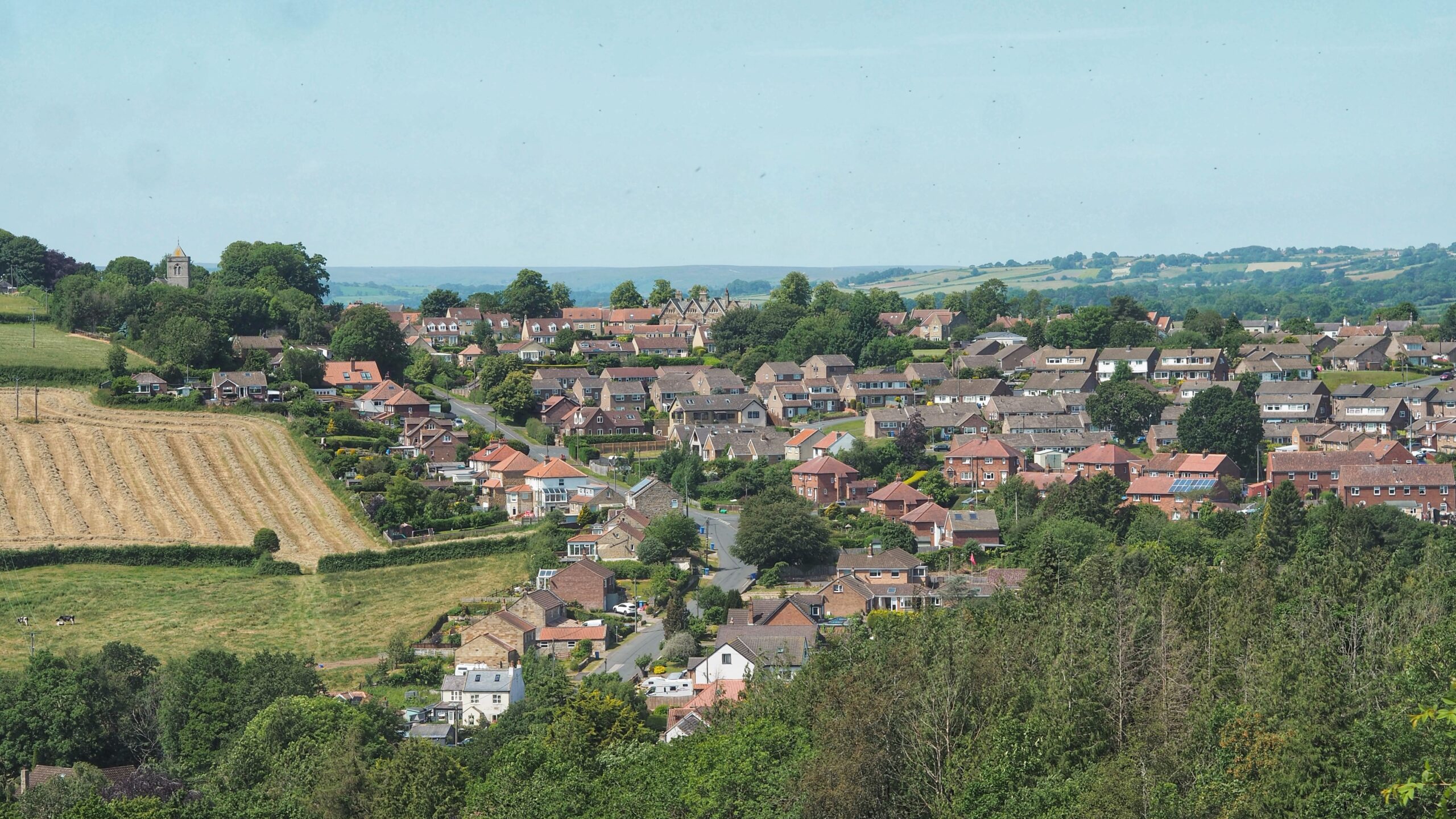
I must admit I can’t recall ever passing through Iburndale — certainly not on a bike, and that hill is steep. Sleights many times of course, but Iburndale feels such a contiguous part of Sleights, containing that same 20th-century housing favoured by retirees and the commuters of Whitby.
The old village, once clustered around the mill down by Little Beck, is medieval. It was first documented in 1258-65 as ‘Irburne’ or ‘Yburn(e)’.1NYMNPA HER No: 3596. Iburndale village. There is a post-medieval ford and footbridge across the beck,2NYMNPA HER No: 24854. Ford and Footbridge on Little Beck at Iburndale. and the mill itself is also post-medieval, but rebuilt on the site of an earlier mill which was owned by the monks of Whitby Abbey.3NYMNPA HER No: 3597. Iburndale mill. HER No: 6540. Mill race at Iburndale Mill The mill was still operating in 1933 but is now converted to a private house.
It is quietly remarkable that any of this tranquillity survived at all.
In 1858, the Iburndale Iron Company issued a prospectus that fairly bristled with Victorian self-confidence. Capital of £30,000.4Mining Journal – 14 August 1858, THE IBURNDALE IRON COMPANY. https://www.britishnewspaperarchive.co.uk/viewer/bl/0007618/18580814/005/00025Yorkshire Gazette – 12 June 1858, THE IRON TRADE AT WHITBY AND THE DISTRICT. https://www.britishnewspaperarchive.co.uk/viewer/bl/0000266/18580612/017/0004 Four or five blast furnaces at the valley mouth. Ironstone described as almost inexhaustible. Limestone and timber enough, they claimed, for a century of production. The North Eastern Railway already crossed the lower valley, so the practical argument was not entirely without merit.
And yet nothing came of it. The furnaces were never built. Historical maps record only a modest “Trial” mine further up the dale — which is the Victorian equivalent of a very expensive shrug.6NYMNPA HER No: 3590. Ironstone mine west of Throstle Nest.7Tuffs, Peter. Catalogue of Cleveland Ironstone Mines. 1996.8Marsh, Elizabeth Caroline. The Impact of the Decline of the Cleveland Ironstone Industry. December 2021. Page 179.
The valley that was to be blackened by foundry smoke kept its farms, its beck, its medieval bones. The speculators moved on. Iburndale, entirely without trying, remained exactly what it had always been — until encroached by its big brother, Sleights.
- 1NYMNPA HER No: 3596. Iburndale village.
- 2NYMNPA HER No: 24854. Ford and Footbridge on Little Beck at Iburndale.
- 3NYMNPA HER No: 3597. Iburndale mill. HER No: 6540. Mill race at Iburndale Mill
- 4Mining Journal – 14 August 1858, THE IBURNDALE IRON COMPANY. https://www.britishnewspaperarchive.co.uk/viewer/bl/0007618/18580814/005/0002
- 5Yorkshire Gazette – 12 June 1858, THE IRON TRADE AT WHITBY AND THE DISTRICT. https://www.britishnewspaperarchive.co.uk/viewer/bl/0000266/18580612/017/0004
- 6NYMNPA HER No: 3590. Ironstone mine west of Throstle Nest.
- 7Tuffs, Peter. Catalogue of Cleveland Ironstone Mines. 1996.
- 8Marsh, Elizabeth Caroline. The Impact of the Decline of the Cleveland Ironstone Industry. December 2021. Page 179.
Leave a Reply