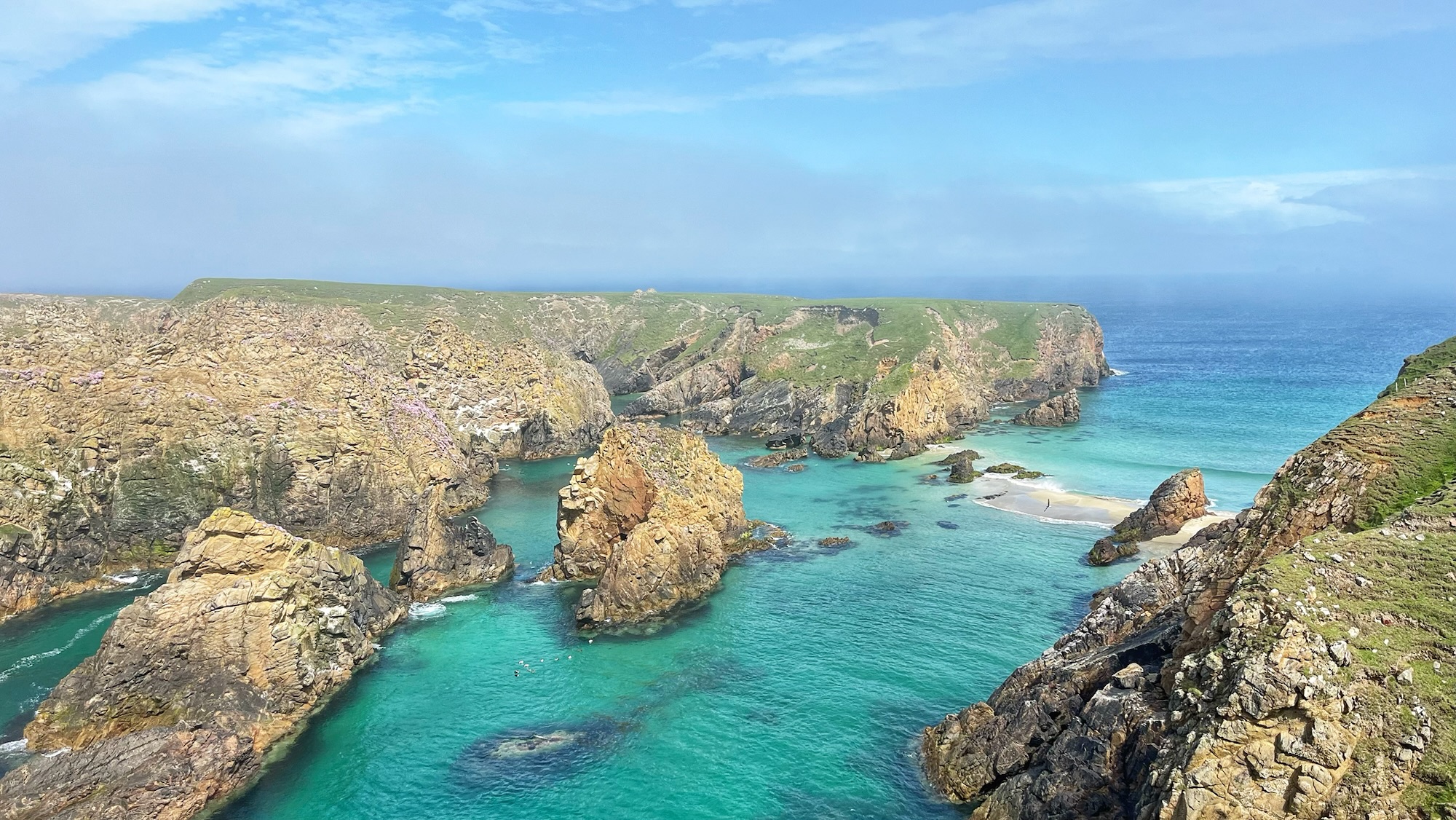
Plan A had sounded brilliant on paper: an 8.5 km cycle along a rough farm track to the abandoned farmstead of Uyea, followed by a wander round the headland. A local on the ferry had tipped us off after we mentioned a preference for solitude over selfie sticks.
Then we woke up.
The morning was dreich to the point of insult. Visibility at sea level stood at roughly 20 metres, which is less a weather forecast and more a personal affront. Plan B was hastily assembled: a tootle along the coastal roads, which at least had the virtue of keeping us relatively dry and some views to look at.
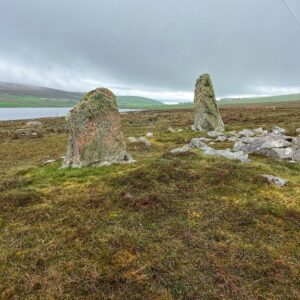
First stop was the Giant’s Grave, two standing stones and a chambered cairn, sitting ten minutes up the road with the quiet authority of something that has outlasted every plan ever made by man. Box ticked. And then, as if the ancient stones had put in a word with someone upstairs, the cloud began to lift. Almost visibly. Almost apologetically. Plan A was back on.
A fine decision. Within the hour, there was blue sky.
Uyea itself was not so much abandoned as resting. Well-maintained enough to suggest it earns its keep during lambing season, possibly as a bothy. A nearby abandoned fishing station at Northwick added a welcome footnote to the day. But the real spectacle was the narrow sound separating the mainland from the island of Uyea. Extraordinary. The isthmus appears at low tide, a brief invitation across the water. We arrived an hour off high tide and, with tremendous British restraint, decided against paddling.
Leave a Reply