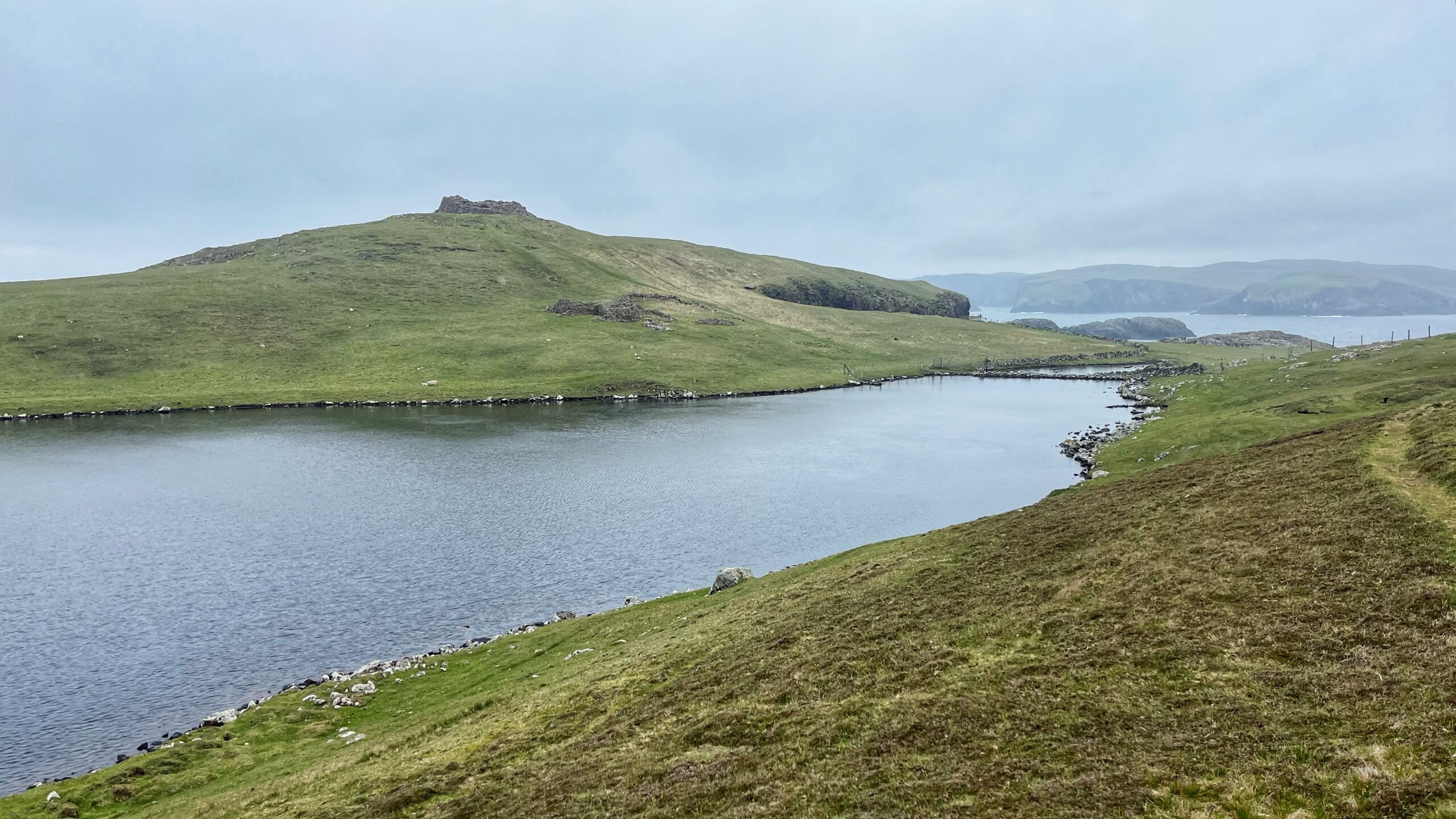
Another day, another broch.
Perched on the dramatic coast of Shetland’s West Mainland, the Broch of Culswick stands as a raw, evocative monument to the Iron Age. While the world-famous Mousa attracts the crowds, Culswick offers a more solitary, haunting encounter with the past, accessible via a rather good circular walk.1“Shetland.” Wikipedia, 2024, https://en.wikipedia.org/wiki/Shetland.
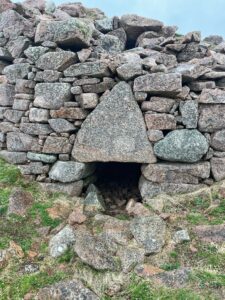
A ruin it may be, but the sources place Culswick among the most significant archaeological remains in Shetland. Every broch seems to have a superlative. Like the rest, it was once a formidable double-walled stone tower — a feat of prehistoric engineering that puts most modern efforts to shame.2Goodlad, Laurie. “Shetland’s top archaeological sites.” Shetland.org, 6 Jan. 2021, https://www.shetland.org/6000-years/archaeology.
The most surprising thing is that nobody can quite agree on what it was for. Was Culswick a defensive fortress built to keep out maritime raiders, or simply a prehistoric status symbol? Some scholars suggest these towers were high-status dwellings designed to say “I own all this” rather than “try getting past this”. Even now the ruins make a considerable impression from the sea.
Most striking of all, the history of brochs is shaped by a “ghost period.” These structures were once the beating heart of Pictish society, yet recent scholarship has found a 250-year gap between the last Pictish occupants and the first Norse settlers. The people who built Culswick may well have disappeared long before a single Viking longboat hove into view.
- 1“Shetland.” Wikipedia, 2024, https://en.wikipedia.org/wiki/Shetland.
- 2Goodlad, Laurie. “Shetland’s top archaeological sites.” Shetland.org, 6 Jan. 2021, https://www.shetland.org/6000-years/archaeology.
Leave a Reply