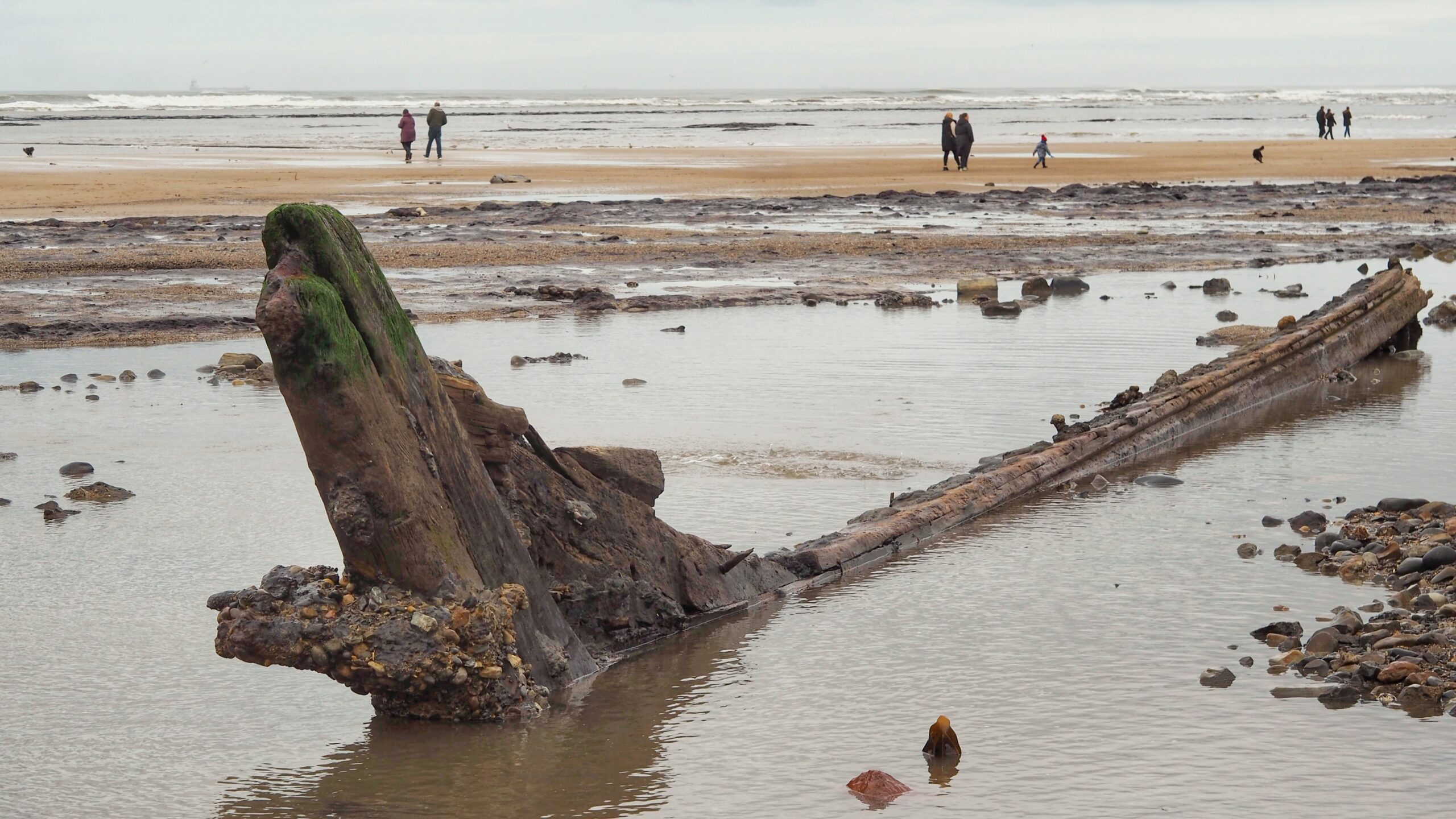
When Storm Chandra recently lashed the North East coast, it behaved like a blind cosmic spade, scraping away millions of tons of sand to uncover a bleak, barnacle-furred graveyard. This was no run-of-the-mill blow. It delivered a rare, once-in-a-decade “unsanding” that laid bare the black, broken teeth of a 6,000-year-old petrified forest, alongside the skeletal remains of what is thought to be, though others are suggested, the Birger, a 19th-century Finnish wreck. On Redcar beach, the sands of time briefly gave way, letting the Stone Age and the Victorian age emerge from the mist in a single, almost cinematic landscape.
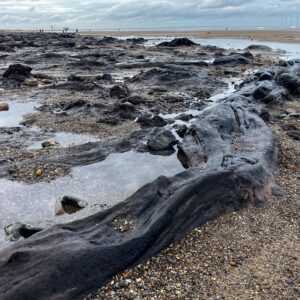
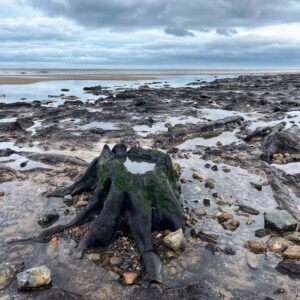
Long before the North Sea existed as a barrier, Redcar was the gateway to an Atlantis of the North Sea known as Doggerland. Eight thousand years ago, you could have walked from here to Denmark without damp socks. This green world was erased by the Storegga Slide, a vast underwater collapse off Norway that loosed a ruinous mega-tsunami. These ancient trees have survived because they were sealed in airless peat, the weight shutting out oxygen and halting decay, turning wood into black, stubborn relics of a lost place.
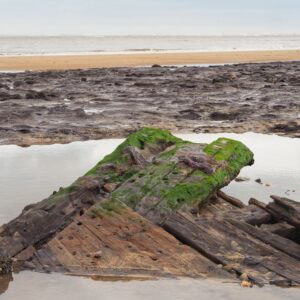
The forest slipped away by degrees. The end of the Birger, on 18 October 1898, was anything but gentle. The 757-ton Finnish barque was driven “crazily” by a gale of hurricane force, spun round the “matchstick legs” of Redcar Pier, then flung onto the Saltscar Rocks. In a final act of structural violence, the wheelhouse was ripped free and fired through Coatham Pier like shot. It tore a 60-yard gap in the structure, a wound from which the pier never truly healed, before it finally slumped into the sea.
Rescue efforts descended into bedlam. Lifeboats such as the Emma and The Brothers fought walls of water, while a third, the Free Gardeners, was hurled through the pier’s legs until its oars were smashed to kindling by the surf. Among the 13 dead was 16-year-old Gustav Ludovic Fogelyan, a sobering peer-connection for any modern teenager. The cargo carried its own cruel contrast. The hold brimmed with Spanish industrial salt, yet Captain Nordlink was bringing home a small wooden cradle for his wife.
Such unveilings are brittle things. As the North Sea calms, the sand returns, helped along in earlier years by the local authority, to cover the Birger and the drowned forest once more. The lesson is a cold one. The beach under our feet is only a lid, resting on a deeper and darker past, waiting for the next hard blow to prise it open again.
Sources
- How the wreck of the Birger cost 13 lives in Redcar 120 years ago. The Northern Echo. 25th October 2018. https://www.thenorthernecho.co.uk/history/16981460.wreck-birger-cost-13-lives-redcar-120-years-ago/
- Understanding Redcar’s shifting sands of time that uncovered the 6,000-year-old petrified forest. The Northern Echo. 20th March 2018. https://www.thenorthernecho.co.uk/history/16094734.understanding-redcars-shifting-sands-time-uncovered-6-000-year-old-petrified-forest/
Leave a Reply