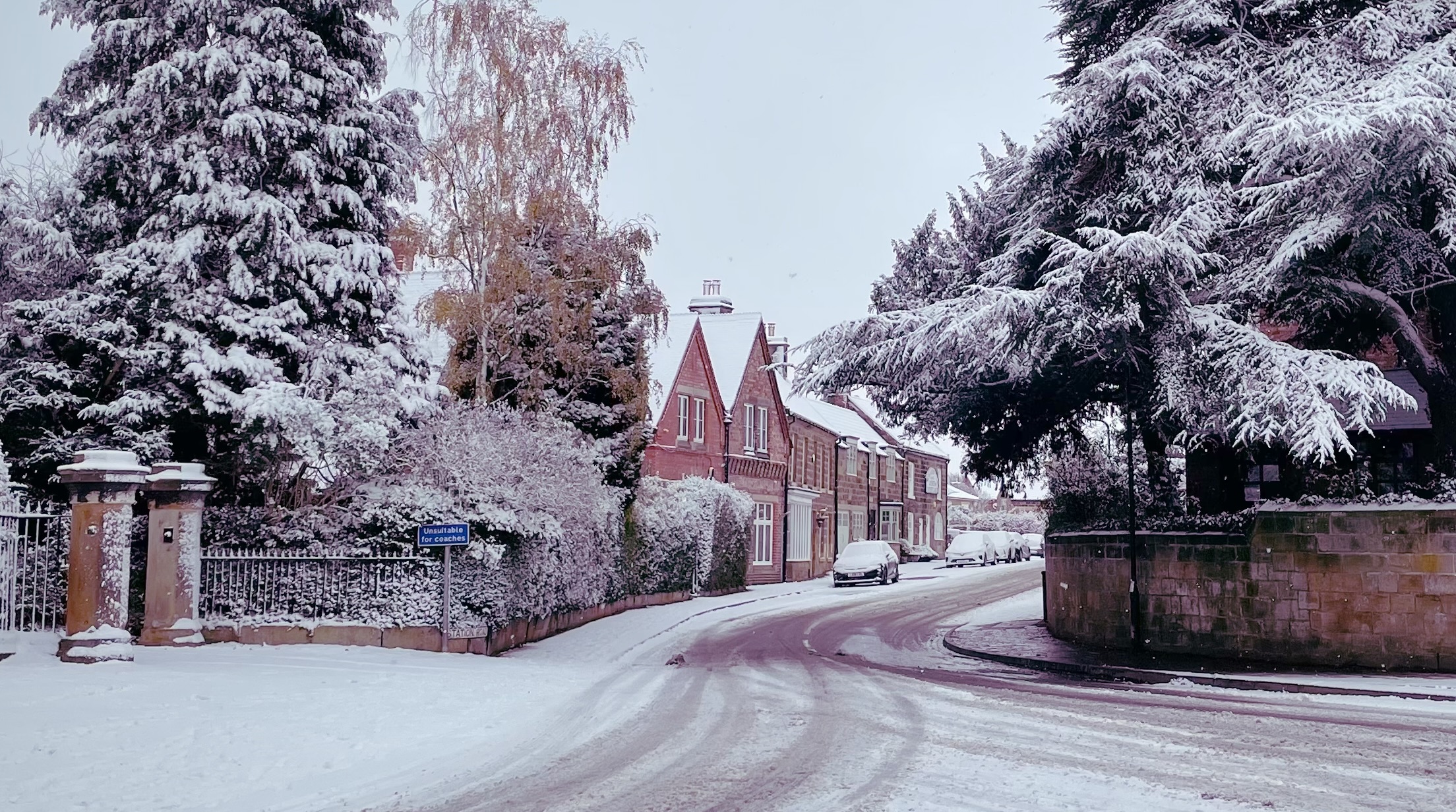
Fresh snow arrived over night and dressed the village with the sort of delicate filigree that flatters every scene. Even the drabbest view has been turned into something fit for a gallery.
This is Station Road, usually choked with parked cars, this morning quiet and softened so completely that the few vehicles present appear to have been swathed in disguise. On the left stand the distinctive twin gables of Thistlethwaite’s old shop. Their red brick Victorian Gothic frontage was the work of Alfred Waterhouse, among the foremost architects of the nineteenth century, a Quaker whose family ties linked him to the Peases. His reputation was considerable; the Natural History Museum in Kensington is his, as are Hutton Hall in Guisborough and Darlington Town Hall.
Jeremiah Thistlethwaite, also a Quaker, arrived in the village in 1857, opened a grocery and married the daughter of the headmaster of the Friends School. His son, William Henry, took over the business and turned his hand to photography as well. His glass-plate negatives, I am told, are still kept safely by the family.
Source: O’Sullivan, Dan. “Great Ayton: A history of the village”. 1983.
Leave a Reply