-

Fiskavaig
Another day spent leisurely pootling the tranquil narrow lanes of the Minginish Peninsula. This is Fiskavaig, a scattered community that comprises a mix of renovated houses, contemporary Scandinavian-style new builds, and the occasional working croft. In the near distance is Ardtreck, featuring its captivating galleried dùn. In fact, if you examine that photograph closely, on…
-

Coire na Creiche
This north-west facing corrie of the Cullin hills is known as ‘the hollow of the spoil’ in Gaelic: Coire na Creiche. It earned this name due to its reputation as a preferred hideout for those seeking refuge after successful raids. However, our exploration yielded no valuable spoils; instead, we stumbled upon a trashed tent flysheet…
-
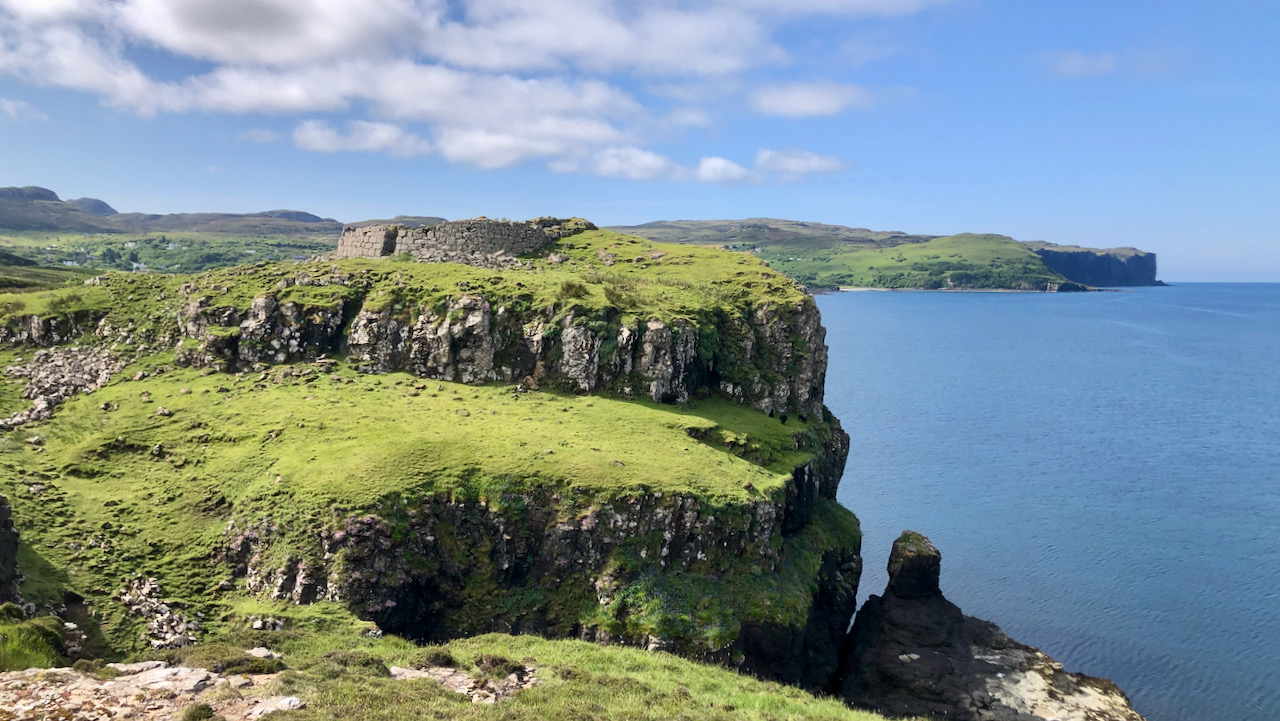
Another day, another dùn
Yesterday, I was unaware of the term “galleried dùn,” but today I came across another one. This is Dùn Ardtreck and is located at Ardtreck Point, near the entrance to Loch Harport. I must say, it is even more remarkable than yesterday’s. To be honest, I’m not entirely sure about the difference between a galleried…
-
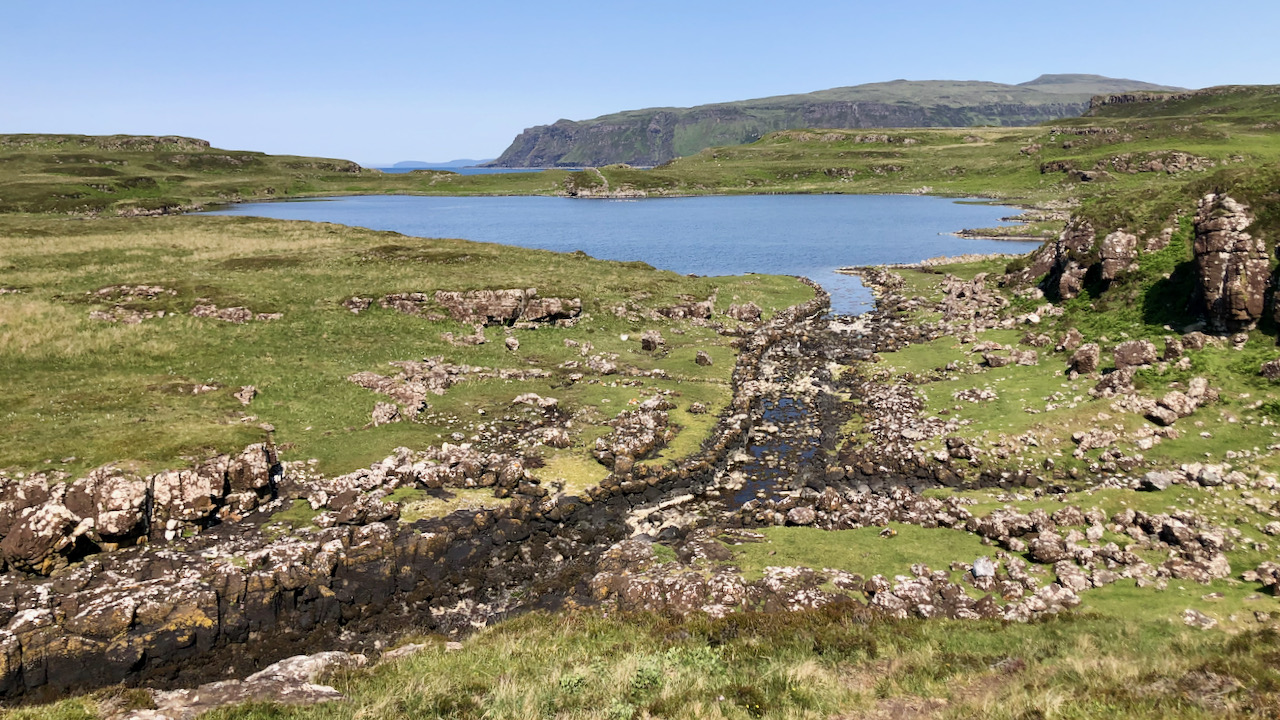
The “Viking Canal” at Rubh’ An Dunain
After yesterday’s lapsus calami when I misidentified a whole mountain ridge (see Mark’s comment), I thought I had better be extra attentive. The Rubh’ An Dunain is a remote headland located approximately 6km south of Glen Brittle. It is renowned for its notable feature, the “Viking Canal,” which connects Loch na h-Aide with the Soay…
-

The stupendous Black Cuillin Ridge
From a distance across Loch Slapin, the Cuillin Ridge appears as the most extraordinary cluster of mountains in the nation, with a rock landscape of unmatched magnificence and astonishing proportions. Their immense size is overwhelming, both frightening and captivating to behold, as if they possess a magnetic pull on the eyes. This range encompasses every…
-

View west from Sgùrr Leac nan Each
It’s been another glorious day, although it took a few hours for the overnight cloud to dissipate. Just moments earlier, the range of hills in the far distance had appeared like an island amidst a sea of clouds. I’m not entirely certain what those hills are, but I believe it could be the massif of…
-

Sgurr nan Conbhairean from Carn Ghluasaid
Another exceptionally sweltering day in the Western Highlands. Sgurr nan Conbhairean, known as the ‘peak of the keeper of the hounds,’ stands proudly and beckoning. In contrast, the Munro I climbed, the smaller Carn Ghluasaid, means the ‘hill of the movement.’ These enchanting names truly captivate the imagination.
-

The College Valley
We have found that the College Valley is a convenient stopping off point on the journey north. It can be found in the northern part of Northumberland National Park, bordering the wild and beautiful Cheviot Hills. It covers an expansive area of approximately 12,000 acres but is privately owned.
-

Scarth Nick — from drovers to abstainers
Scarth Nick, a natural pass in the Cleveland Hills, has likely served as a route throughout history, from prehistoric times to the present. It was probably used by ancient humans and the Romans, and continued to be used as a drove road for cattle during the Medieval era. This pass acted as a precursor to…
-
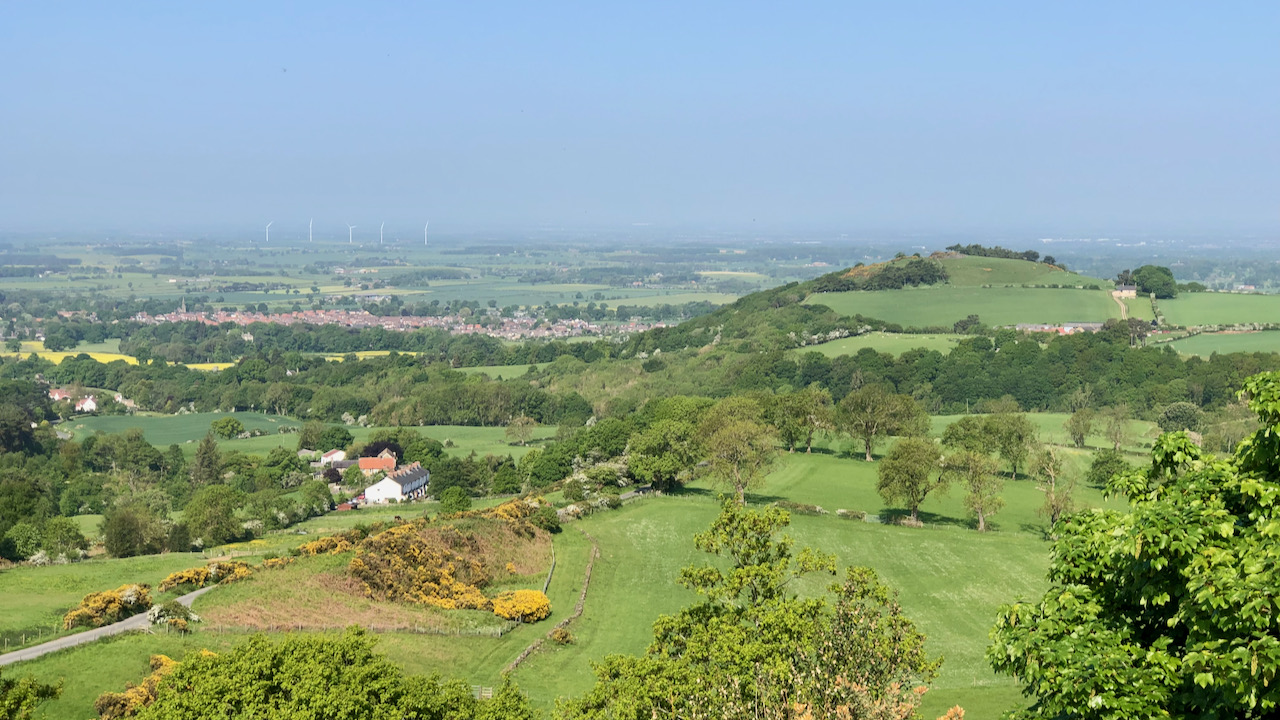
A view along the Cleveland Dyke
A view looking down on Gribdale Terrace, a row of white cottages built to accommodate the quarrymen employed at the adjacent whinstone mine and quarry. The line of the Whinstone or Cleveland Dyke can clearly be seen in the photograph, stretching from Cliff Rigg in the distance to behind the cottages where it follows the…
Care to comment?