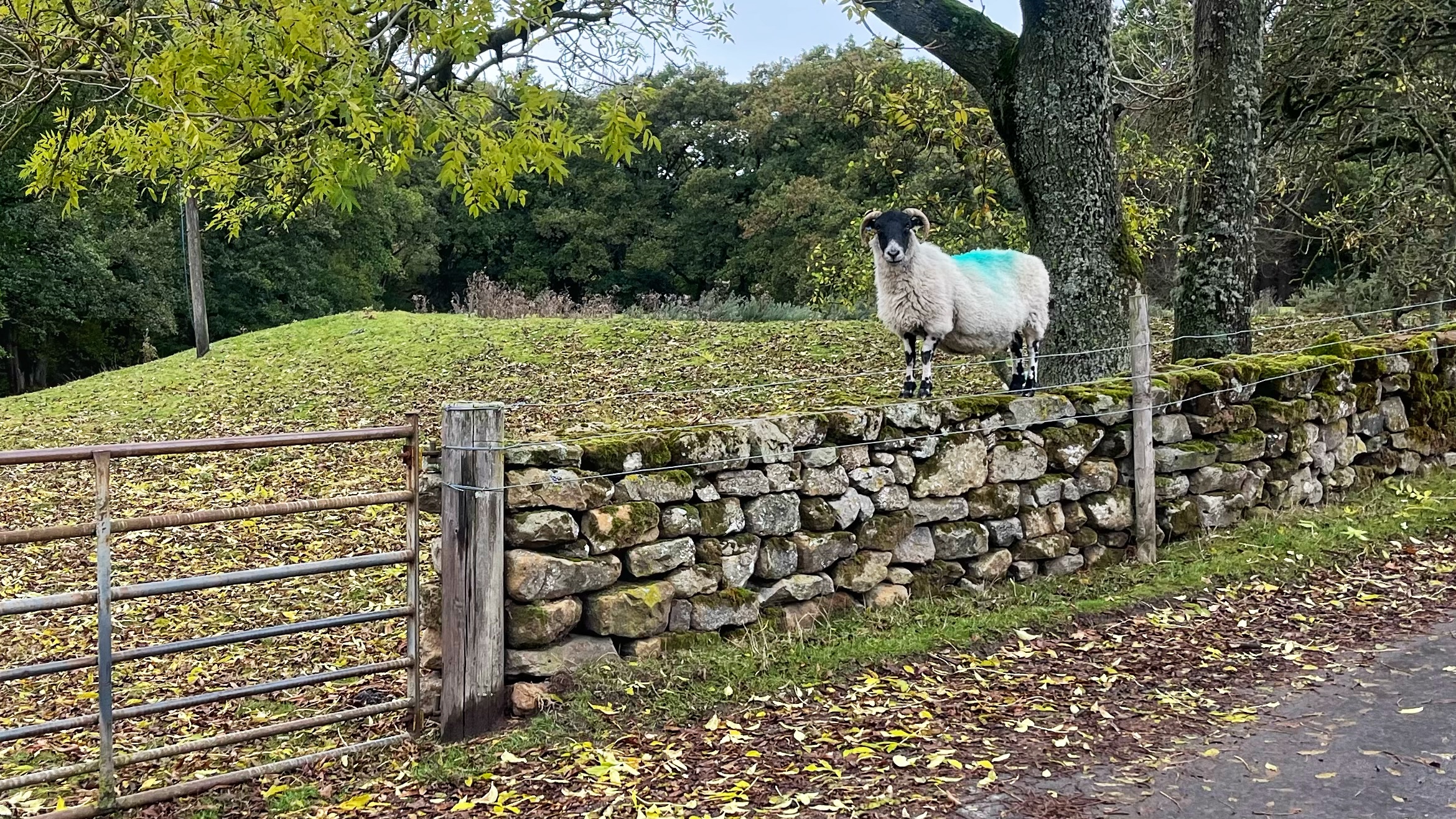
I cycled past this sheep this morning. It regarded me with studied indifference. I turned around and pedalled back for a photograph. It had not moved an inch. Having captured the moment, I left it to its thoughts. Perhaps it was contemplating the clocks going back tonight. Perhaps sheep have better things to think about.
Our sunrise shifts from 7.50 am to 6.50 am, giving early risers four weeks of brighter mornings before sunrise slips back to 7.50 am again. Sleep scientists tell us that morning light helps reset our internal body clock, making the autumn change easier to accommodate than the spring shift. I doubt our woolly friend has given the matter much consideration.
When I was working, daylight hours dictated my running schedule. The clocks going back meant regular outings with a headtorch. Yet running in the dark brought its own rewards. I grew more attuned to the nocturnal world: the tawny owl’s famous exchange, the female calling “twit” and the male replying “twoo”; the sudden glint of an animal’s eyes in the darkness; the rustle of something nearby that I could hear but not see.
Unless the moon is new, the cloud cover is thick and you are running, a headtorch is not always necessary. Our eyes take around twenty to thirty minutes to adapt fully to darkness, although their sensitivity begins to increase within minutes. A red-light torch helps preserve that precious night vision. One glance at a bright mobile phone screen can undo much of the adaptation.
There is something rather satisfying about running through the darkness, discovering how much of the world reveals itself once you stop expecting to see everything. Perhaps the sheep understands that already. It certainly looked as though it knew something I did not.
Leave a Reply