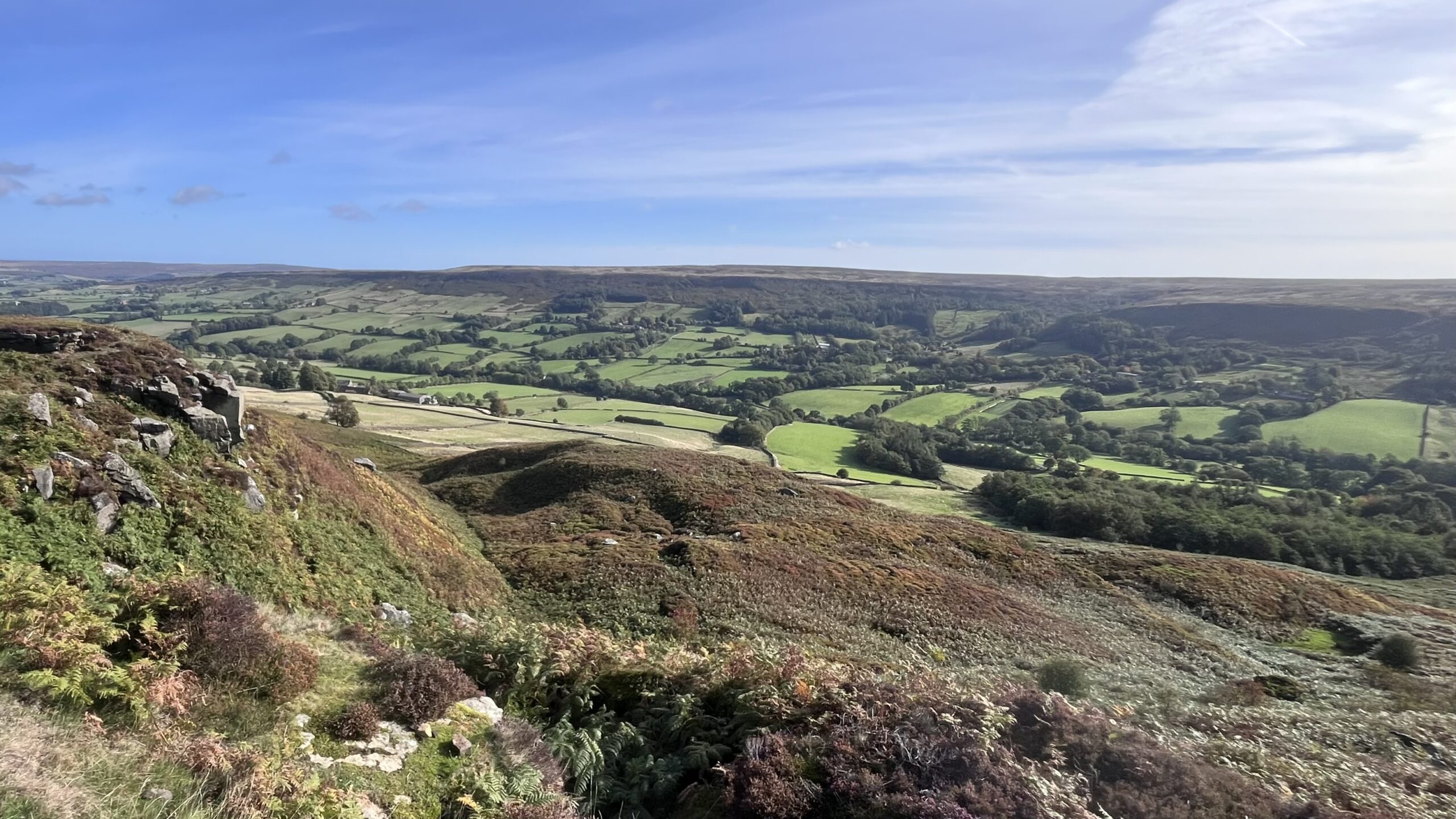
In the distance, just right of centre and past the patchwork fields, lies Botton Village, mostly hidden by trees. It’s a community that has never made a fuss.
In September 1955, a small group moved into Botton Hall at the head of the dale. The hall had belonged to the Macmillans, relatives of Harold Macmillan. It had been given to refugees from Austria. Nobody threw a parade.
The founder was Dr Karl König, a follower of the educationalist Rudolf Steiner. After the Nazis took Austria, he and his friends fled to Scotland. There they lived and worked with children with learning difficulties. One child, Alister, belonged to the Macmillans.
Children grow up. The only place waiting for them was an institution.
So the family handed over their Danby Dale home. Alister lived there for the rest of his life.
By 2005 the village held around 340 people: 134 villagers with learning difficulties and about 200 co-workers and their children. All worked, lived and supported each other. Some made cheese from a 70-strong milking herd. Others wove cloth or engraved wine glasses.
König held that buildings without harsh corners shape the people inside them. The village church won an architecture award, beating Middlesbrough’s Riverside Stadium.
Channel 4 once called it the strangest village in Britain. Visitors tend to disagree.
Source: “A Peek Behind the Scenes.” Whitby Gazette. 9 August 2005. Page 15.
Leave a Reply