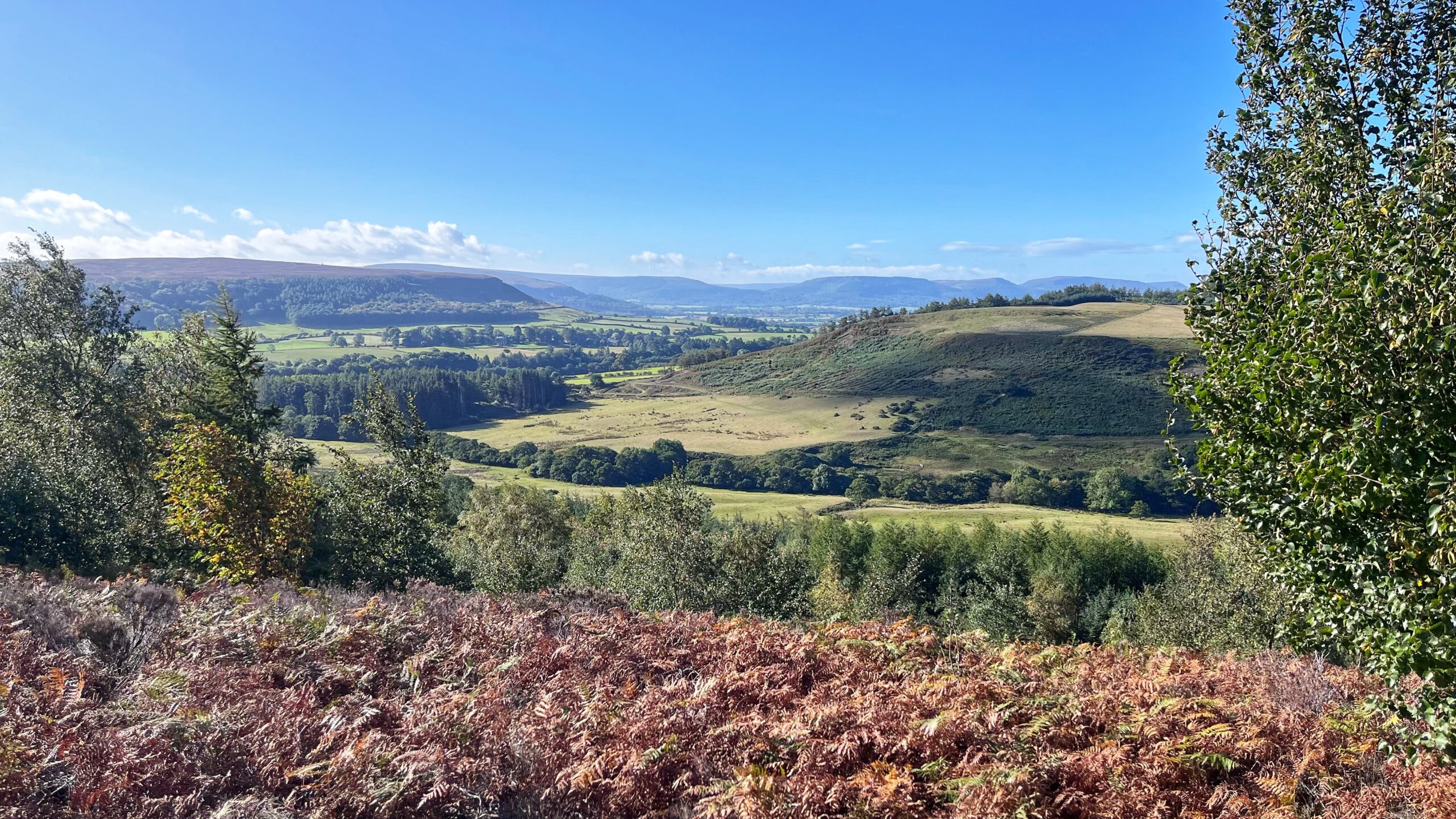
Beneath the moors of the Cleveland Hills lies Kildale, a dale that looks as though nothing has ever happened there. Something did happen, though. In 1662 the estate was bought by John Turner, serjeant-at-law, of Kirkleatham. John kept to the family business of being minor Yorkshire gentry. His younger brother, William, as was the lot of younger brothers, had to find his own way in life.
So like Dick Whittington, off he went to London and made an absolute fortune as a woollen draper, merchant banker and eventually Lord Mayor. Now Sir William Turner, he never married and left no children, so when he died his money went to his great-nephew, Cholmley Turner. Cholmley inherited both Kildale and Kirkleatham, and spent the family fortune on schools, hospitals and all the usual monuments a rich man builds to be remembered by.
Not all of that fortune was clean. From April 1677 until 1690, Sir William held substantial stock in the Royal African Company, and did rather well out of it. He was not just a passive investor either. He served as an Assistant, the seventeenth century’s idea of a company director, across four separate terms: 1676–1678, 1681–1683, 1686–1688 and 1691. During his time with the company it ran 237 slaving voyages across the Atlantic, carrying thousands of enslaved Africans in conditions nobody at Kirkleatham or Kildale ever had to think about. He was a director of the East India Company as well, which tightened his grip on England’s trading empire still further.
The pretty stonework at Kirkleatham was paid for out of all that. In 1676 Sir William founded Sir William Turner’s Hospital, or Almshouses, at Kirkleatham, for ten old men, ten old women and twenty poor children. When he died in 1693 his will left £5,000 to found a free school for boys there. Cholmley built the school in 1709, a grand building that now houses the Kirkleatham Old Hall Museum, and in 1742 he rebuilt and expanded the hospital, adding a stone chapel in the middle of the quadrangle. Inside that chapel is a seventeenth century Italian stained-glass window showing Sir William in his Lord Mayor’s robes standing next to his brother John in his serjeant-at-law’s gown. One bought the land. The other paid for it. The window puts both men in the same frame, which is more honest than most memorials manage.
Kildale still looks very much like a place time forgot. Yet the history of Kildale Manor and the architectural treasures of nearby Kirkleatham remain inextricably linked to the global currents of 17th-century trade. The quiet beauty of the North York Moors hide poignant reminders of how landed prestige and public benevolence were often underwritten by the insidious profits of transatlantic slavery.
Sources
- Sir William Turner Foundation, https://sirwilliamturner.org.uk/index.php?option=com_gridbox&view=page&id=1&Itemid=101. [Accessed 26 Sept 26]
- Page, William, editor. “Parishes: Kildale.” A History of the County of York North Riding: Volume 2, Victoria County History, London, 1923, pp. 249–253. British History Online, https://www.british-history.ac.uk/vch/yorks/north/vol2/pp249-253. [Accessed 26 Sept 26]
- Page, William, editor. “Parishes: Kirkleatham.” A History of the County of York North Riding: Volume 2, Victoria County History, London, 1923, pp. 371–383. British History Online, https://www.british-history.ac.uk/vch/yorks/north/vol2/pp371-383. [Accessed 26 Sept 26]
- “Sir William Turner.” Register of British Slave Traders, https://britishslavetraders.org/individual/sir-william-turner/. [Accessed 26 Sept 26]
- “William Turner (London MP).” Wikipedia, Wikimedia Foundation, 28 Jan. 2026, https://en.wikipedia.org/wiki/William_Turner_(London_MP). [Accessed 26 Sept 26]
- “William Turner.” Cleveland & Teesside Local History Society, http://ctlhs.co.uk/golden-jubilee/fifty-interesting-people/william-turner/. [Accessed 26 Sept 26]
Leave a Reply