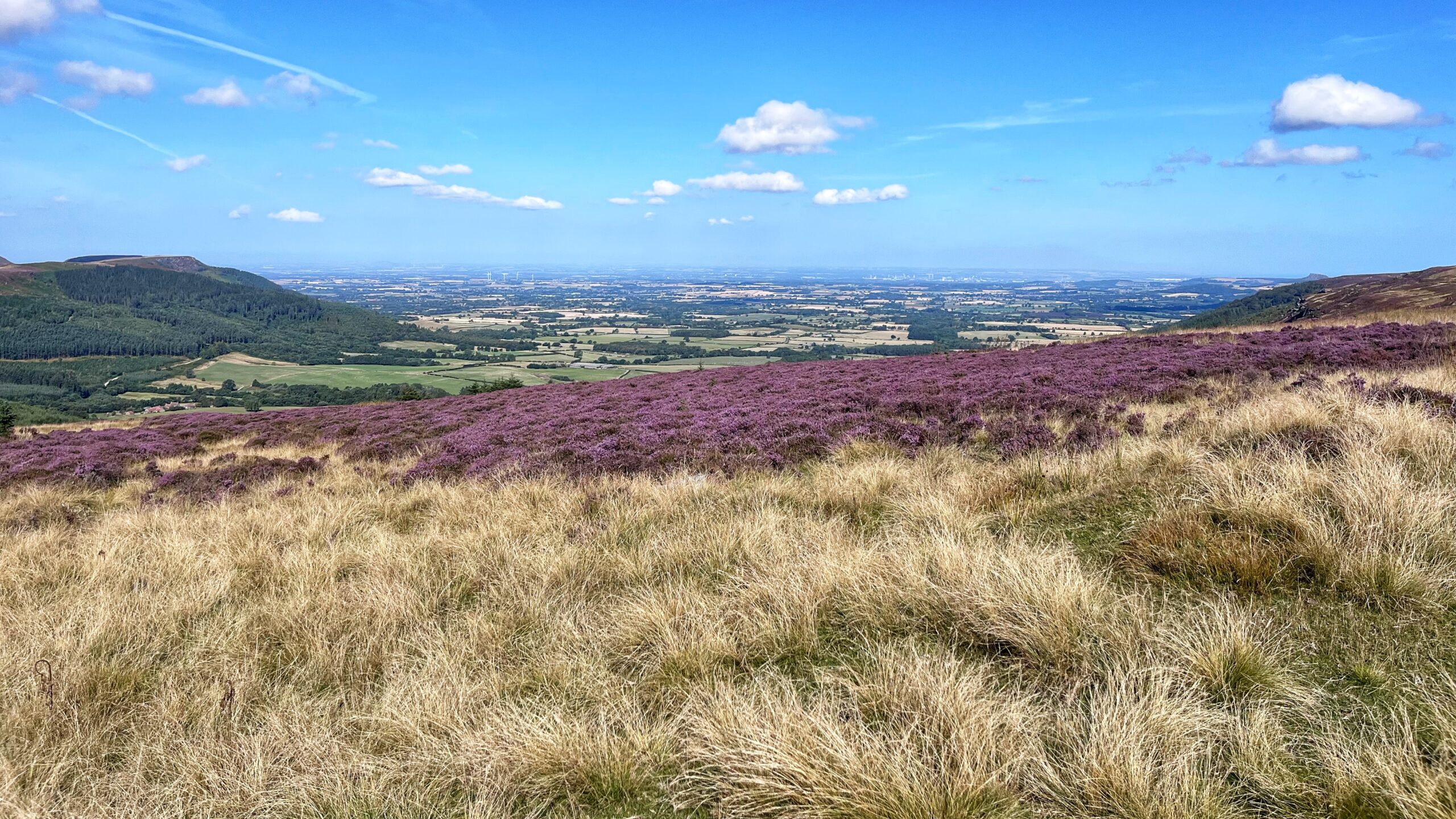
Moorland fires have a way of making headlines only for as long as the ground stays dry. This summer’s blazes filled the news for weeks, and then some rain came and the story simply went quiet, whether that counts as relief or amnesia is anyone’s guess. What follows is an article from the Cleveland Standard, dated 2 April 1953, reproduced here word for word1100 fires in four days on the moors. Cleveland Standard. 2 April 1953. Page 1. https://www.britishnewspaperarchive.com/image-viewer?issue=BL%2F0003490%2F19530402&page=1&article=003&stringtohighlight=roseberry+topping. It is included purely out of historical interest. It is not intended to cast doubt on the seriousness of human-driven climate change, nor on the good sense of rewetting the moorlands. It simply shows that fire on these moors is nothing new, and neither, it seems, is the short memory that follows it.
100 fires in four days on the moors
MOORLAND FIRES, which devastated large areas of the North-east last weekend, gave firemen of the North Riding Brigade their busiest spell of duty since the service was formed.
Assisted in some areas by troops and civilians, they dealt with more than 100 fires in four days on the North Yorkshire Moors.
Last Sunday, fires one mile in length at Guisborough Moor and between Stokesley and Gribdale, together with a large outbreak at Bilsdale, kept firemen toiling for many hours while on Eston Moor employees from I.C.I. assisted men of the Grangetown Brigade to prevent fire spreading to nearby I.C.I. forestry property.
Other outbreaks were reported at Roseberry Topping, Chop Gate, and at Robin Hood’s Bay, where firemen fought for four hours to subdue a blaze covering about three acres.
In a statement on Monday,the North Riding Fire Chief,Mr. L. Corbrick, said that the position was very dangerous and urged that farmers, gamekeepers and members of the public having picnics should not light fires on the moors until there had been more rain.
Danger averted
Forestry workers helped firemen from the Guisborough andRedcar brigades to fight a moorland fire near Kildale. A patch of heather and bracken, approximately 500 by 300 yards was onfire, and the flames were backed by a strong wind.
There was danger that the fire woud [sic] spread to nearby woodlands, but the firemen confined the blaze to the moor.
Skelton Fire Brigade was called out to a fire near North Skelton station on Friday afternoon. On arrival, it was found that the grass on the embankment was on fire, and the flames were put out with only slight damage being caused.On Friday night, Guisborough Fire Brigade was called out to a chimney fire in a dwelling house in the town.
- 1100 fires in four days on the moors. Cleveland Standard. 2 April 1953. Page 1. https://www.britishnewspaperarchive.com/image-viewer?issue=BL%2F0003490%2F19530402&page=1&article=003&stringtohighlight=roseberry+topping ↩︎
Leave a Reply