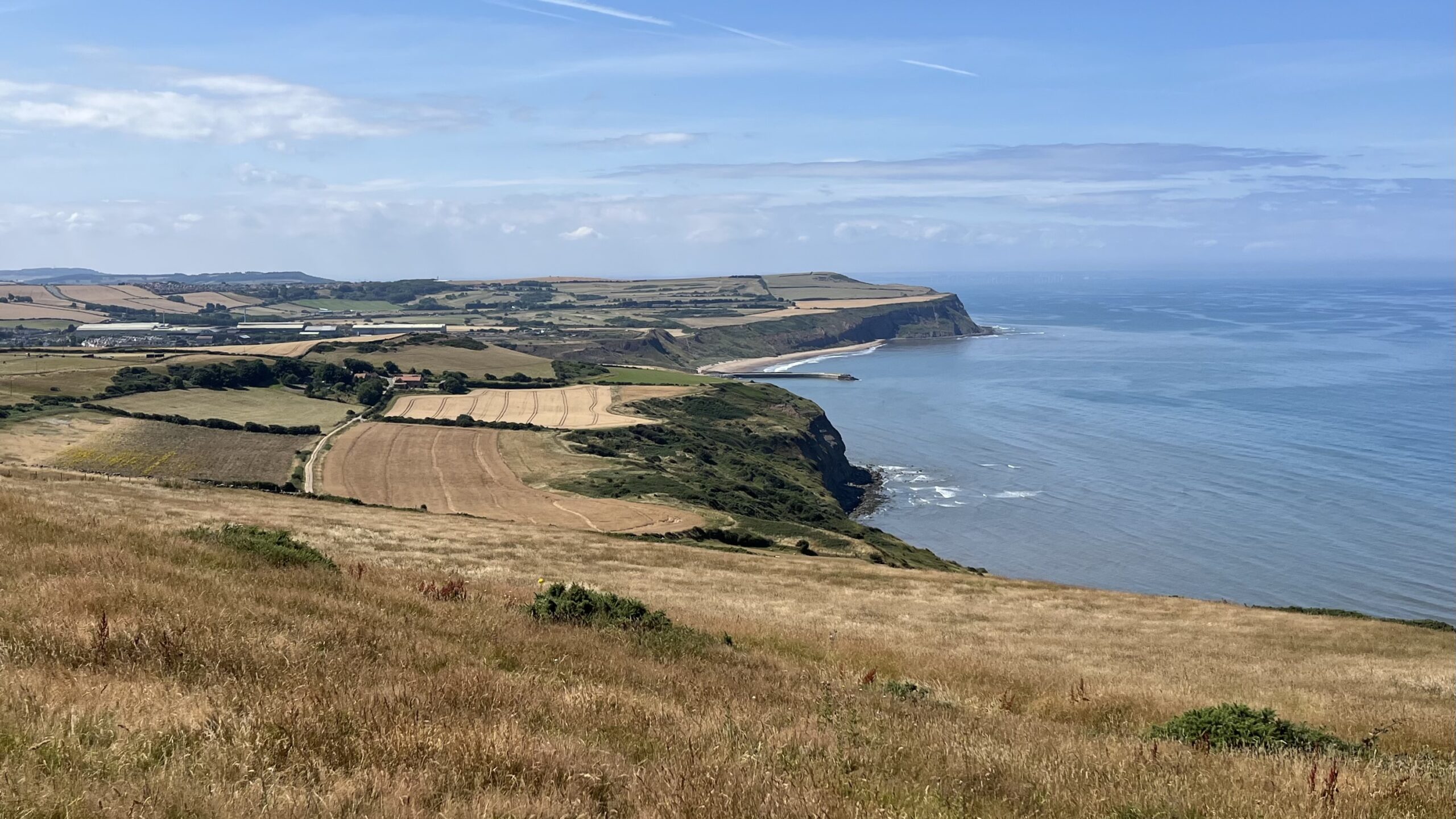
In February 1886, the barque Cervantes hit rocks off Kettleness in a snowstorm, her crew tossed about all night in open boats before rescue found them. That is the shipwreck story. But the coast had another story waiting, and this one belongs to the people, not the ship.
Eleven hundred tons of coal and coke came ashore along the cliffs between Hummersea and Boulby, and the district descended on it like the tide itself. Hundreds of people —men, women, and children— turned out with bags and baskets of every shape and size, hauling away tons of fuel by hand. The going was not easy. Carting was impossible for seventy or eighty yards along the strand, so if you wanted the coal, you carried it yourself, on your back, over rock. Farmers arrived with waggons and paid others to do the carrying, treating the wreck as a proper harvest. Even after days of this, the piles barely seemed to shrink. Word went round that the coal burned well, better than expected, which only sharpened the rush.
Not quite “Whisky Galore” but a ship’s misfortune became a village’s midwinter windfall. Nobody organised it, nobody rationed it. People simply came, in numbers, and took what the sea had put within reach. That is a story that risks being forgotten.
Sources
- Loftus Advertiser , 6 Feb. 1886, p. 8, britishnewspaperarchive.co.uk/viewer/bl/0004155/18860206/072/0008.
- Loftus Advertiser , 13 Feb. 1886, p. 8, britishnewspaperarchive.co.uk/viewer/bl/0004155/18860213/074/0008.
Leave a Reply