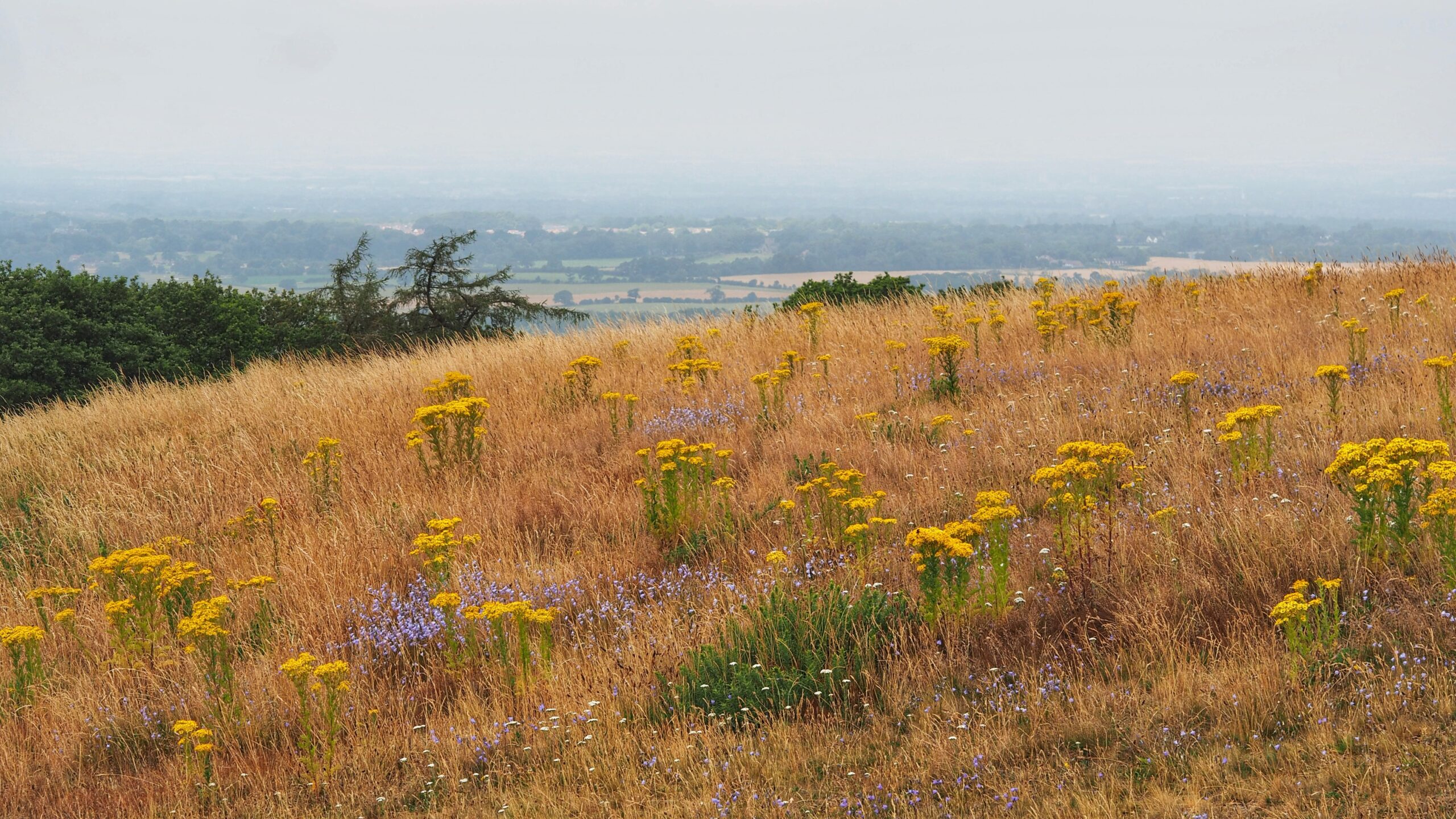
Three heatwaves have hit Britain since spring, baking the ground and warming the seas. Humidity makes it feel worse. Soil has dried fast, wildfire risk is high, and marine life is under strain too. The Met Office, says cooler air is due soon, but rain is not, so dry days continue.
Some plants seem to be thriving. Like these ragwort with a swathe of harebells as a colourful contrast.
Common Ragwort is the devil incarnate of British wild flowers. Written off as a weed, it is anything but useless.
The Knepp Wildland Foundation takes a defence brief for ragwort, calling it a native wildflower that has picked up folklore it does not deserve1Phelps, Matt “A Big Year for Ragwort” – The Plant We Love to Hate. June 2025. https://knepp.co.uk/2025/06/a-big-year-for-ragwort-the-plant-we-love-to-hate/. Horses and cattle steer well clear of it in the field, put off by the bitter smell and taste; the real danger only appears once it is dried into hay or silage, where that bitterness disappears and animals cannot tell it is there. There is no legal duty to dig it up on sight either, whatever the rumour says.
The seeds do not travel far, contrary to popular belief. Research from Imperial College London found viable seed rarely spreads more than a few metres, with most of what blows about being sterile chaff.
On the credit side of the ledger, over thirty insect species rely on ragwort, cinnabar moth caterpillars among them, and one study logged 178 species visiting its flowers, including dozens of bees and hoverflies. Knepp reckons much of the hostility is simply that people distrust anything that thrives without being asked to, springing up on verges and waste ground we would rather kept tidy. Rather than a menace to be sprayed away, it should be presented as a genuine boost for pollinators at a time when they badly need one. The implication is that it is our idea of a weed that wants rethinking, not the plant itself.
- 1Phelps, Matt “A Big Year for Ragwort” – The Plant We Love to Hate. June 2025. https://knepp.co.uk/2025/06/a-big-year-for-ragwort-the-plant-we-love-to-hate/
Leave a Reply