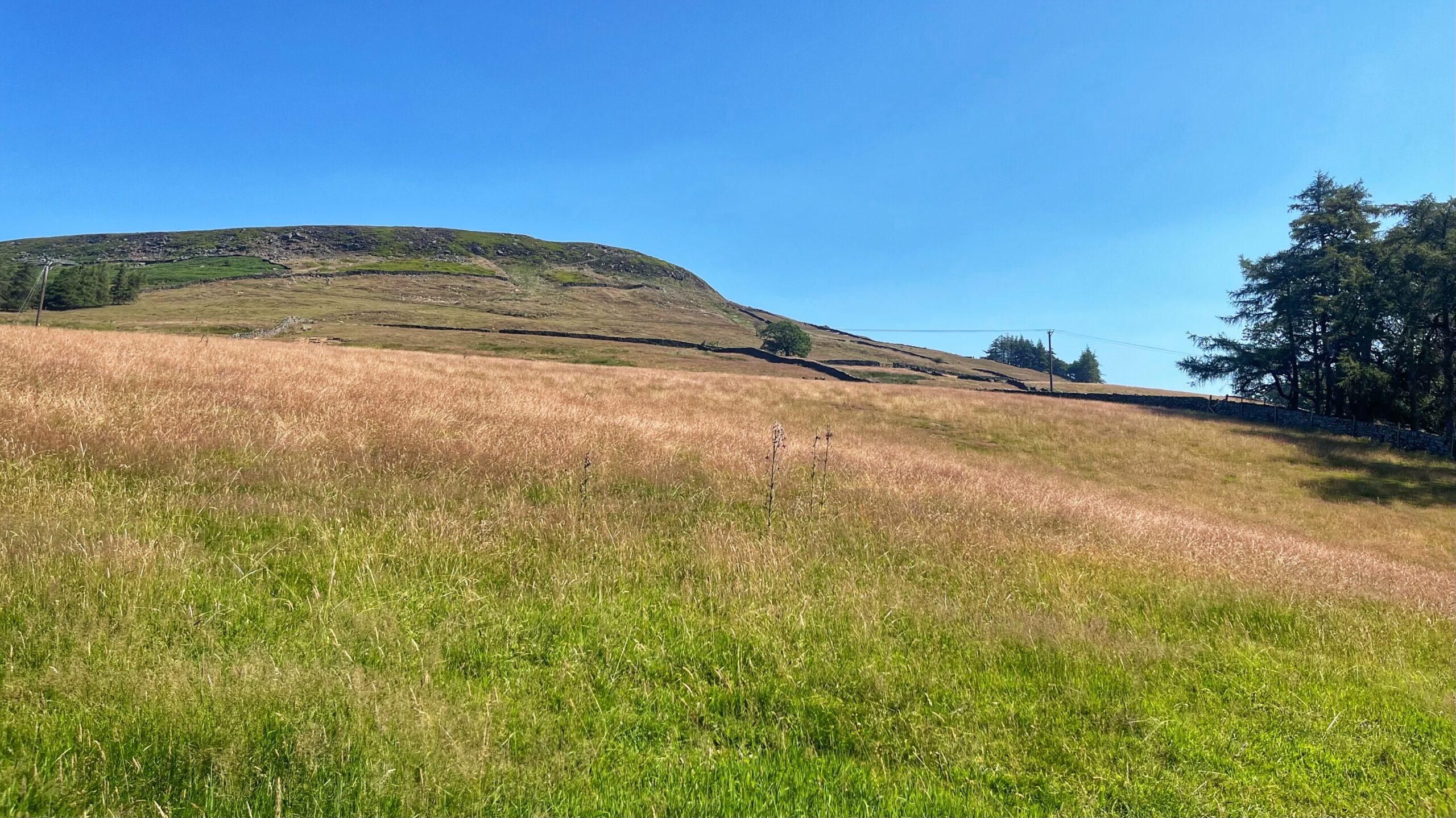
Farndale East is getting itself a new woodland, courtesy of the Yorkshire Wildlife Trust. In the intake fields below Potter’s Nab. The idea is simple enough. Trees hold soil together, and soil held together does not go washing into the River Dove every time it rains. Sensible stuff.
Before a single sapling goes in, archaeologists have been poking about in the “hummocky” bumps of the hillside, working out what is buried under the grass. Turns out the official paperwork on Head House Farm was not quite straight. It claims the place was built in 1875, but census records show a proper working farm there in 1841. Somebody was clearly not paying attention.
The old drystone walls do not march about in straight lines like a regiment on parade. They wander with the drainage, the way natural things do when man does not interfere. The “hollow ways”, tracks like Jackson’s Road, are worn so deep by centuries of livestock that you could lose a dog in one.
Keeping the trees clear of all this is meant to manage the water without flattening the history under it. Whether it can do both remains to be seen, but at least somebody looked before digging in.
Source: Land South of Potters Nab, East Farndale, North Yorkshire. Field Assessment. LS Archaeology. 2026. https://www.academia.edu/166114177/Land_South_of_Potters_Nab_East_Farndale_North_Yorkshire
Leave a Reply