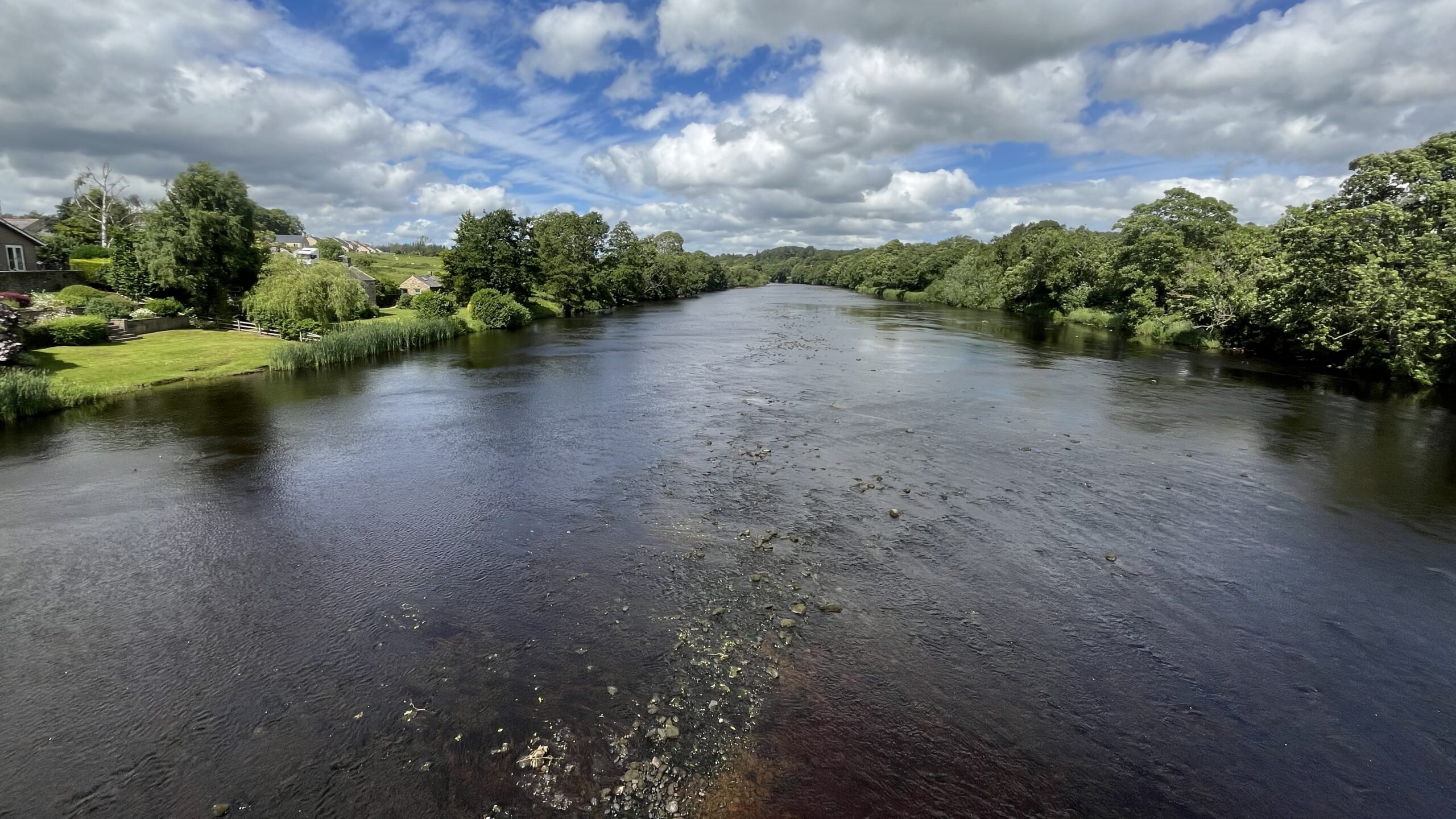
Calm and wide, the River North Tyne, gently flows below Wark Bridge. It is not behaving naturally. It looks tame because, in a very real sense, it has been tamed.
For most of its history the North Tyne did what upland rivers do: it raged when it rained and starved when it did not. Two things changed that, and neither was an accident of nature.
The first was trees. From the late 1920s, vast tracts of the catchment were planted with conifer, and to get trees growing in waterlogged moorland, foresters cut deep drainage ditches across the slopes. Far from steadying the river, those ditches sped storm water straight downstream, making floods worse, not better. It took ten to twenty years, once the canopy closed over, for the forest to flip from flood-maker to flood-tamer. Two of the worst floods of the twentieth century, in December 1954 and January 1955, landed squarely in that dangerous adolescent phase.
Then came the dam. Kielder Water, finished in 1980, locked away nearly two hundred million tonnes of water, and its effect dwarfs anything the forest alone could do. Today, the reservoir routinely halves what would have been the natural flood peak downstream.
So the peaceful water in the photo is not just due to low summer rainfall. It is policy, engineering and forty years of forest growth, all quietly doing their job upstream.
Source: Archer, David. Land of Singing Waters: Rivers and Great Floods of Northumbria. The Spredden Press. 1992.
Leave a Reply