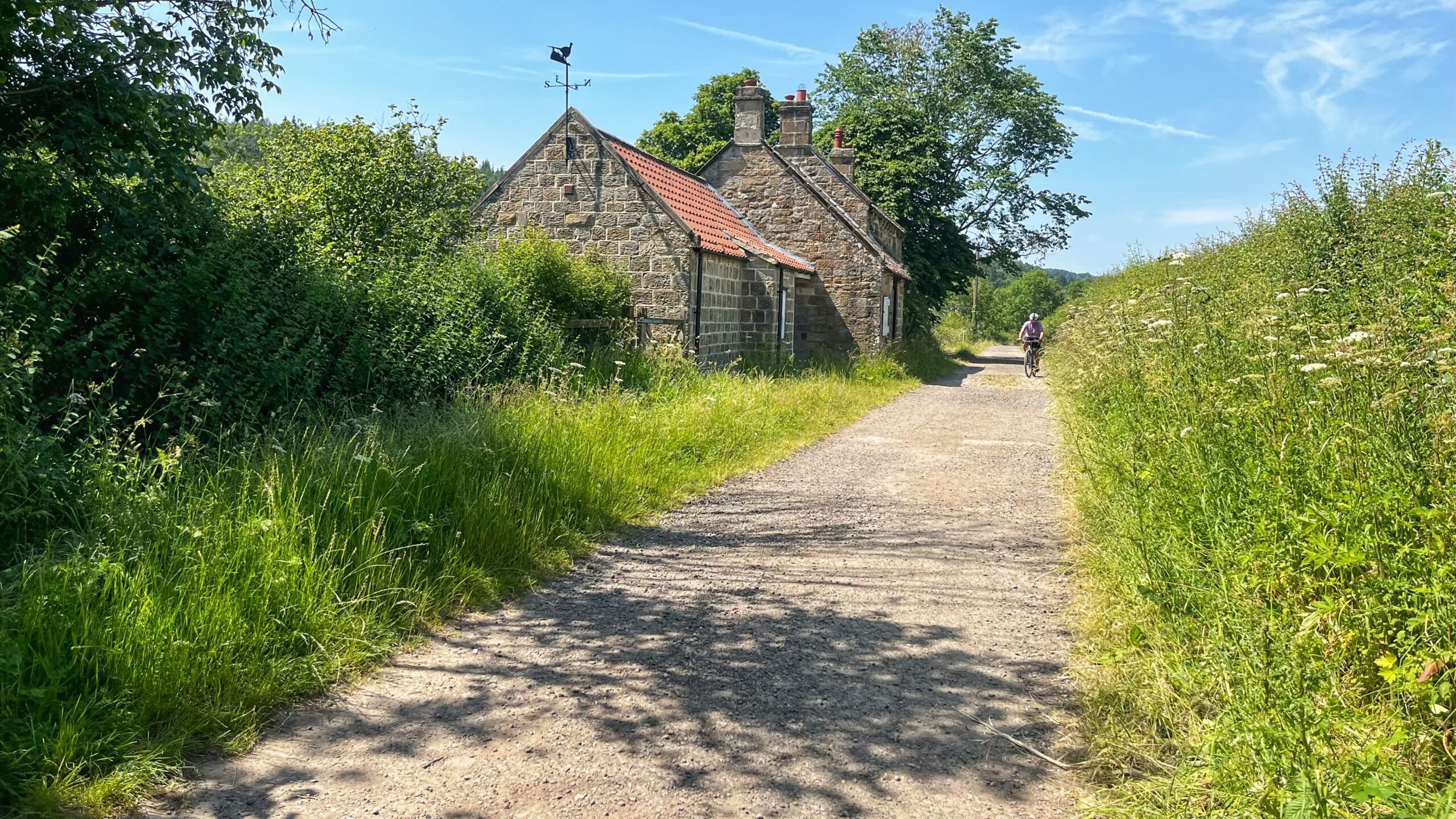
A gravel track on a baking summer day runs through lush green verges high with cow parsley and nettles. To the left stands Toll Cottage, an 18th-century stone building with a terracotta pantile roof and a weather vane on its gable.
Before tarmac, before bypasses, before anyone thought roads should be free, there was Barnard’s Road. One flat mile along the River Esk between Egton Bridge and Grosmont. Straight, well-drained, wide enough for two carts to pass. A miracle of engineering by local standards.
It was built in the early 1850s to replace a medieval flagstone pannier path — single-file, cart-free, and exhaustingly slow. The alternative route involved climbing two separate hills. The new road was, by any measure, a blessing.
There was a catch.
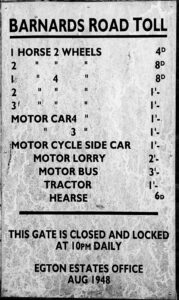
You paid to use it. When the tolls stopped in the early 1950s, the rates were: Horse and two wheels: fourpence. Motor bus: three shillings. Tractor: one shilling. The gate locked at ten o’clock every night.
The road was named not after its builder, Robert Cary Elwes, but after his son-in-law, the Reverend Charles Barnard — a Lincolnshire rector who appears to have managed the estate, collected the tolls, and kept the money. History rewards the man who holds the cashbox.
The last entry on the board is “HEARSE — 6d.”
Even the dead were charged.
Source: Laurence, Alastair. “Old Egton: A New History”. Whitby 2018. Chapter 7. Pages 45-49.
Leave a Reply