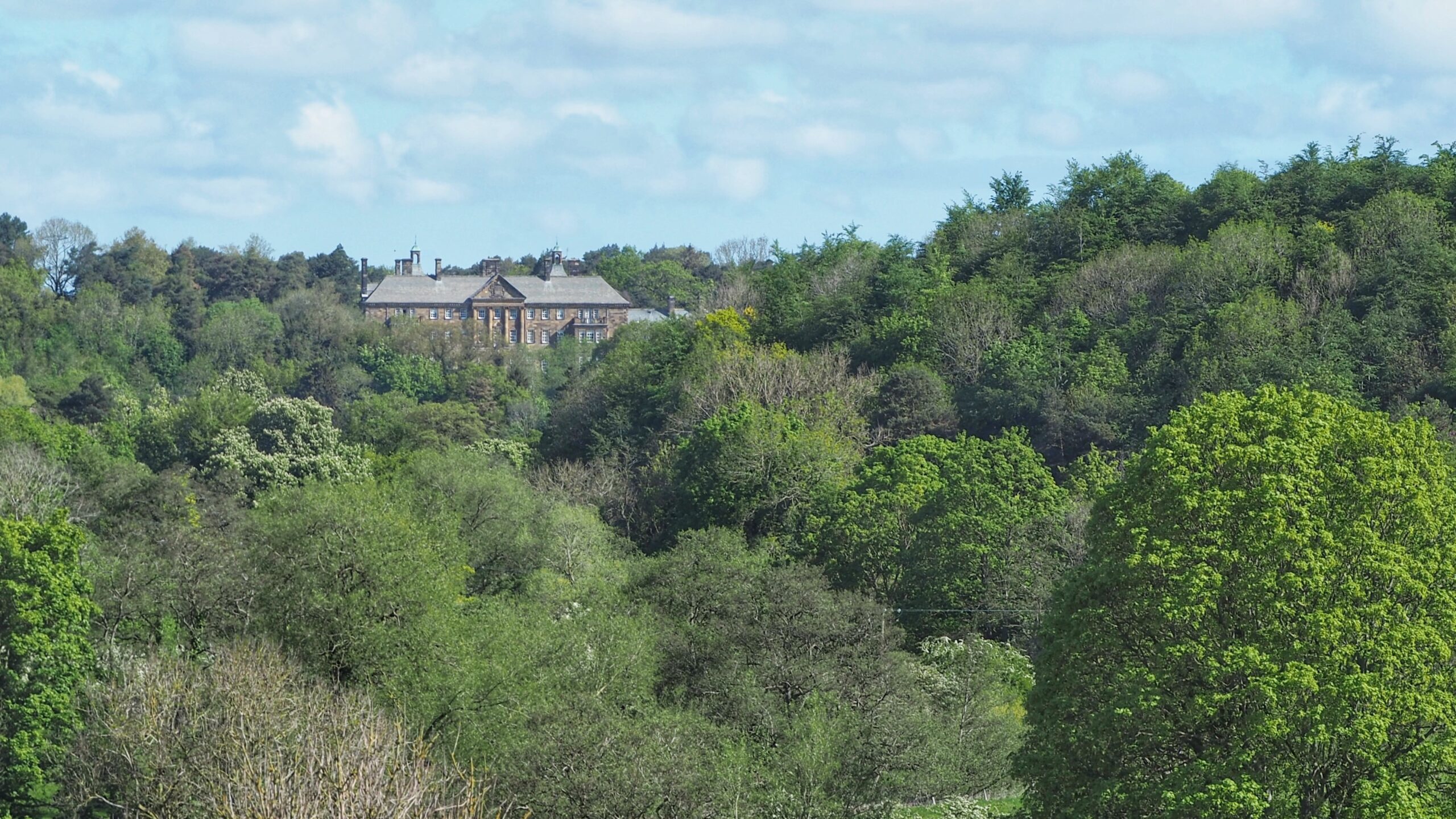
Look at this fine house, which Pevsner described as “large and lavish”1Pevsner, Nikolaus, The Buildings of England — Yorkshire The North Riding. Penguin Books. 1985.. Lording it over the Leven valley. It was built between 1903 and 1906 for a man named James Lionel Dugdale; Lord Dugdale to give him his title.2“History of Crathorne Hall Hotel.” Handpicked Hotels, 2026, https://www.handpickedhotels.co.uk/crathornehall/welcome/inspirations/heritage Today, this building is an upmarket hotel3“Crathorne | Cleveland & Teesside Local History Society.” Cleveland & Teesside Local History Society, 2026, https://ctlhs.org.uk/our-local-area/interesting-places/crathorne/https://ctlhs.org.uk/our-local-area/interesting-places/crathorne/. You will pay a lot of money to sleep there and pretend you are important. It is all so very posh.
The Dugdale family were very rich. They made their money in the Lancashire cotton trade and were so rich that one of them once said he did “fairly stink o’ brass“. This was not a joke. They owned Lowerhouse Mill and they owned the houses where the workers lived. They even owned the shop where the workers had to buy their food. They liked to keep a tight ship. Sometimes a bit too tight. One member of the family was even accused of beating a worker for a very small mistake4“Thomas Dugdale.” Burnley and Pendle Methodist Circuit, 2026, https://www.burnleyandpendlemethodists.org.uk/local-methodist-heritage/thomas-dugdale5“James Dugdale.” Eccles Old Road, 2026, https://www.ecclesoldroad.org.uk/people/james-dugdale. It was a hard life for those in t’ mill.
But the money did not just grow on Lancashire trees. It came from across the sea. Those mills in Manchester and Burnley needed raw cotton to make cloth. Cotton that grew on big plantations in the southern United States. Nearly two million enslaved Africans worked on them in chains. They were worked until they could not work any more. They did not get paid a single penny. One woman who had been a slave said that not one cent of the cotton money ever reached the hands of the people who did the work6Olusoga, David. “Slavery and the Guardian: the ties that bind us.” The Guardian, 28 Mar. 2023, https://www.theguardian.com/news/ng-interactive/2023/mar/28/slavery-and-the-guardian-the-ties-that-bind-us.
When the demand for cotton went up, more people were needed to pick it. This led to a “second middle passage”. People were taken from their families and “sold down the river“. They were sent to the deep south to work on the cotton plantations. This was done to keep the British mills turning. We wanted cheap shirts and we did not care how we got them7Ibid.. It was a messy business.
In Britain, we like to think we are the good guys. We tell stories about how we stopped the slave trade. But it’s a bit of a tall story. We kept making money from slavery for a long time after we said it was wrong. We used a lot of smoke and mirrors to hide the truth. We pretended that our factories just appeared out of the ground. We did not want to see the “stolen labour” that paid for our grand houses8Ibid..
Even though it is Edwardian, every stone of this grand house was bought with a stolen life. The “financial DNA” of the building is full of misery. Society has inherited this wealth and society still benefits from the interest on this money9Ibid.. If we take the profit, do we also take the blame? History is rather simplistic until the bill arrives. If the debt for the past is finally due, who is going to pay it?
- 1Pevsner, Nikolaus, The Buildings of England — Yorkshire The North Riding. Penguin Books. 1985.
- 2“History of Crathorne Hall Hotel.” Handpicked Hotels, 2026, https://www.handpickedhotels.co.uk/crathornehall/welcome/inspirations/heritage
- 3“Crathorne | Cleveland & Teesside Local History Society.” Cleveland & Teesside Local History Society, 2026, https://ctlhs.org.uk/our-local-area/interesting-places/crathorne/https://ctlhs.org.uk/our-local-area/interesting-places/crathorne/
- 4“Thomas Dugdale.” Burnley and Pendle Methodist Circuit, 2026, https://www.burnleyandpendlemethodists.org.uk/local-methodist-heritage/thomas-dugdale
- 5“James Dugdale.” Eccles Old Road, 2026, https://www.ecclesoldroad.org.uk/people/james-dugdale
- 6Olusoga, David. “Slavery and the Guardian: the ties that bind us.” The Guardian, 28 Mar. 2023, https://www.theguardian.com/news/ng-interactive/2023/mar/28/slavery-and-the-guardian-the-ties-that-bind-us
- 7Ibid.
- 8Ibid.
- 9Ibid.
Leave a Reply