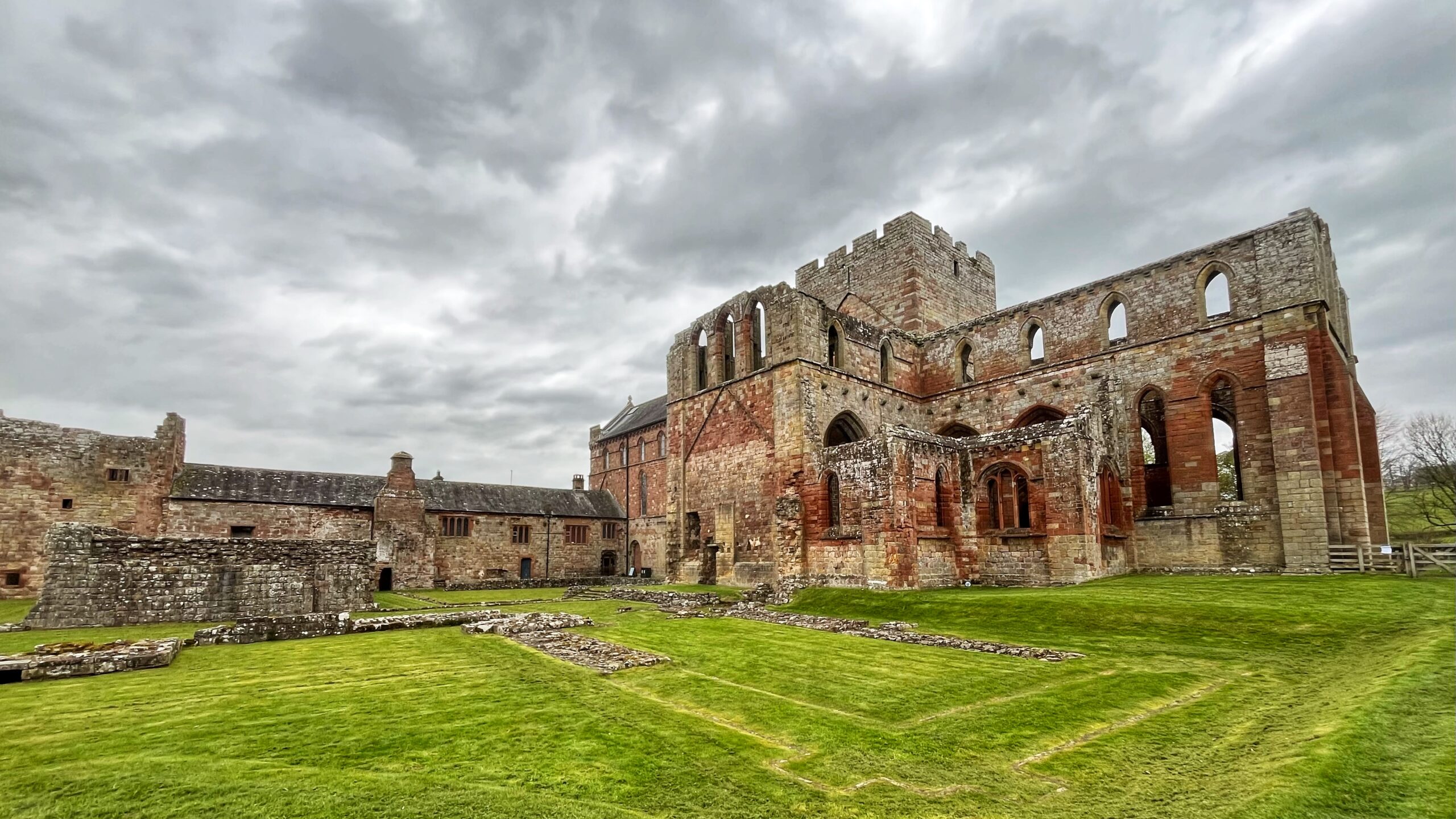
Founded in 1169, Lanercost was home to a community of Augustinian canons devoted to a life of prayer and service. It looks like a ruin. It is not entirely one. The nave of the priory church has been a working parish church since the 1740s — simultaneously a medieval wreck and a living place of worship. Half collapsed, half very much open for business.
The building itself is, in a sense, stolen. The priory was constructed largely from stone lifted directly from Hadrian’s Wall, which runs less than a mile away. The Romans spent decades building that wall. The monks spent rather less time dismantling it. History has a very short memory.
In 1306, the ailing King Edward I — “Hammer of the Scots” — arrived and stayed for five months. He was too ill to march, yet still issued orders to crush Scotland from his sickbed. He eventually dragged himself north again and died on the journey. The priory received royal misery as a parting gift, and a brief, unlikely moment at the centre of national affairs.
The Dissolution of the Monasteries in 1537 is usually cast as the villain of the story. Henry VIII dissolved it, certainly, but Scottish raiders had already inflicted considerable damage over the previous centuries. Henry merely administered the final blow to something already rather battered. Blame, as ever, is a shared enterprise.
Eight hundred years of prayer, theft, royal suffering, and quiet survival. Not bad for a ruin.
Leave a Reply