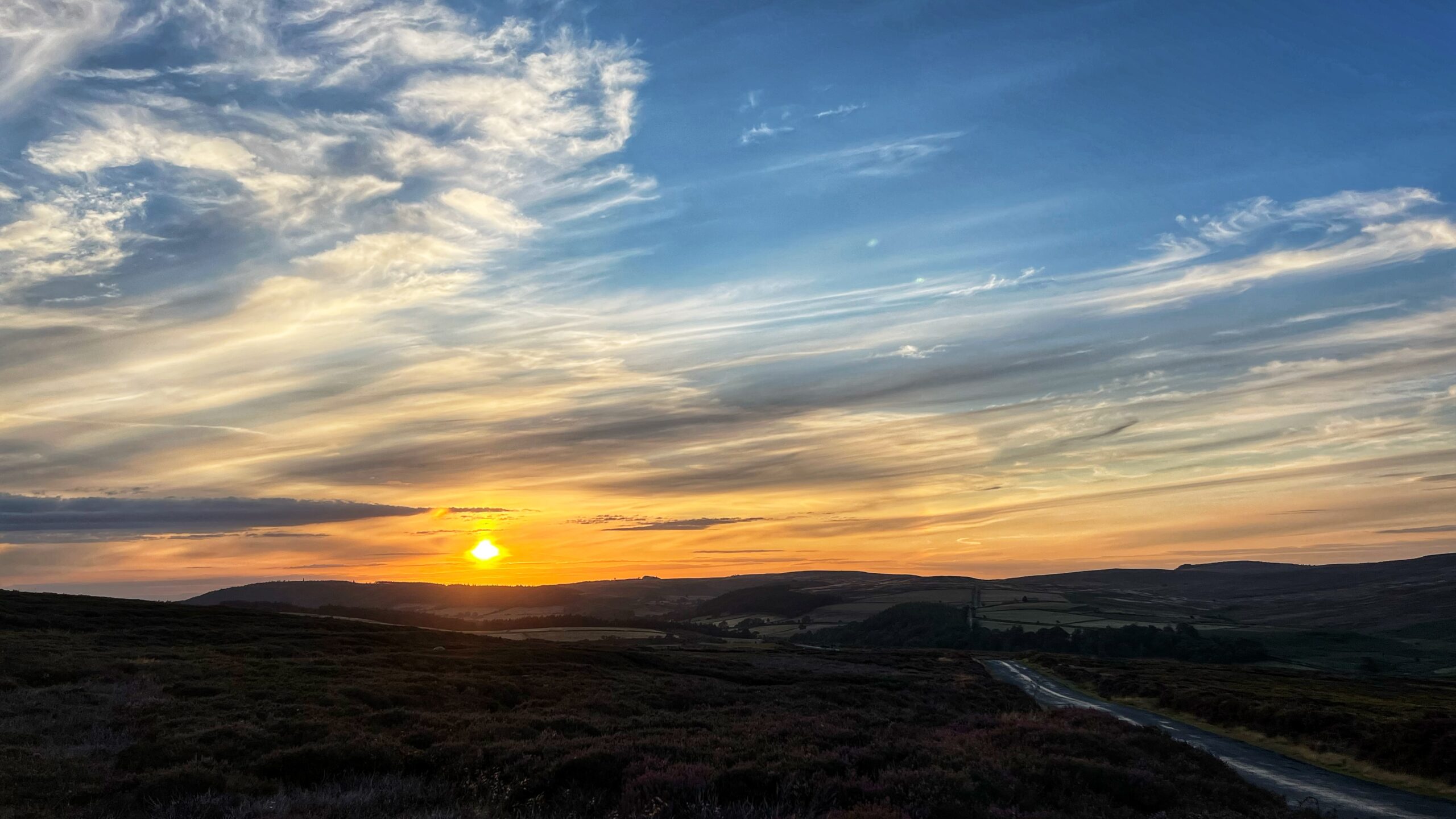
It is not often these days that I find myself driving home across the moors at sunset. By that time I’ve settled in for the night.
Most cloud formations save their best trick for this hour. High cirrus, with a smattering of some lower, featherier clouds thrown in for good measure, catch the low sun in a way nothing else quite manages, and for a few minutes it the sky puts on a spectacular display.
It does not last, of course. Nothing this good ever does. But while it holds, the flat glare of the day gives way to a paintbox of tangerine, salmon and dandelion, soft enough to make you forget the drive home entirely.
The sun only gets to light the underside of a cloud if the sky is clear in the direction it is setting, which is where the old saying comes from: red sky at night, shepherd’s delight. This would count as a red sky, I think. Weather in Britain moves from west to east, so a red sky at night means clear air to the west, and the orange light floods up underneath whatever cloud sits above you. Clear to the west generally means fair weather on the way, which is about as safe a bet as forecasting ever gets given our current heatwave. People have trusted the observation for thousands of years, it even turns up in the Bible, so who am I to argue. I will spare you the morning version.
Good sign for tomorrow then, on the whole. Cirrus in any case by itself usually means settled weather, though a thickening sheet of it can be the first scout for a front moving in a day or two later. We all live in hope. Either way, a fine bit of sky to be driving home under.
Leave a Reply