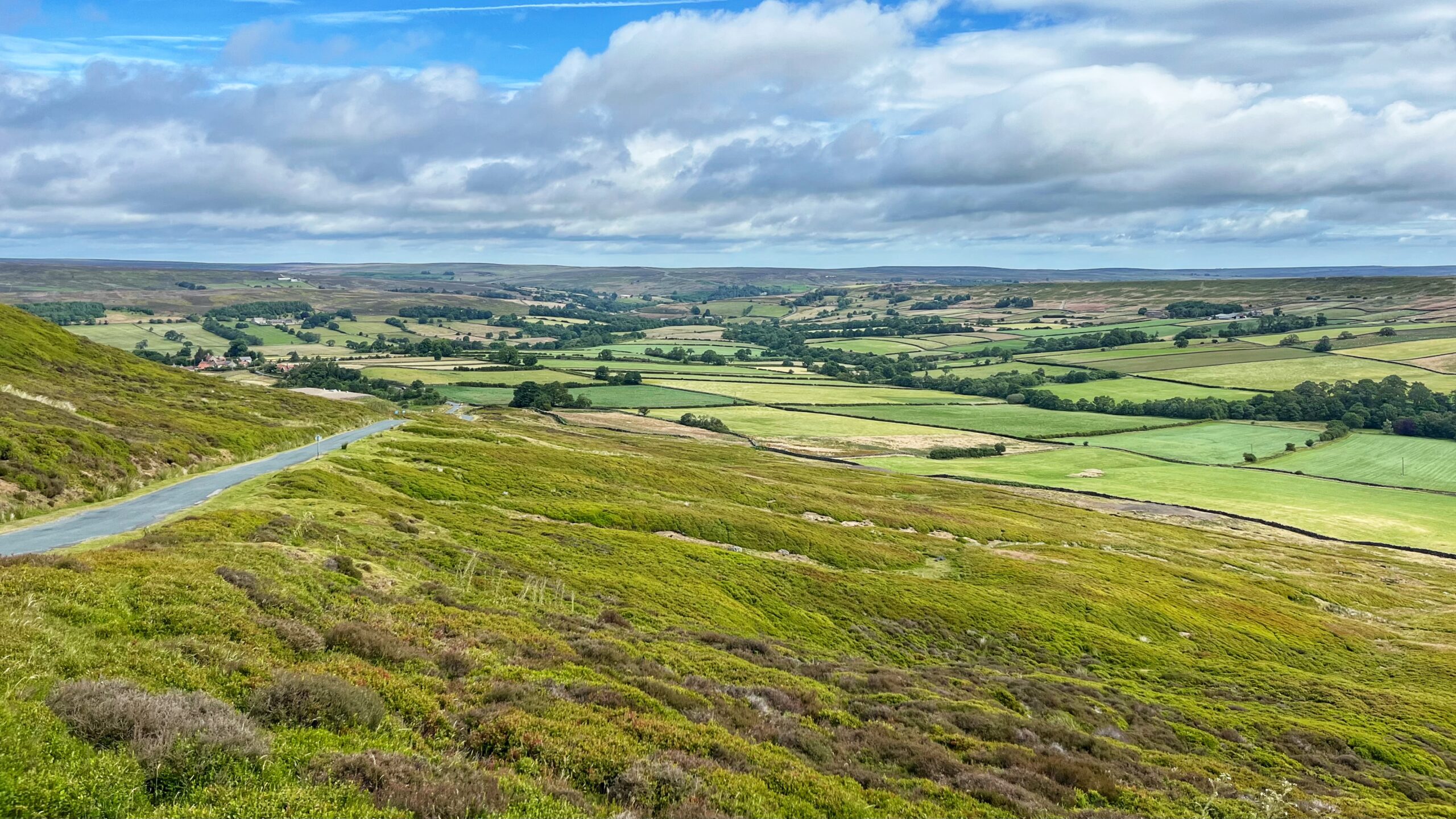
The name Westerdale suggests it’s the westerly dale in the Esk valley, with the river starting life as springs called Esklets high on the moor. But the dale forks in two. One arm mixes wooded ravines with bare moorland and old common land, now grazed by sheep and cattle. This one, drained by Tower Beck, was once called Trowsdale on old maps, and its upper reach bears the name Westerdale Head. Read in that what you will.
The village proper sits at the foot of the ridge between the two arms—on the left in the photo. Thirty houses line a single street, with a similar number of farms scattered round about. A hundred and thirty folk call it home, mostly the retired and professionals, a few families, and eight working farms scraping a living from sheep and cattle rather than crops. Most houses date from the eighteenth or early nineteenth century, built mainly on the eastern side, eating into what was once the village green. The church, Church Farm and a scattering of cottages hold the western side. No shop, no post office, no school, no pub. Ten miles from the nearest market town and ringed by moorland, it is a quiet place with a past that was anything but.
In medieval times Westerdale meant dale, forest, manor and parish all at once, home to a planned village, a Templar house, a Cistercian grange and a small nunnery. William II granted the forest to Guido de Balliol around 1090. It passed through Balliol and Bovincourt hands before the Templars held it for over a century, and the Hospitallers took it on afterwards.
Source: Wilson, Carol M. “Westerdale: the origins and development of a medieval settlement”. 2013.
Leave a Reply