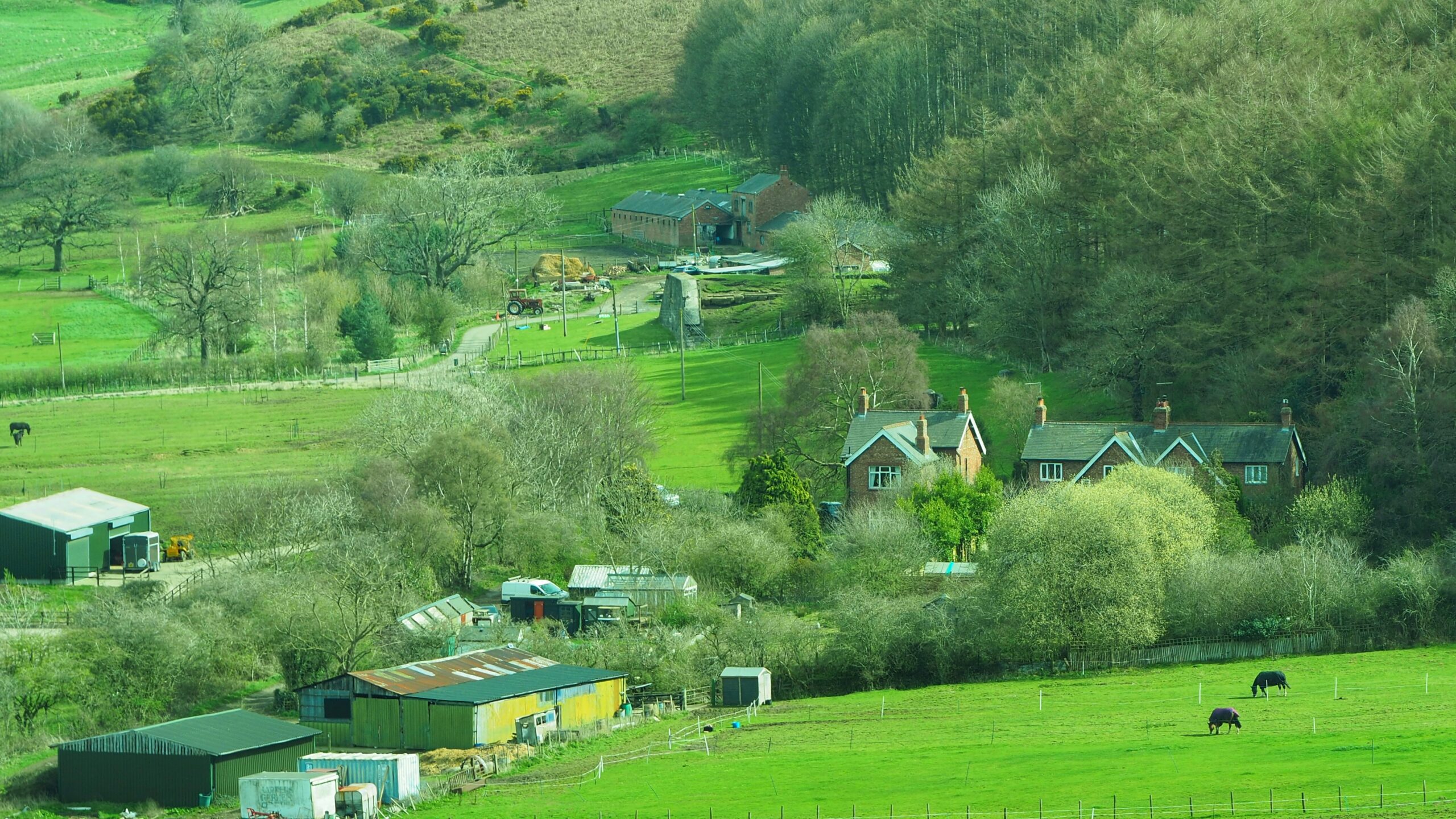
Green “Yorkshire” fields in early spring, and nothing here looks remotely industrial. Yet the three red-brick Edwardian cottages sitting neatly in the middle distance were built for the men who ran Belmont Ironstone Mine, and the large brick building in the distance was once the stables for the horses that worked underground. The large concrete wall between supported the tipping gantry over the railway sidings. Today goats graze where tubs of ironstone once rolled, corrugated iron farm sheds align the dismantled railway siding, and the wooded hillside rising towards Highcliffe gives nothing away. A hundred years of weather and indifference have done a thoroughly competent job of burying the evidence.
Bolckow Vaughan and Company first considered acquiring Belmont Mine when ‘the company was still in need of more supplies,’ with a rival’s interest finally forcing their hand at the director’s meeting of 28 August 1906. True to form, they debated it, dropped it, revived it, then deferred it again until a rival showed interest. Nothing focuses the mind like competition. The lease was finally signed in 1908 and the first ironstone raised in August 1909.
The ironstone itself was hardly worth the bother. With an iron content of barely 27%, it was poor quality by any measure, only viable because demand was so fierce. That demand, driven largely by the war from 1914, kept the mine breathing. Men were even returned from the army to dig stone and keep the furnaces fed. Stockpiles grew. New equipment arrived.
That equipment caused its share of chaos. The electric fan, installed to replace the old furnace ventilation system, left the furnaceman covered in hot cinders on its first day. The underground locomotive, purchased with great enthusiasm, derailed so regularly on tight corners that it became more nuisance than help. Progress is rarely as smooth as its salesmen suggest.
When trade collapsed in 1921, peace proved more destructive than war. Within weeks, 450 men received notice and the mine shut. Reopening was discussed at intervals throughout the 1920s, with the enthusiasm of men who had no real intention of doing it.
By February 1933 the mine was completely dismantled, the aerial ropeway pulled down in eight weeks flat, and the picking belts carted off elsewhere. Belmont was abandoned, this time for good.
Source: Chapman, Simon. “A History of Mining in the Guisborough District.” Industrial Archaeology of Cleveland 2001.
Leave a Reply