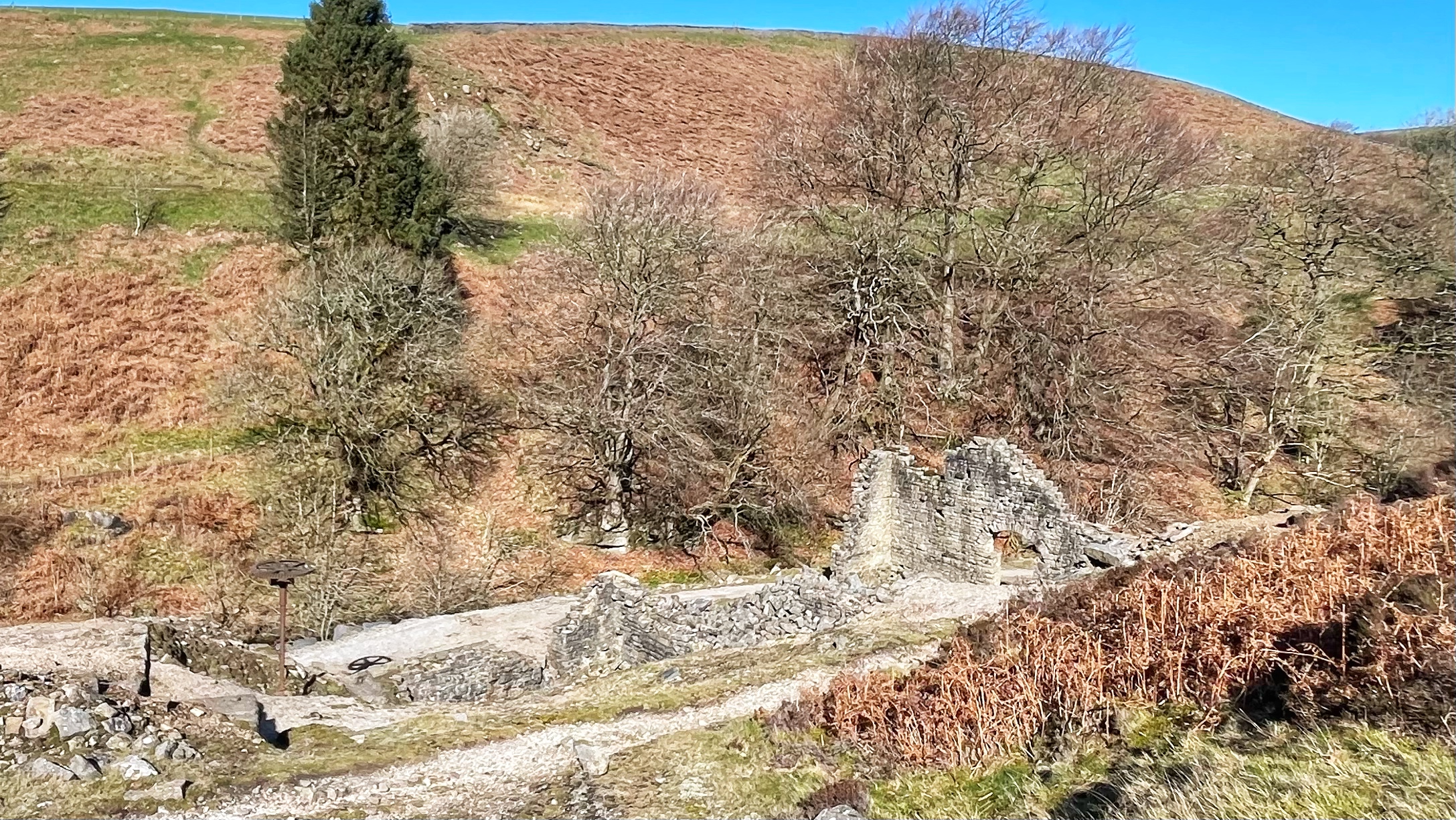
These crumbling stone walls tell quite a story.
Standing at the foot of a bracken-covered hillside near Pateley Bridge, the ruins of the Prosperous smelt mill look like something from a forgotten world. They are, rather fittingly, exactly that.
Lead was probably first mined here by the Romans. The first written record dates from 1781. Around 1800, John Lupton built the smelt mill itself. His family had been digging into these hills since the 16th century, which is either impressive dedication or a worrying lack of imagination1Prosperous lead mines and smelt mill. Heritage Gateway. List Entry Number: 1017752.https://www.heritagegateway.org.uk/Gateway/Results_Single.aspx?uid=1017752&resourceID=5.
In 1822, William Watson leased both the Prosperous and nearby Providence mines. For a while, things looked promising. Then the 1830s arrived, foreign lead flooded the market, prices fell, and the more accessible parts of the mine ran dry.
By 1839 Watson was leasing every mine along Ashfoldside Gill. By 1841 he had vanished entirely, leaving behind 50 workers and a rather unhappy set of bankers.
In 1843, a man named Michael Colling stepped in on behalf of the landowners to pick up the pieces.
The last company to operate the mill, the Bewerley United Lead and Barytes Mining Company Limited, closed in 1889. A final attempt to reopen the mines in 1967 was quickly abandoned.
The hills won, as hills generally do.
- 1Prosperous lead mines and smelt mill. Heritage Gateway. List Entry Number: 1017752.https://www.heritagegateway.org.uk/Gateway/Results_Single.aspx?uid=1017752&resourceID=5
Leave a Reply