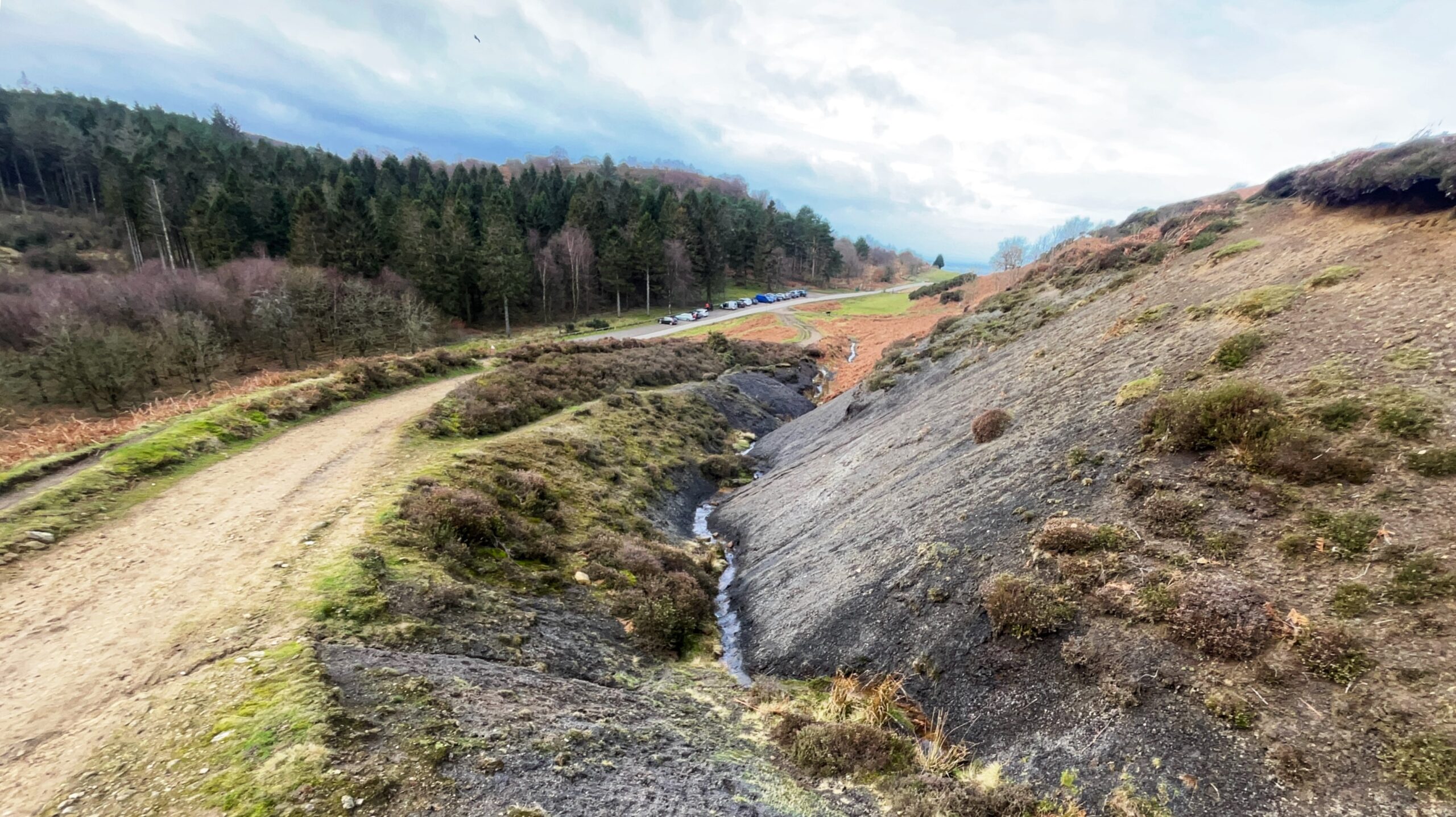
I have long been fascinated by this track and steep-sided gorge that leads to Gribdale Gate on the Lonsdale side. Its form suggests deliberate shaping, as though carved by generations travelling to and from Great Ayton Moor. The talus slope is composed of shaley mudstone, which weathers into a slick, unstable mass, more mud than stone when wet. Even after heavy storms, however, I have never seen more than a thin trickle of water descending the gully. It seems unlikely that such a modest stream alone could have produced erosion on this scale.
Yet it is precisely through such gradual degradation that our dales were formed. Weather works patiently but relentlessly, widening valleys over centuries. Frost and heat play the leading roles. Water freezes within cracks in the rock, forcing them apart and shattering the surface, while periods of warmth expand the stone and hasten its breakdown. Together, these quiet forces reshape the landscape.
The stream itself flows towards the head of Lonsdale, an apparently illogical course if the feature is wholly natural. Before descending the valley, the water performs a curious U-turn. It is striking to consider that Lonsdale Beck ultimately find its way into the Tees, even though at the outset it seems to run away from it.
Anyway, I am inclined to think this gully may once have been a holloway leading down from the moor, perhaps used first for hauling peat turves and later for dragging stone from Lonsdale Quarry on sledges. Time and weather may then have softened and deepened the track, until a new track was forged to the side and leaving the landscape we see today.
Leave a Reply