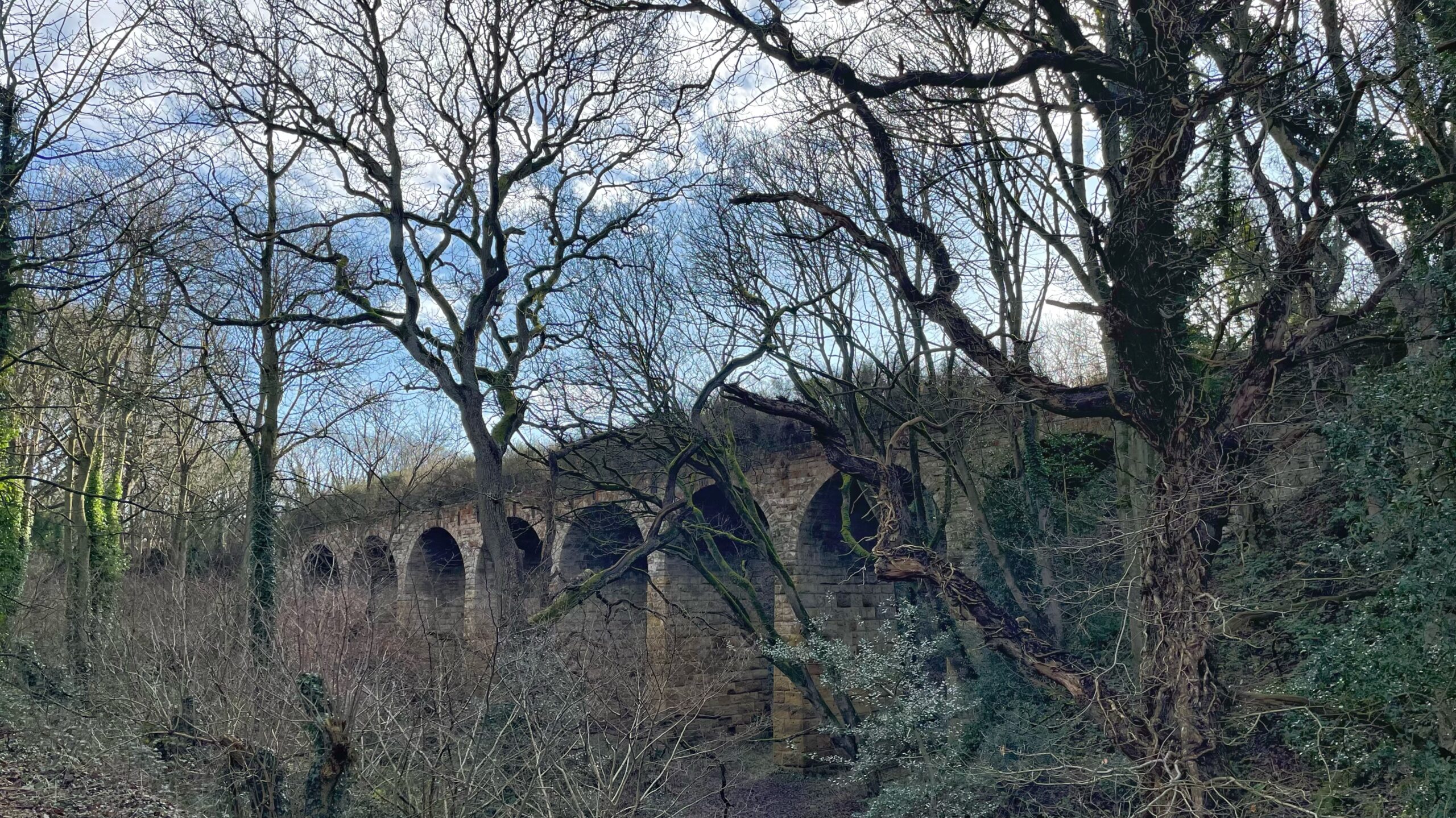
The old viaduct at Slapewath stands forlorn and overgrown. It looks peaceful now. Built in 1861 by the Cleveland Railway, it sat at the centre of one of the fiercest railway battles in the north of England.
By the time the Middlesbrough & Guisborough Railway was running, one thing was clear. It was not going any further east. Mines beyond Guisborough were not controlled by the Pease family so were blocked from good rail access. The same names kept appearing. The same interests kept winning.
Enter Ralph Ward Jackson of West Hartlepool. He wanted independence from the Stockton & Darlington Railway and direct access to East Cleveland ironstone. Alongside landowners like the Chaloners and industrialists like the Bell brothers, he backed a new scheme. A railway from Normanby to Skinningrove, with branches to rich seams along the way.
The response was immediate. Rival surveyors appeared. Parliamentary Bills multiplied. Accusations flew. One side hired the leading geologist of the day. The other rushed a route that missed key deposits. By 1858, the House of Commons was hearing evidence that bordered on open warfare.
“We are under the belief at Guisbrough that the Stockton & Darlington Company is influenced by persons who are not interested in developing the resources of the district.”
The outcome was a compromise. Ward Jackson’s group won permission to build what became the Cleveland Railway, but only running east from the Stockton & Darlington Railway at Guisborough. The SDR secured its own extensions elsewhere. Both sides claimed success. Neither trusted the other.
Construction of the Cleveland Railway was fast and tense. Sunday working caused outrage. Navvies striked over pay. Wooden viaducts crossed small valleys. The line reached Skinningrove in 1861, opening up East Cleveland’s mines at last. But access to the Tees remained contested.
That fight continued on the river itself. In 1860, Ward Jackson pushed ahead with a jetty at Normanby despite legal threats. When Tees Conservancy barges blocked the works, they were dragged aside by steam tugs. The episode became known as the “Battle of the River Tees”. It was railway rivalry by other means.
Victory came at a cost. Financial strain brought down Ward Jackson. His companies overreached. Parliament intervened again. Meanwhile, the railway map kept changing. In 1863, the Stockton & Darlington Railway was absorbed into the North Eastern Railway. In 1865, the Cleveland Railway followed.
The rivalry ended not with triumph, but with amalgamation. The ironstone flowed more freely. Routes were rationalised. Some lines were abandoned within a decade. Guisborough gained better connections, then lost them again. Passenger services came late and went early. Its station ended up at the end of a spur.
The remains are still there. Tree lines, embankments, viaducts. They mark a period when railways were not just transport, but weapons. The surprising part is not the conflict. It is how openly it was fought, in public, in Parliament, and sometimes by force.
The final lesson is simple and uncomfortable. Infrastructure shapes towns, but power shapes infrastructure. When steel and money decide the route, communities learn to live with the consequences long after the trains have gone.
If any filmmakers happen to be paying attention, the railway feud in Cleveland is crying out for the big screen. You have ambition, money, Parliament, and even a spot of organised skulduggery. Add a love interest for good measure. And best of all, one of the antagonists comes from a leading Quaker family. So much for the simple idea that the good hats and the bad hats were easy to tell apart.
Source:
“Guisborough Before 1900”. Edited by B.J.D. Harrison and G. Dixon. Chapter 11. 1982.
Leave a Reply