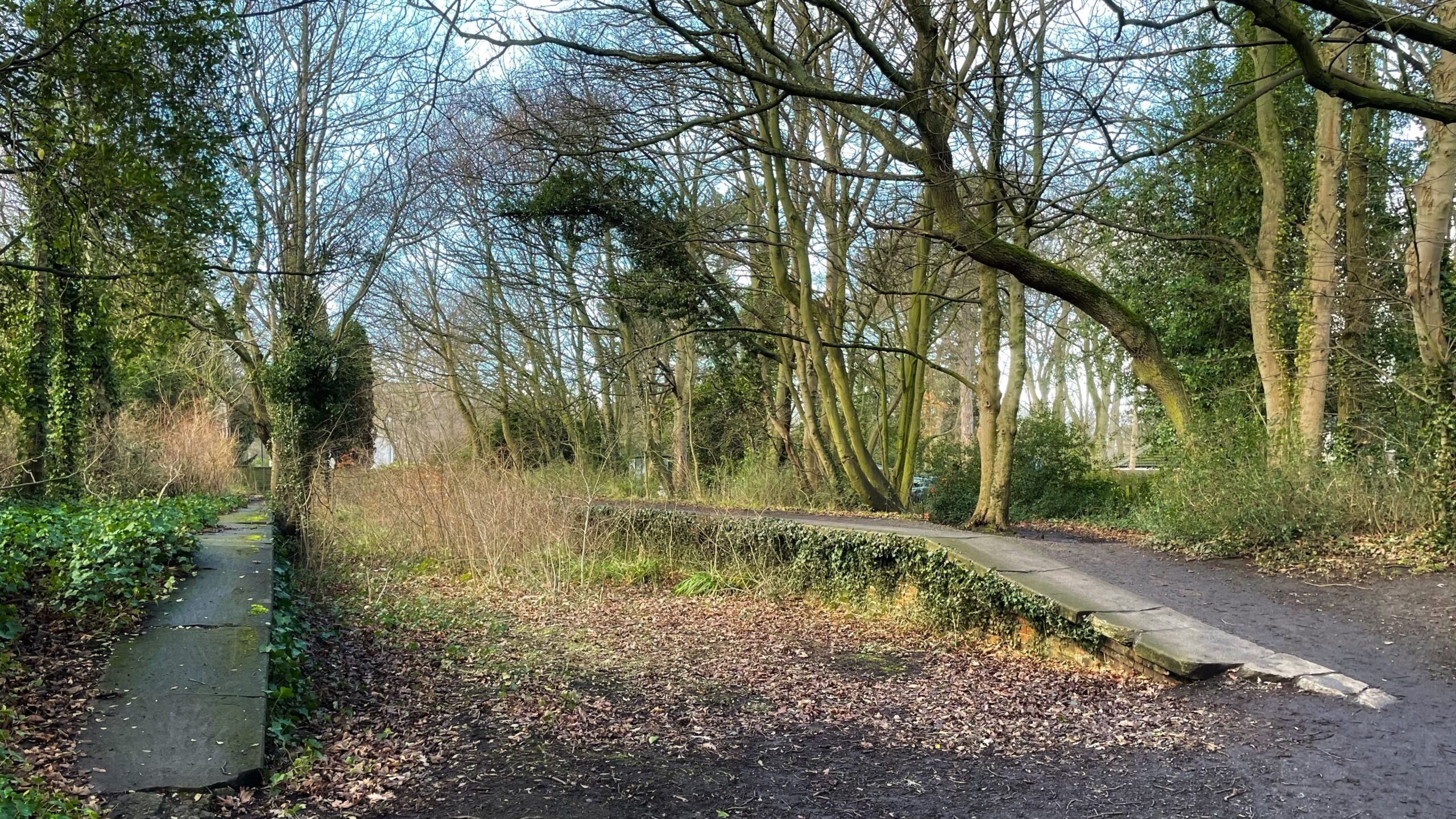
The photograph shows an overgrown piece of railway history: the remains of the private station, built not for a town, but for Sir Alfred Edward Pease of Hutton Hall. It is a neat place to begin, because it tells you almost everything about how the railway first came to Guisborough.
In 1850, Guisborough had no railway at all. Middlesbrough, by contrast, had docks, furnaces, and momentum. The iron boom was under way, fuelled by new discoveries of ironstone across Cleveland. Railways were no longer nice additions. They were power.
The Middlesbrough & Guisbrough Railway was promoted in 1851 by men who already had plenty of that power. Joseph Pease and his son did not set out to serve Guisborough. They set out to serve their ironstone mine at Codhill. The proposed line bypassed the town, ending inconveniently at Hutton. The explanation was cost. The reality looked more like control.
The prospectus made the priorities plain. Sixty-five percent of expected revenue would come from minerals. Passengers were an afterthought. The route chosen was steep, indirect, and avoided rival ironstone deposits. Even the language was telling. One gradient was dismissed because the traffic would be “a descending one”. Ironstone going downhill to Middlesbrough mattered. Everything else could wait.
Guisborough noticed. A railway that carried its name but missed its streets felt like an insult. Local pressure followed, aimed at the Lord of the Manor, Robert Chaloner. The result was a forced change of route and an Act of Parliament in 1852 that dragged the line into the town itself. It was a small victory, but a revealing one. The railway came not as a gift, but as a concession.
When the line opened for passengers in February 1854, the service was minimal. One train each way per day. Leave at 8.10 in the morning. Return at 5.20 in the evening. The first stationmaster was praised for being steady and industrious, which suggests expectations were modest all round.
What followed was not trust, but suspicion. The railway’s buildings carried the initials of the Stockton & Darlington Railway (the MGR’s parent company). Decisions were made in Darlington, not Guisborough. Shareholders in the town had little influence. When coal arrived cheaply by rail, local merchants were ruined. When the merchants were gone, prices rose sharply. Dependence came first. Cost followed.
One complaint summed up the mood:
“The present line already constructed is managed in a manner I think much more conducive to private interests than it is to the interests of the shareholders and the public.”
The railway did change Guisborough. Travel was easier. Coal arrived faster but dearer. The town was no longer isolated. But it also learned a hard lesson early. Railways were not neutral. They chose sides.
By the late 1850s, resentment was spreading eastward, towards Skelton, Loftus, and the coast. Others had ironstone. Others wanted railways. And they were no longer prepared to wait politely.
Next time, the rivalry explodes. New lines are planned, Parliament is dragged in, and the fight for Cleveland ironstone spills from committee rooms onto the River Tees itself.
Source:
“Guisborough Before 1900”. Edited by B.J.D. Harrison and G. Dixon. Chapter 11. 1982.
Leave a Reply