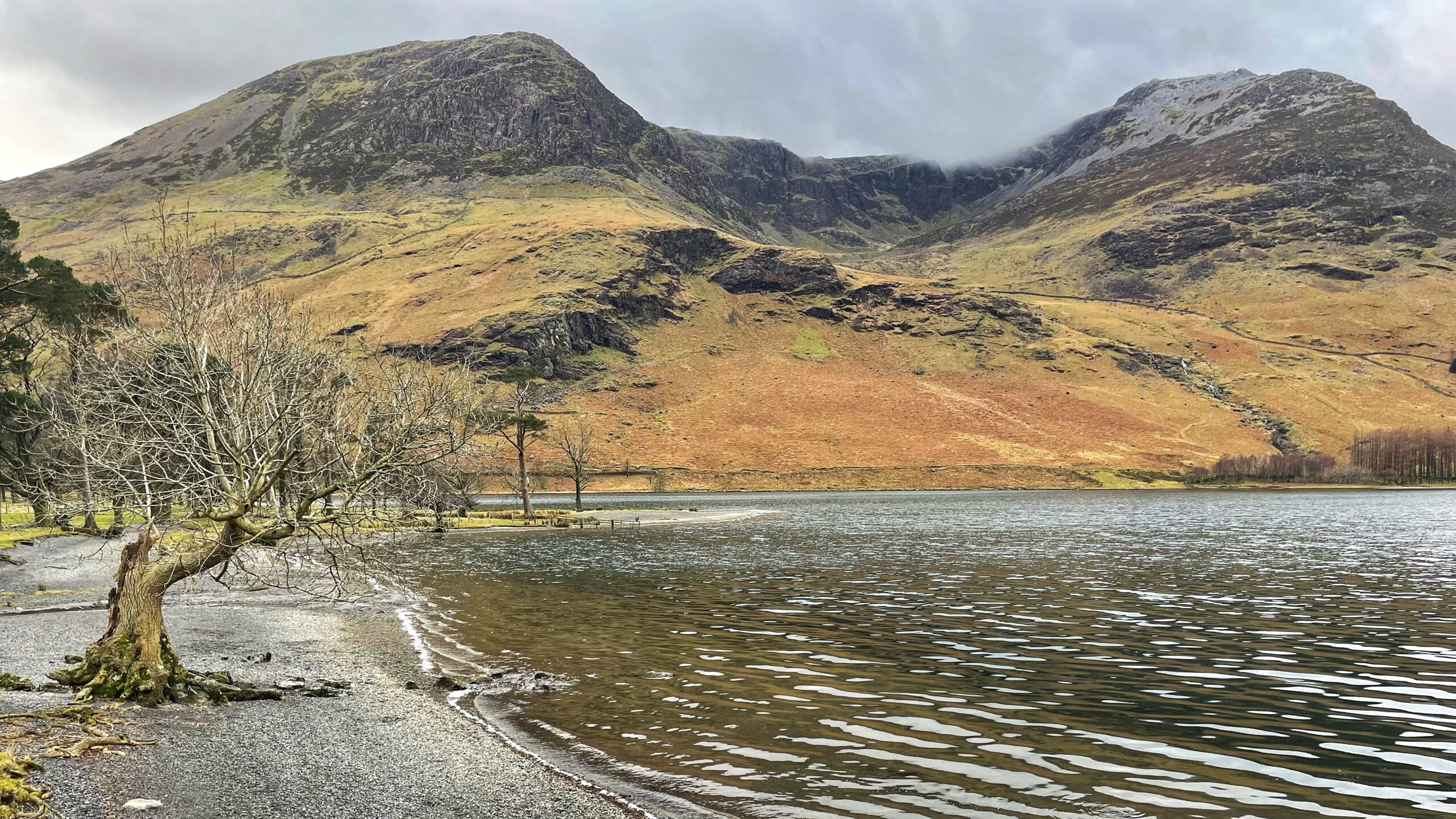
Burtness Comb hangs above Buttermere like a great green amphitheatre, tucked between High Stile and High Crag. I once picked my way down it during the Lake District Mountain Trial in 1978. Somewhere on that bracken-choked slope, there may still be an orange-faced Omega watch, a twenty-first birthday gift, quietly keeping time for no one.
The comb is not just the focus of the image. It is said to contain a geological oddity found nowhere else in the Lake District: the only identified “rock avalanche boulder tongue”. This strange landform was born when Grey Crag, high on the side of High Stile, collapsed in spectacular fashion and tore itself apart.
The edges of the boulder tongue supposedly stand out clearly, rising several metres above the surrounding ground. Its surface is a jumble of winding ridges, knolls, and an astonishing number of boulders, though nature has begun to soften the scene with grass and scrub. Scientific study suggests that this mass of debris was laid down not in one go, but by two separate avalanche events. I must admit, back in 1978 I wasn’t particularly taking note.
Geologists describe its creation as a dramatic moment in the mountain’s past. The fall of Grey Crag would have been thunderous, the air thick with dust, as thousands of tonnes of rock surged down into the comb.
Seen today, the boulder tongue has been described as resembling a river caught mid-flow, frozen in stone. It is a lasting mark left by a brief, violent upheaval, one that reshaped the mountain and still tells its story to anyone willing to look.
Source:
Wilson, Peter. Lake District Mountain Landforms. Pp 117/8. Scotforth Books.
Leave a Reply