-

Dry hedging in Newton Wood, two years on
Volunteering with the National Trust in Newton Wood. Two years on the dry hedges built to allow the regrowth of the woodland floor seemed to have done their job, but were looking tied. So the task today was to rejuvenate the hedges, and extend then to discourage visitors from using the erosion gulley. Dry (or…
-

Peat Law
Another photo from the last few days in the Scottish Borders. At 464m asl., the hill on the right is known as ‘Three Brethren‘ after the three 16th-century cairns on its summit. It stands on an old drove road once used by cattle but now popular with walkers and mountain bikers. The cairns were each…
-

It’s amazing what you come across in a Scottish forest
In 2012, a full-size football pitch was created in a plantation of spruce near the Scottish border town of Selkirk. Trees were felled and the timber used to make the goal posts, crowd barriers, benches, and changing rooms. The pitch had been carefully tendered. For just one day, four teams of amateur players — two…
-
Frisian horses on the Southern Uplands
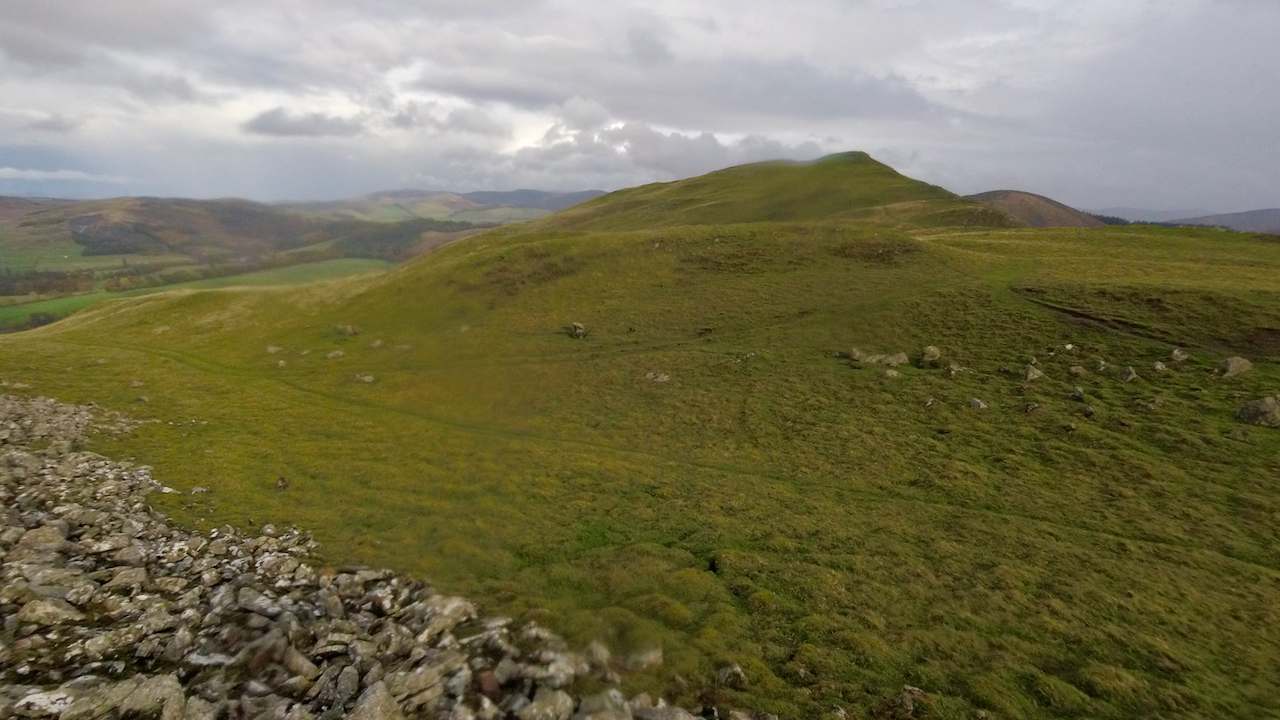
Cademuir Hill is a small ridge, barely 4km long south of Peebles in the Tweed valley. Yet it hosts 3 prehistoric forts. The photo is taken from the south-westernmost at 356m asl, arbitrarily named by the archaeologists as ‘Cademuir Hill 2’, towards the highest at 407m asl., ‘Cademuir Hill 1’. The 3rd fort, The Whaum,…
-
Glen Vale and John Knox’s Pulpit
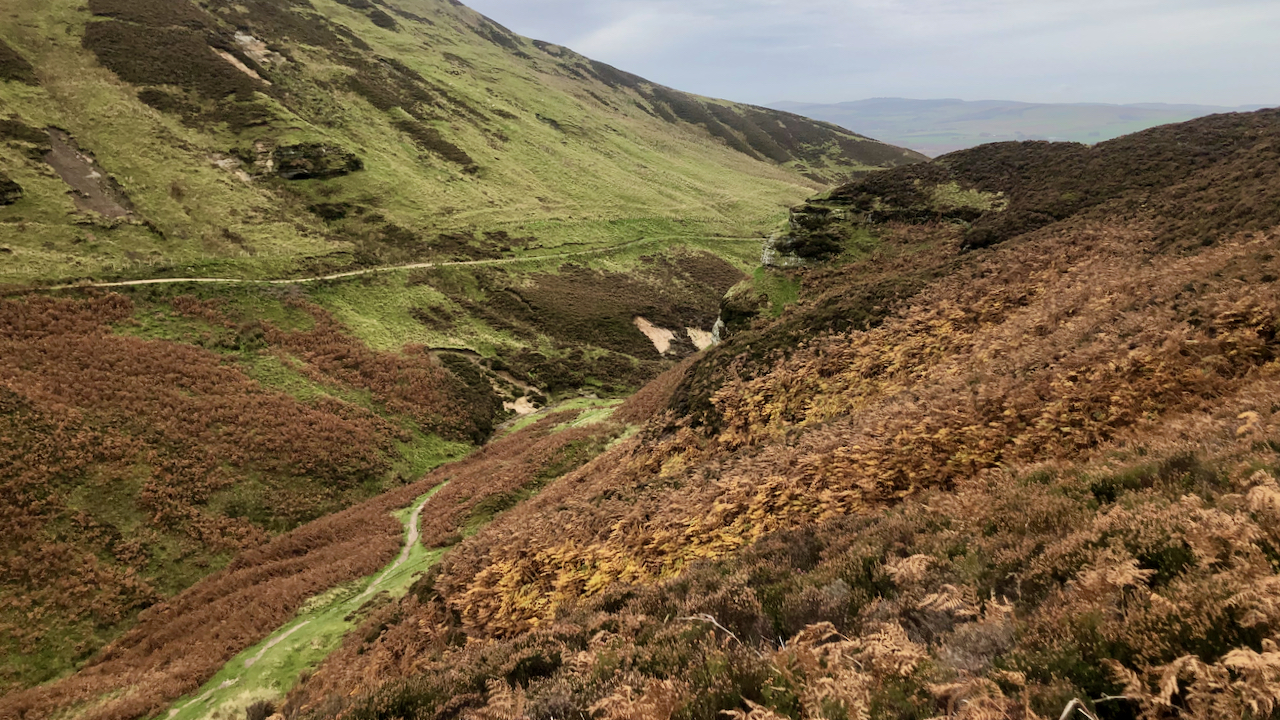
Another range of hills I’ve passed by many times before on journeys to the Highlands — the Lomond Hills. The main photo is Glen Vale, the Convenanters’ glen — a “ravine of rugged grandeur” — on account of the Presbyterian conventicles held during the ‘Killing Time‘ in the late 17th Century when such Convenanters as…
-
Middledean Camp
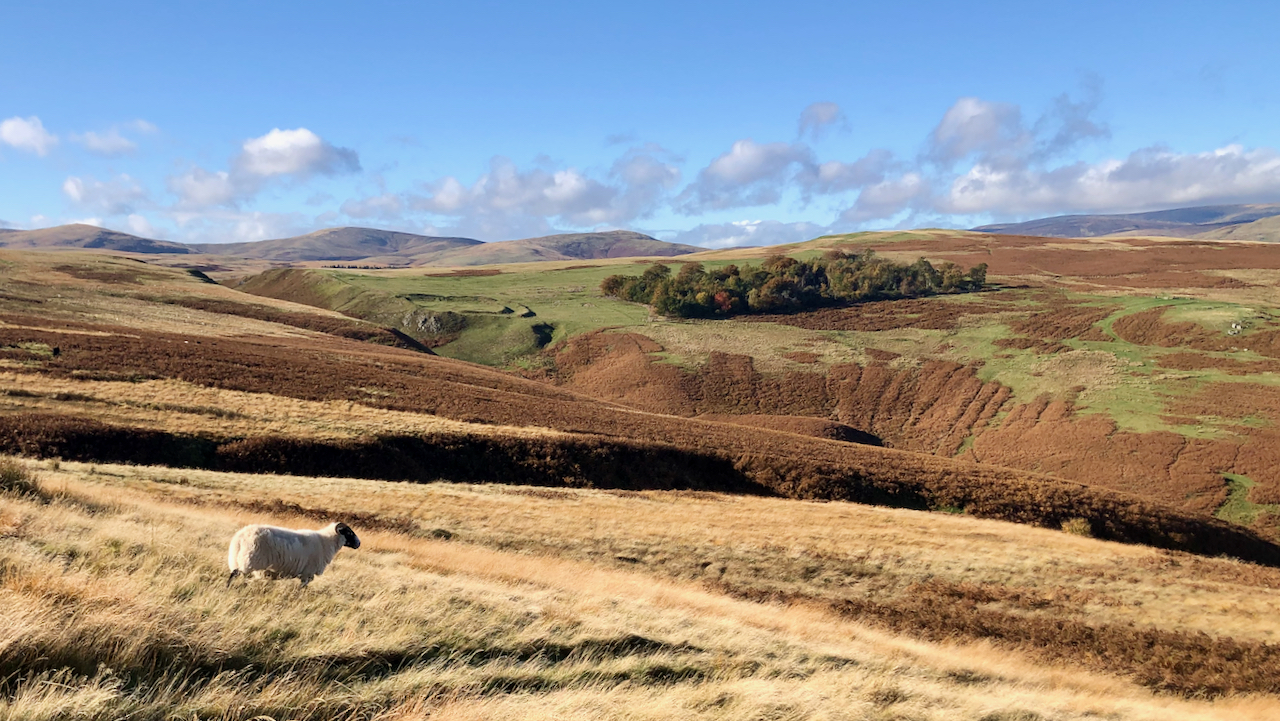
Viewed from across the precipitous Middledean Burn, the double earthbanks of the Iron Age fort known as Middledean Camp stands out against the smooth rounded hills of Breamish Valley in the Cheviots. Double earthworks such as this are termed ‘bivallate’. Promontary hillforts are those which are defended by steep slopes on 2 or 3 sides.…
-

Hutton Hall
This building has always intrigued me. Sited at the east end of the long tapering village green of Hutton Rudby, it was at one time seat of the Lord of the Manor of Hutton although it was split into two dwellings soon after 1947. While the whole building is Grade II listed, it is the…
-

A Highcliffe dog
A ‘brynic‘ is some sort of sign in the sky foretelling some event. The end of a rainbow for instance might be a warning of a coming shower, if not a bad spell of weather. This rainbow, with its crock of gold at Highcliffe Nab, is not a complete one. A mere stump or ‘stob‘…
-

The Retained EU Law (Revocation and Reform) Bill 2022
So a new PM is inflicted upon us. One part of this government’s growth agenda was the ditching of environmental protections. So far there has been no indication of any reversal of this agenda with the coronation of the new PM. On the day when fracking was being debated in Parliament ‘The Retained EU Law…
-

Old hedgerow, Airy Holme
A few scraggy hawthorn trees. A relic of an old hedgerow. The lower branches have been well browsed by sheep. A boundary is shown on the Ordnance Survey Six-Inch map of 1856. It is commonly believed that the age of a hedge can be estimated by counting the number of species in it. True, the longer…
Care to comment?