-

Is this how the lord of the manor avoided mixing with the common folk?
Pevsner described St. Andrew’s Church at Ingleby Greenhow as “Low, with a squat little bell-turret. The exterior seems unassumingly Georgian. It was in fact almost entirely rebuilt in 1741.” He goes on to identify various Norman architectual features, a window in the west wall of the bell-turret and some moulding around the priest’s doorway. So…
-

With the cloud hiding most signs of modernity — a notable exception being the well-worn paths — I can’t help thinking that this a timeless view
It is certainly a view the young James Cook would have recognised while he lived with his family at Aireyholme Farm. Cook of course would go on to achieve fame with his navigational exploits in the Pacific, beginning with his trip to Tahiti to observe of the Transit of Venus. He left England aboard the…
-

Saltwick Bay and Black Nab
When King Henry VIII ordered the dissolution of the monasteries, Whitby Abbey did not escape. Its fixtures and furnishings were all sold off with the funds going into the King’s coffers. The lead on the roof was stripped and used on the nearby St. Mary’s Church which until then had a thatched roof. The bells…
-

A day of strange atmospherics
On this day in 2005, at 0601 in the morning, a huge explosion rocked an oil depot in Buncefield near Hemel Hempstead in Hertfordshire. It was the largest in peacetime Europe and the noise is said to have been heard as far away as the Netherlands. I seem to remember people at work saying they…
-

Carr Ridge, Urra Moor
It is recorded that this standing stone is a “Post Medieval” waymarker. A stone has stood over 450 winters reassuring travellers across the bleak Urra Moor, the highest point of the North York Moors. The only sound that broke the muffling of the cloud was the frequent ‘go-back, back, back‘ call of the Red grouse…
-

There is nothing as exhilerating as being out in the snow
Well ok, it was only a smattering, a ‘greymin‘, barely enough to cover the rocks on this Bronze Age tumulus on Great Ayton Moor. ” ‘Twas frost and thro leet wid a o’ greymin snaw“. On my walk up Roseberry through Newton Wood, the feathery pruinescence of the dead bracken fonds meant I was not…
-

Bransdale
Only the ice covered road in the foreground is a give away for the temperature. A brisk day in Bransdale, blue skies and brilliant sunshine. In spite of snow falling overnight on the coastal North York Moors, not a flake had fallen on Blakey Ridge for the drive over. But with snow forecasted in the…
-
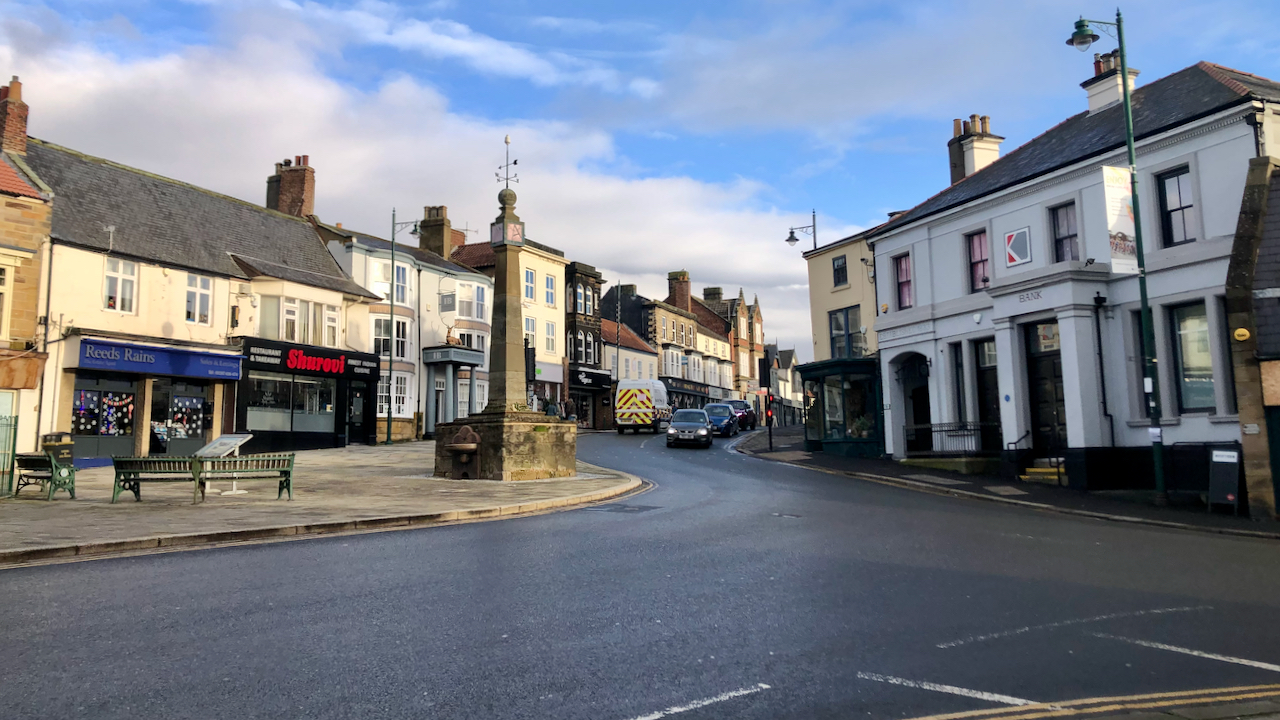
On me bike which meant I had to negotiate Guisborough’s busy town centre!
Surprisingly quiet. The town cross is relatively modern but the steps are worn, perhaps part of the Medieval Market cross although a 17th or 18th century engraving shows circular steps. Perhaps the engraving also shows the town’s bull-ring which was located very near the cross. Yes, bull-baiting was a very popular in this period and…
-
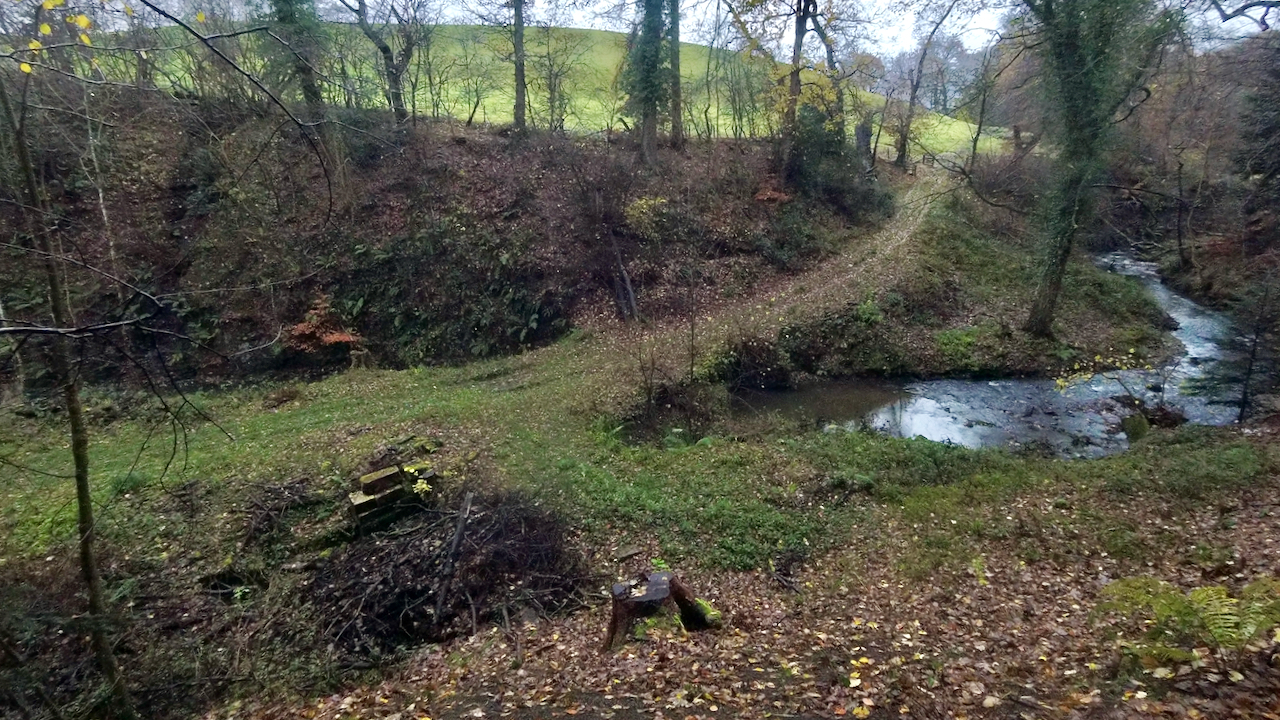
One of the opportunities of winter is the reduction in tree cover
The woodland floor becomes airy and light. New vistas are opened up. Climbing up the steep path from the River Leven through Bleach Mill Intake my interest was piqued by a stack of dressed stones in the defile below. Although I don’t think the stones are in their original position they are evidence of the…
-
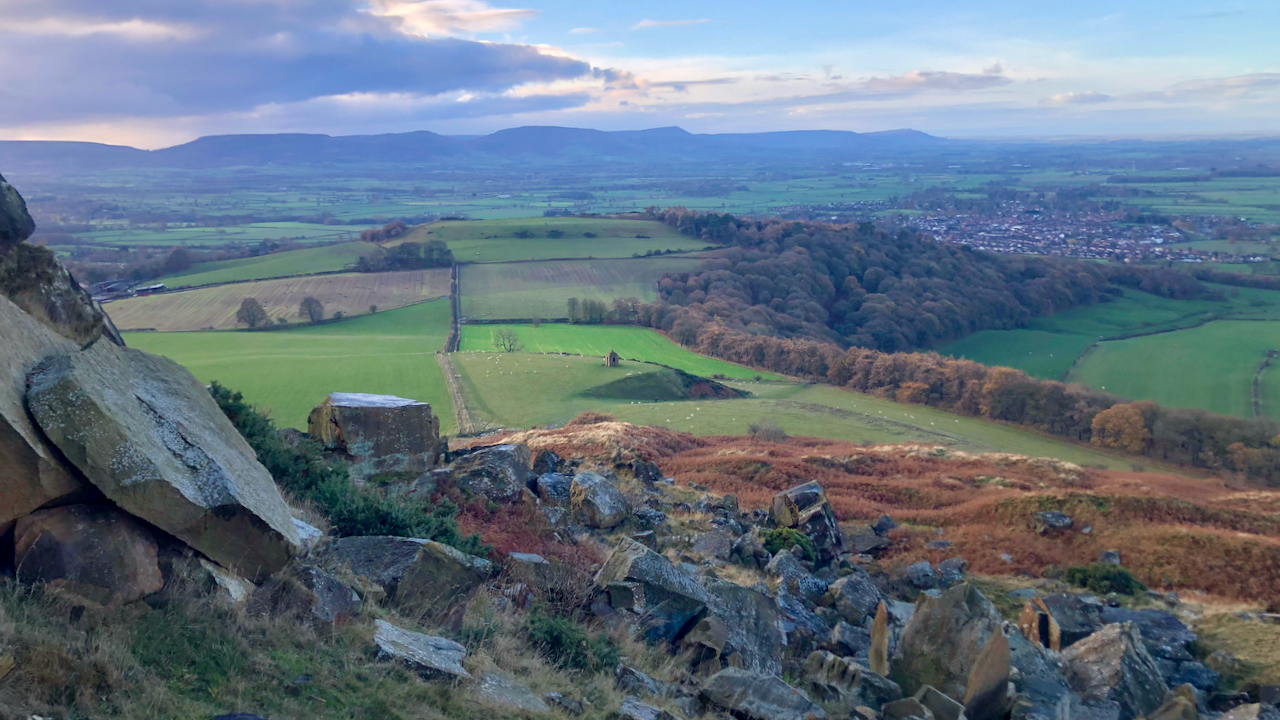
The talus of sandstone boulders at the foot of Roseberry Topping resulting from the landslip that occured in 1912
A scene of rocky confusion. ‘Talus’ is a strange word. It’s a word I actually find uncomfortable to use, long past its sell-by date. In this context it means the slope of rock debris but an alternative meaning is an anklebone. Each derives from different Latin words. Until 1830 talus was more often referred to…
Care to comment?