Category: Redcar
-
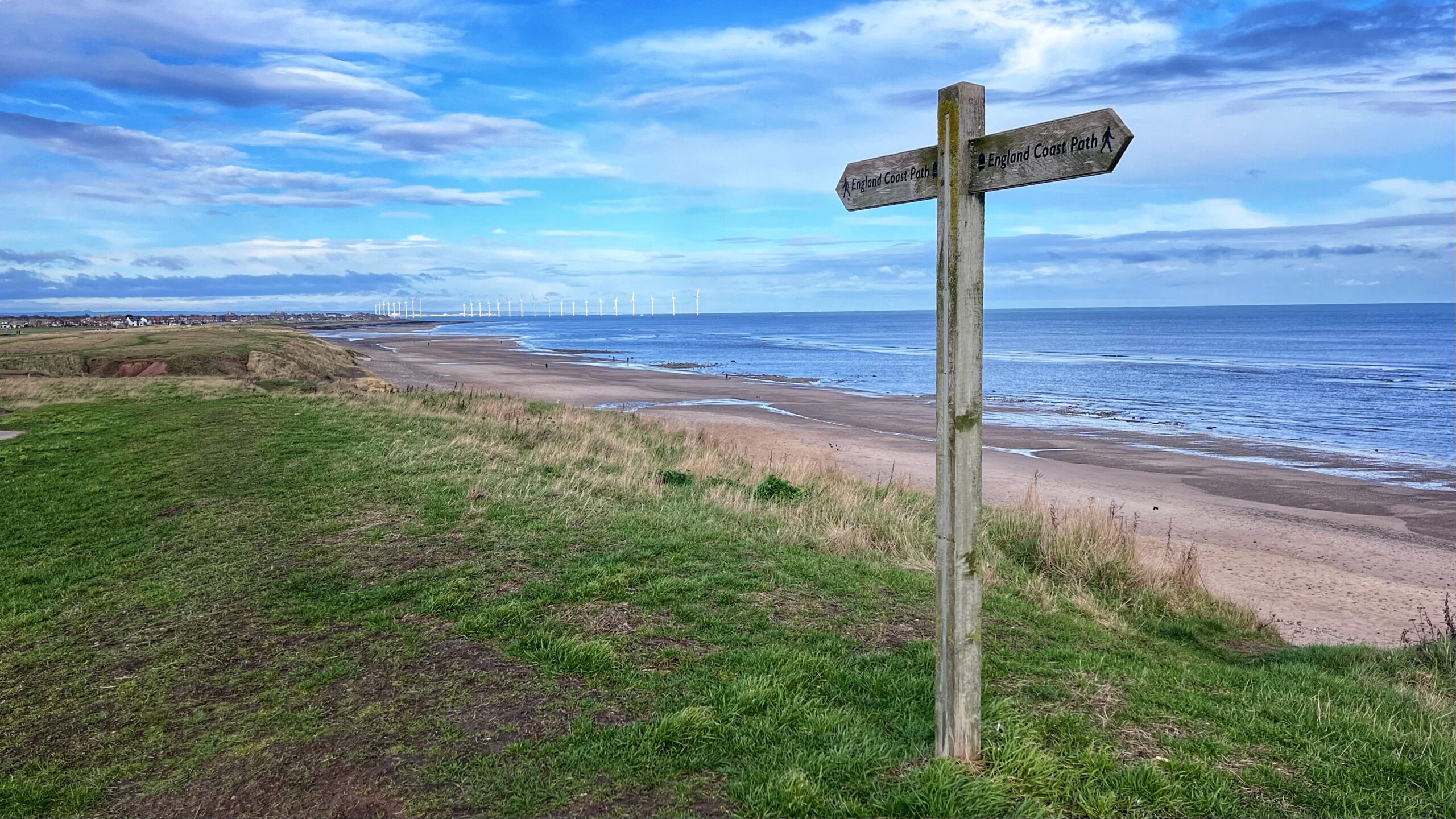
A Pithy Guide to the King Charles III Coast Path
At Marske Sands, a wooden fingerpost points towards Redcar and its turning turbines, as if pointing out the obvious. The King Charles III Coast Path belongs to a 2,700 mile plan to walk round the island, or near enough. It is the sort of stroll that rewards enthusiasm with blisters. You walk north until Scotland…
-
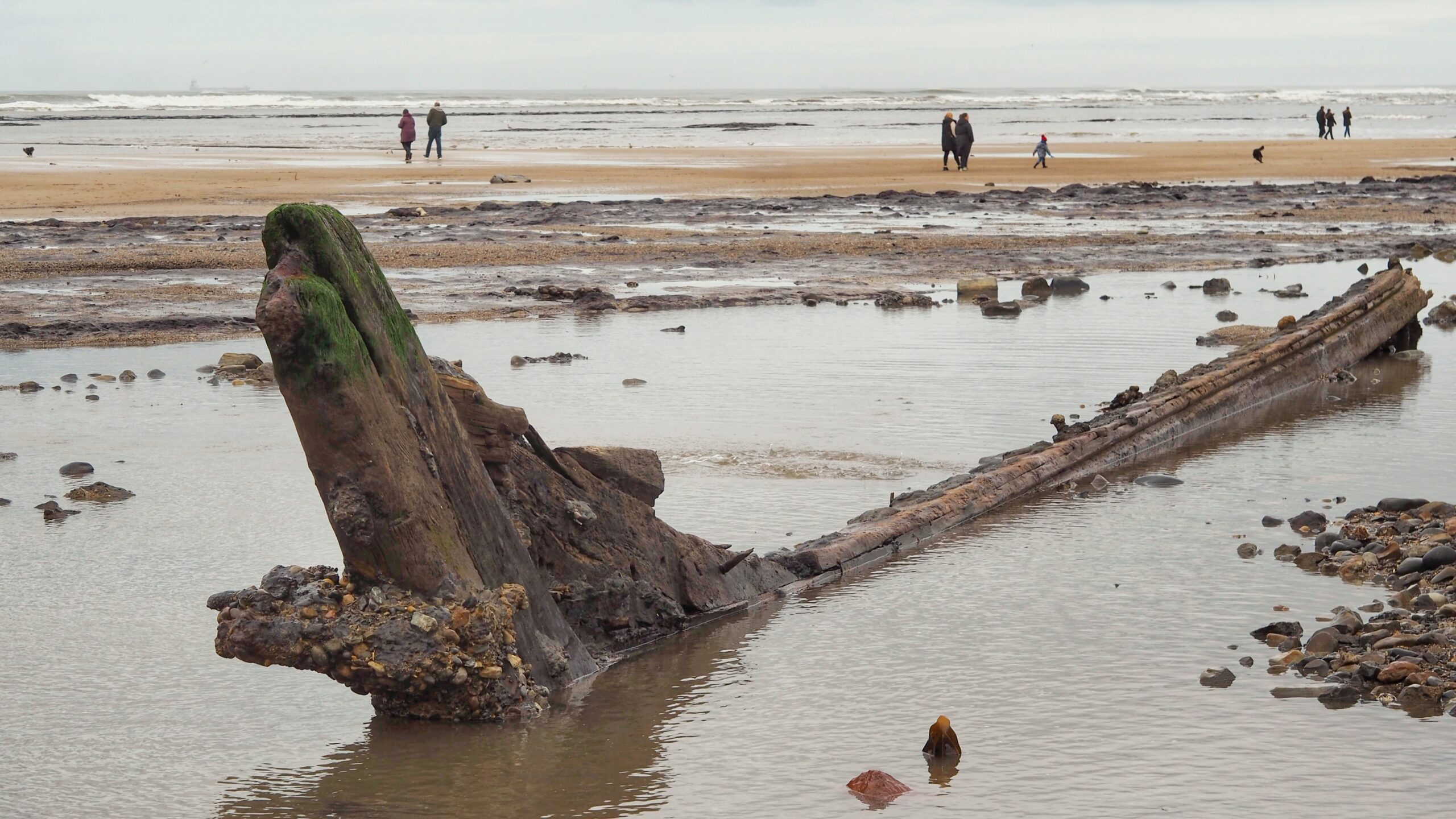
Redcar: Where Time Was Scoured Clean
When Storm Chandra recently lashed the North East coast, it behaved like a blind cosmic spade, scraping away millions of tons of sand to uncover a bleak, barnacle-furred graveyard. This was no run-of-the-mill blow. It delivered a rare, once-in-a-decade “unsanding” that laid bare the black, broken teeth of a 6,000-year-old petrified forest, alongside the skeletal…
-
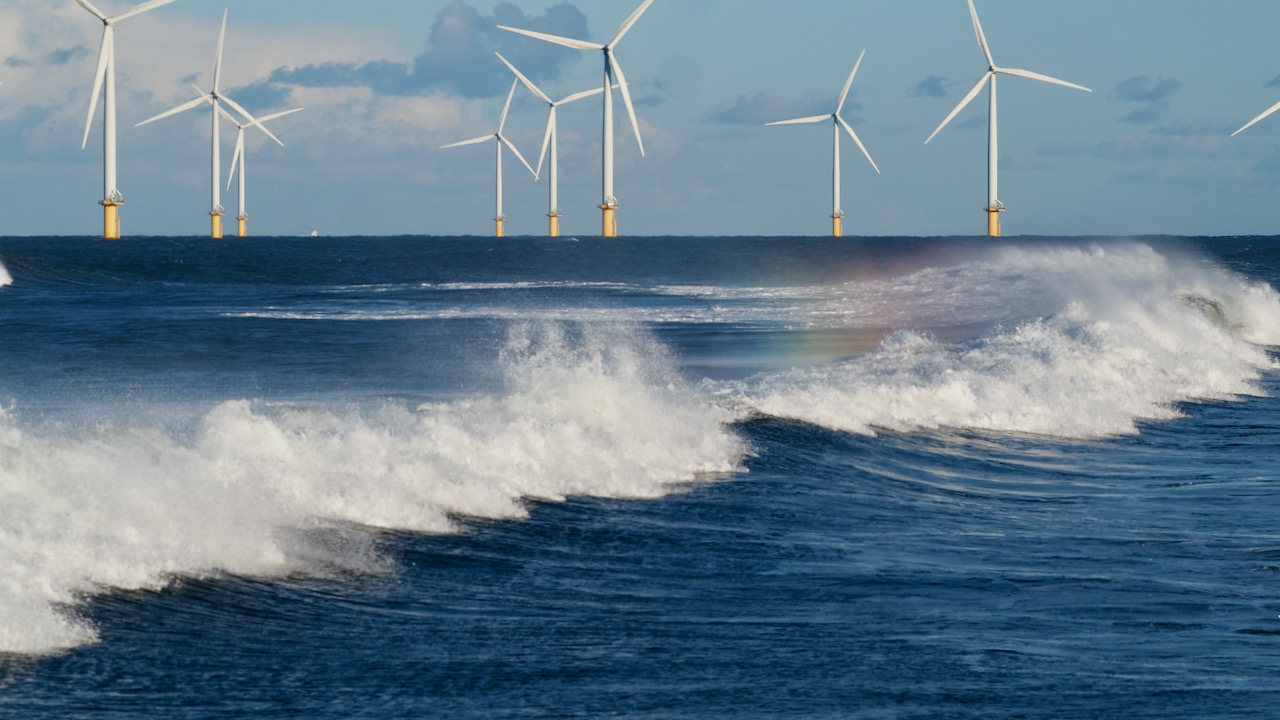
Coal Dust and Grief: The Senghenydd Colliery Disaster of 1913
An afternoon’s saunter on South Gare, where the Tees River meets the sea. A remarkably high tide, a strong westerly breeze, and a rainbow glistening on the roaring waves. Or should I perhaps refer to that as a ‘spray bow’? Cobwebs duly blown away, I thought about how I could relate Britain’s worst pit disaster,…
-

Tees Bay Pilots—A legacy of expertise and evolution
An early evening trip to the South Gare rewarded us with windswept skies and sunlit wind turbines. However, it was the western skies across the Tees bay that truly stole the show, presenting a more dramatic spectacle. A huge container ship had just passed by the Gare, en route to some distant port. Guiding this…
-

The Legacy of Marske Aerodrome: its role in WW1
Back in October 1973, I entered my first orienteering event, which happened to be in the bramble-infested maze of Errington Wood. Needless to say, I got hopelessly lost, but that experience marked the beginning of my lifelong love of the sport. Unfortunately, the course that day didn’t take us up to the high point of…
-

It’s good to see blue skies after the grey of the last few days
This is the sands at Redcar. A few years after the turn of the 19th-century Redcar, with the exception of Scarborough, was described as “the most extensively patronised seaside resort on the N.E. coast.” An old Redcar woman, Mrs. Diana Carter, had begun providing the first bathing machines at Redcar in about 1802. Six years…
-
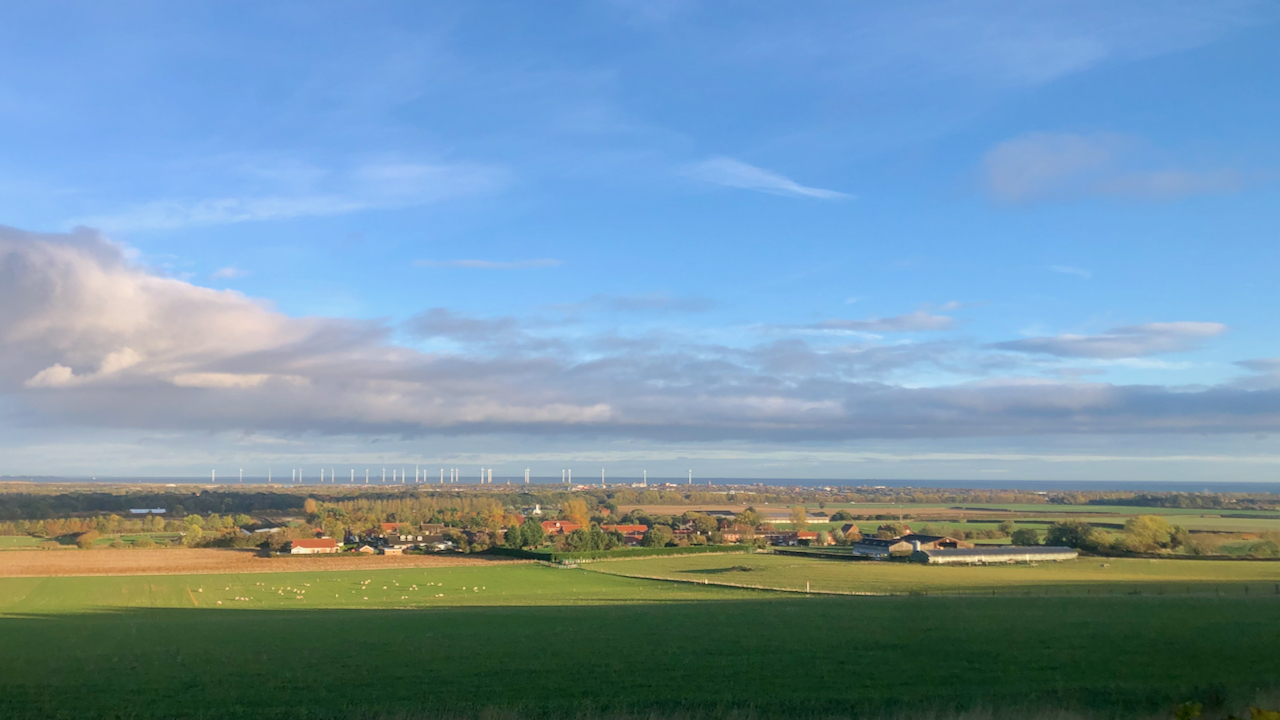
Yearby
An early, gloomy start from Yearby Bank back home via Eston Nab, a prominence which used to be a regular run but now I rarely go. After a few minutes, the sun broke over the hill revealing super lighting over the coastal plain. Yearby is that quiet hamlet at the foot of Yearby Bank, notorious,…
-
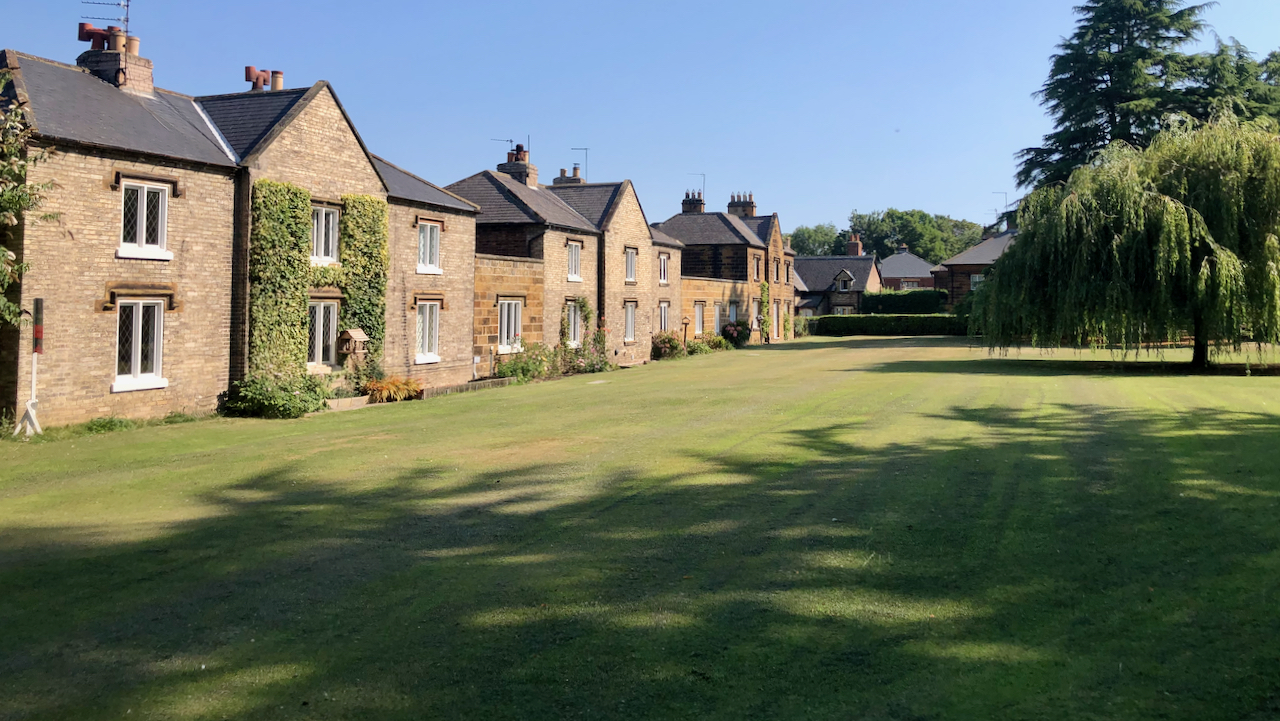
Wilton village
Perhaps the most least known village of Teesside. Its tweeness belies its proximity to the petrochemical industries of the Wilton International Site, or whatever it calls itself nowadays. Wilton offers plenty of photogenic opportunities. The ‘Castle’, rebuilt 1807 and now a golf club; the old school, built 1855, and the church, rebuilt 1907/8. I think…
-

Paddy’s Hole
A small man-made harbour on the river side of the South Gare Breakwater. Brightly painted boats bob in the breeze and ‘quaint’ boat-houses, once the home of salmon fishermen, align the shore. It is assumed the name, Paddy’s Hole, comes from the large number of Irish navvies that helped build the breakwater between 1863 and…
-

Redcar Blast Furnace
In many respects the most notable feature of any integrated iron and steel works, whether operational or non-operational, a blast furnace is an impressive example of industrial architecture at its best. Located at the northern end of the development, at the boundary between the North Industrial Zone and Coastal Community Zone Redcar Blast Furnace is…