Category: North York Moors
-

A Chance Encounter with the Great Crested Newt
Shakespeare’s witches in Macbeth famously required “Eye of newt, and toe of frog” for their cauldron. Debate lingers over whether this references the amphibian’s body part or a herbalist’s term for mustard seeds. In our garden pond, we have plenty of common newts, but today at the National Trust’s Bridestones property, I encountered my first…
-

The Battle Against Erosion—Conservation Efforts at Roseberry Topping
With the ever-increasing influx of visitors, Roseberry Topping will inevitably suffer unless concerted efforts are made for its preservation. Before the National Trust assumed responsibility for the area, maintenance was minimal, as the land had been classified as agricultural. Under the Trust’s stewardship, conditions markedly improved. Paths on the lesser slopes were temporarily diverted to…
-

Scugdale — Home of the Yorkshire Giant
The study of teeth proves invaluable to archaeologists. Teeth preserve well and frequently feature among unearthed human remains. Their examination unveils a trove of information, discerning not only the sex and age of the individual but also shedding light on diet, disease, and even geographic origins through isotope analysis. In Calgary, Canada, there exists a…
-

Hollins Ironstone Mine
An exploration of the east side of Rosedale—Northdale Rigg and Heygate Bank—yields splendid views across the dale, the hillside punctuated by two notable scars from the ironstone mining era. This is the site of Hollins Mine, where ironstone mining began in Rosedale in the modern period. The two drifts, known as Garbutt’s on the left…
-

From spoil to… What will this heap become?
I stumbled upon an intriguing new feature in the Cleveland Hills today. Gazing westward, Highcliff Nab stands prominent in the background. A vast expanse of Guisborough Forest had been clear-felled and replanted with conifer seedlings. Amidst this scene, someone had built a conical mound of earth, about three metres high with a flat top. But…
-
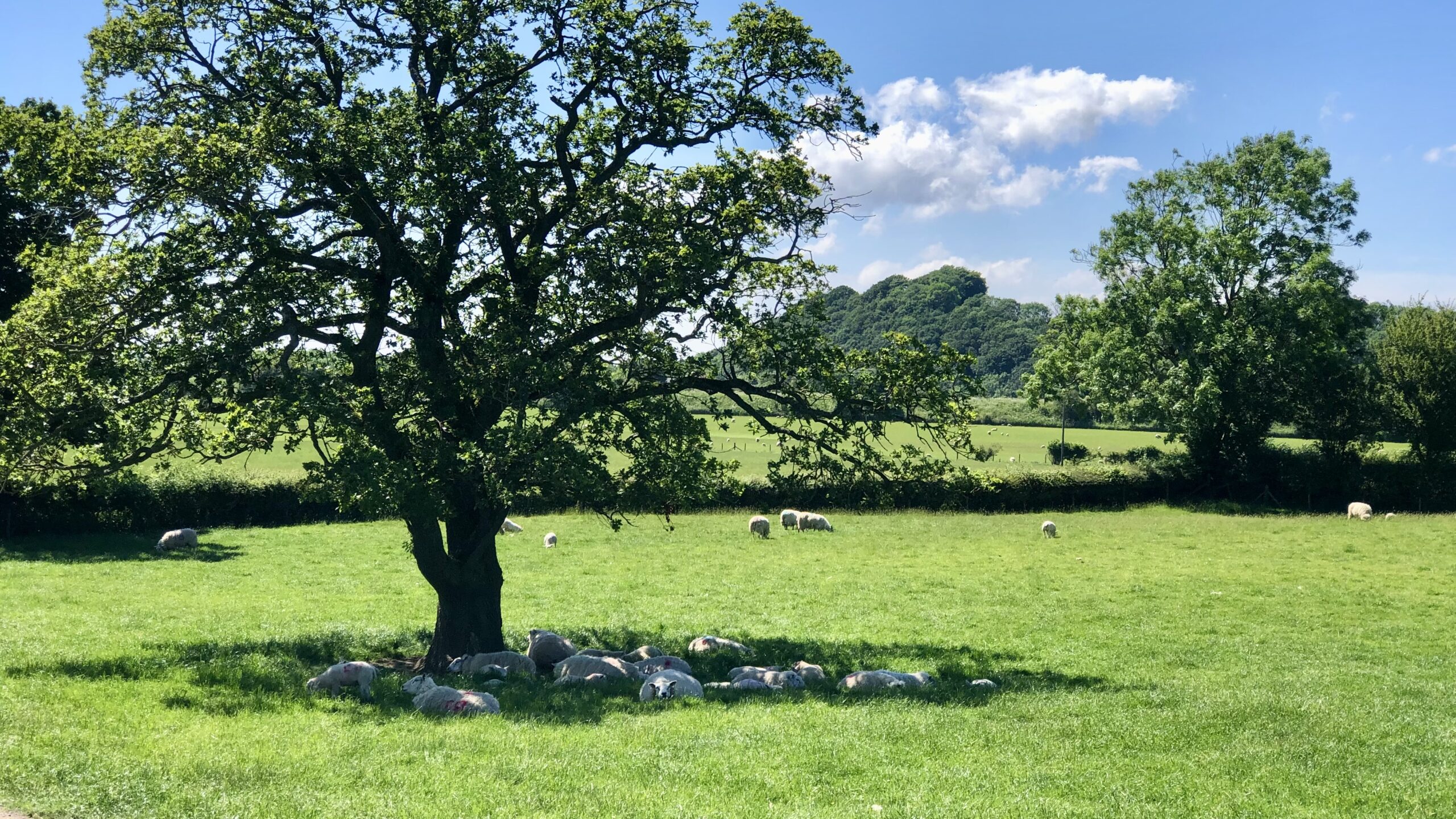
Woolgathering under the big oak
“Your brains are gone woolgathering,” once described a person deemed foolish or confused, as noted in the 1852 volume, ‘A Dictionary of Archaic and Provincial Words, Obsolete Phrases, Proverbs, and Ancient Customs, from the Fourteenth Century’. Woolgathering also denotes daydreaming, a state of drifting into idle thoughts and fancies. The term itself is colourful. One…
-

A Swathe of Purple: Bell Heather in Full Bloom
The North York Moors hold England’s largest stretch of upland heather moorland, renowned for their late summer display of heather. Come August, the moors will be briefly blanketed by the lilac hues of Ling, or Calluna vulgaris. Another heather, Erica cinerea or Bell heather, blooms in a richer purple from June to September, adorning the…
-

Making Hay While the Sun Shines
Aireyholme Farm has been hard at work hay making. The creation of dry hay is an elaborate process, involving a sequence of operations each requiring specialised machinery. These stages are: mowing, tedding, raking, and baling. The procedure begins with cutting the grass, which is then left in the field for several days, depending on the…
-

Kirby Bank: A Slice Through Time
You’re looking at a slice of history. The summit steps of Kirby Bank consist of hard sandstone, descending to softer shale below, both formations dating back to the Jurassic period. During the last Ice Age, the Tees glacier reached the top of the Bank, creating a ‘randkluft‘ as ice melted against the warmer rock. As…
-

The Pulse of Life in Bransdale
The North York Moors dales, after enduring months of rain and unseasonably cold temperatures, have erupted into a lush and vibrant green. The pastures, the crinkled oak leaves, and the dark crowns of the conifers in Barker Plantation all pulse with life. This intense greenness assails my senses: I hear it in the blackbird’s song,…