Category: North York Moors
-
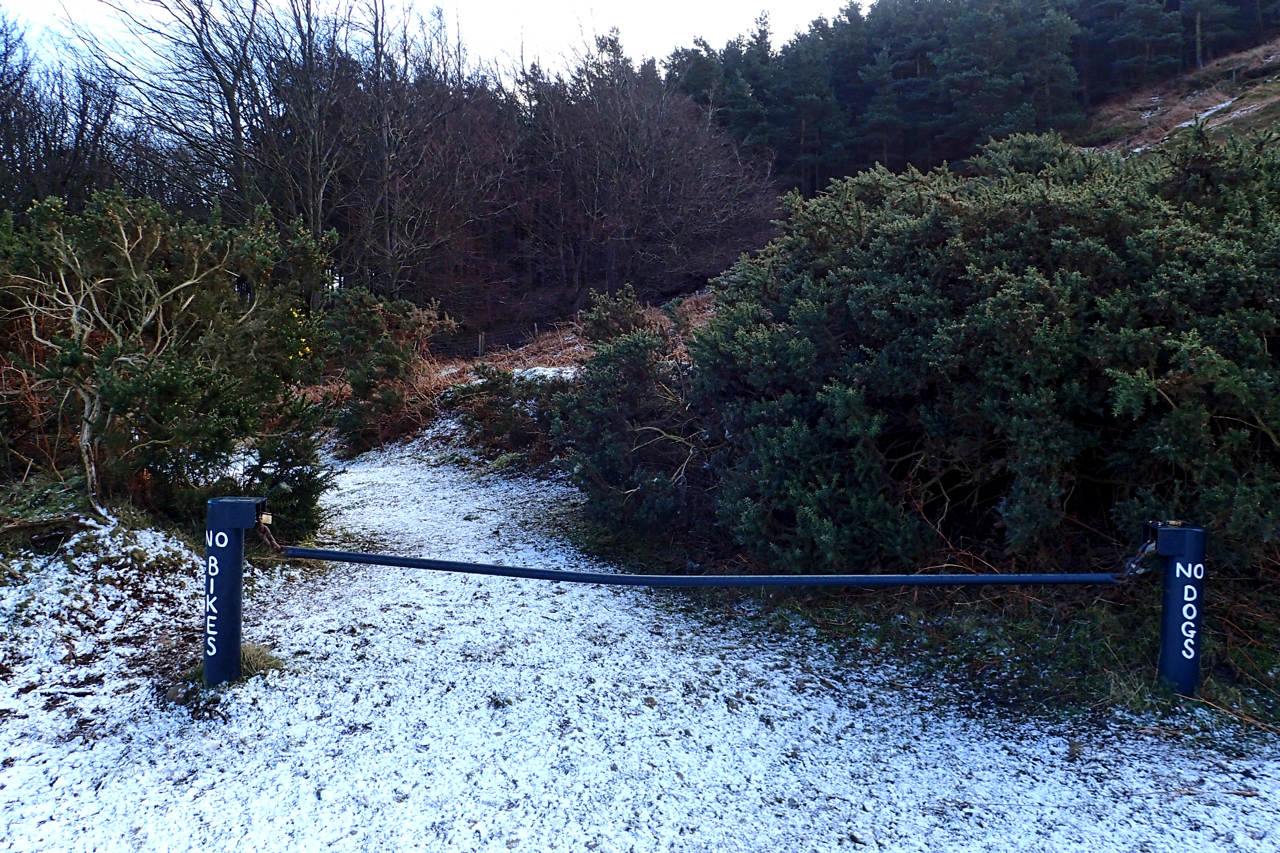
Public Bridleway through Coalmire Wood
This annoys me. Intimidating signs erected across a Public Right of Way, clearly shown as such on the O.S. maps and on the North York Moors National Park’s own mapping portal. I took the photo above at point A, and the one below, of a padlocked gate, at point B. Both maps indicate a Public Bridleway…
-
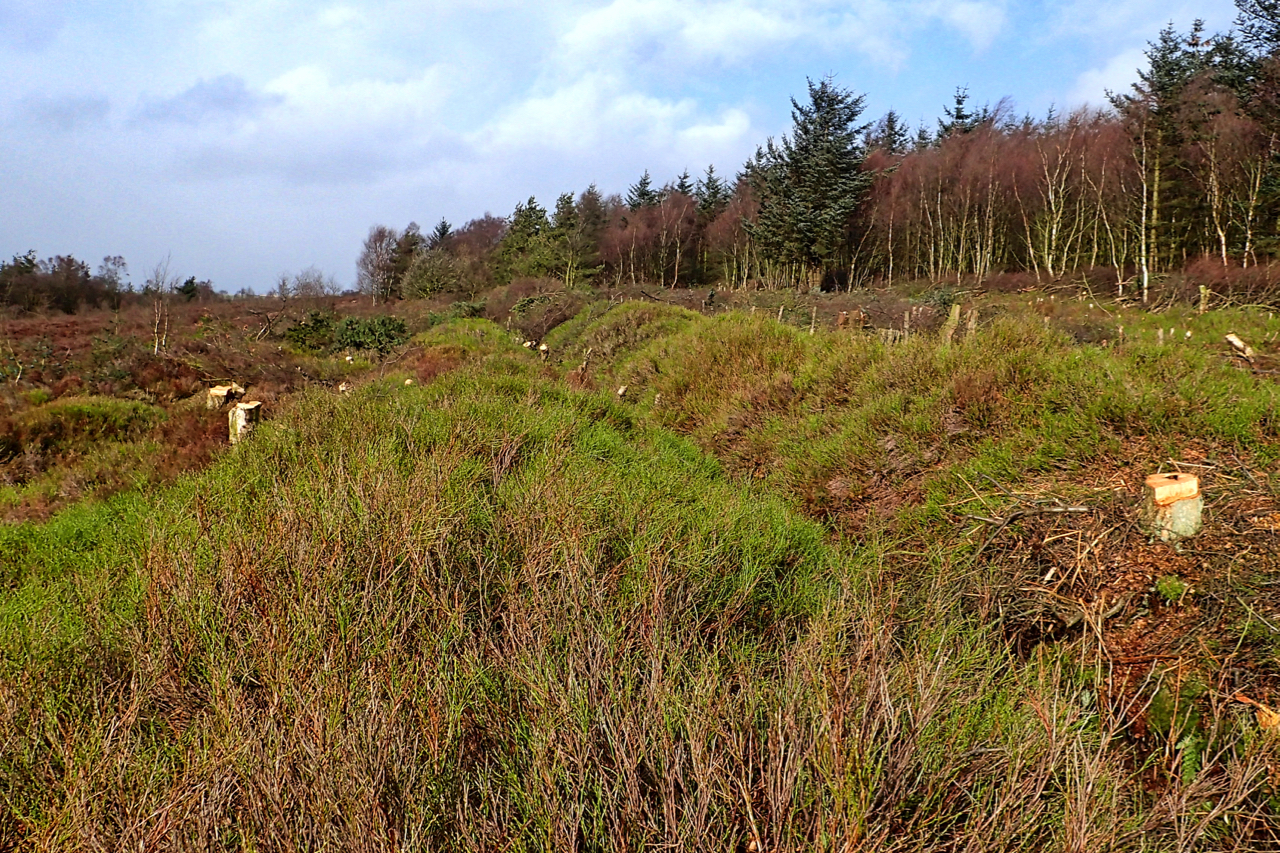
Prehistoric linear boundary at the Bridestones
The National Trust’s second winter season of tree and scrub clearance of the prehistoric linear boundary at Bridestones is almost over. Tree felling stops in the spring and summer to avoid disturbance of nesting birds. Just remaining for this winter is to stack the brashings and logs to create wildlife refuges. The Bronze Age earthwork…
-
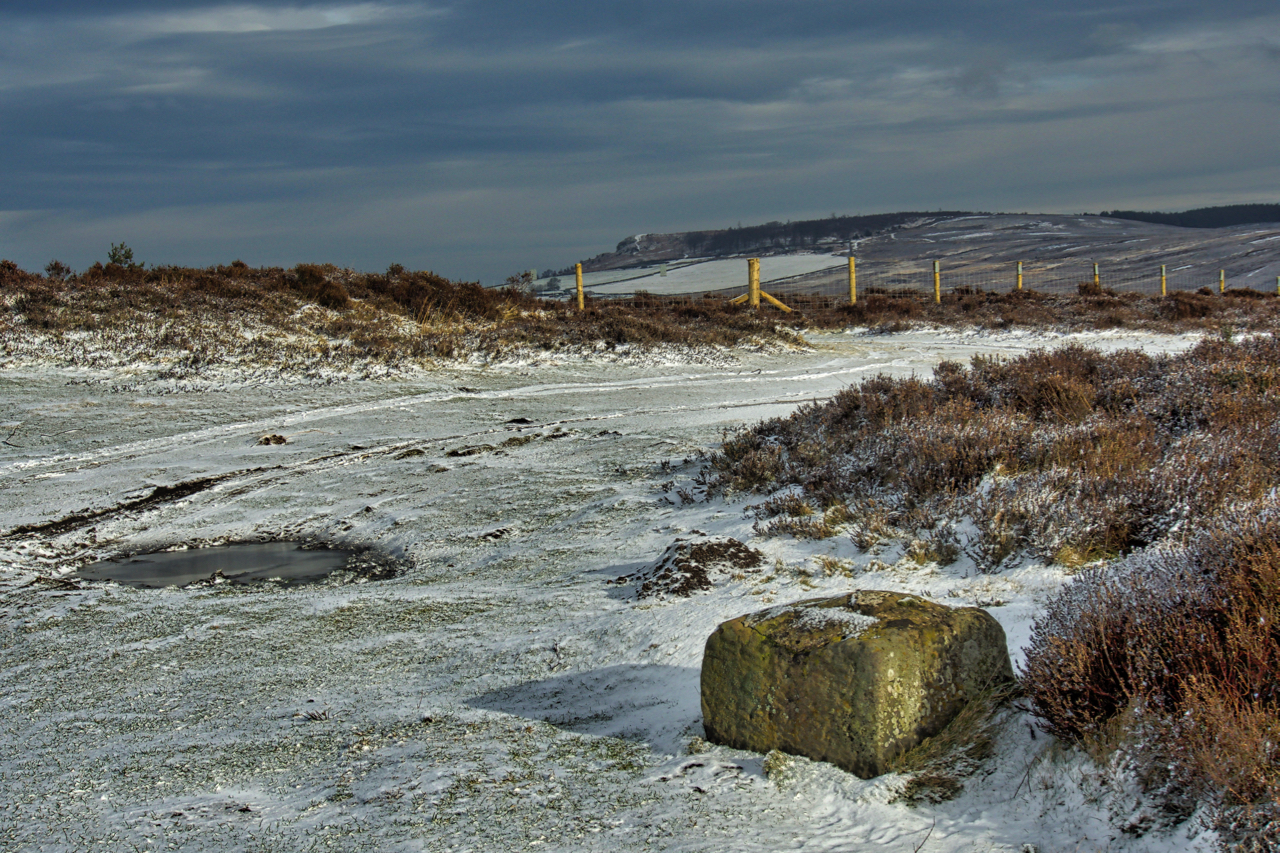
Percy Cross
I’ve had my eye on this medieval wayside cross for some time but its position at the edge of a road verge is not very photogenic. Last night’s snowfall, however, has had the double effect of transforming the scene and highlighting the base of the cross known as Percy Cross. Although the shaft is missing…
-
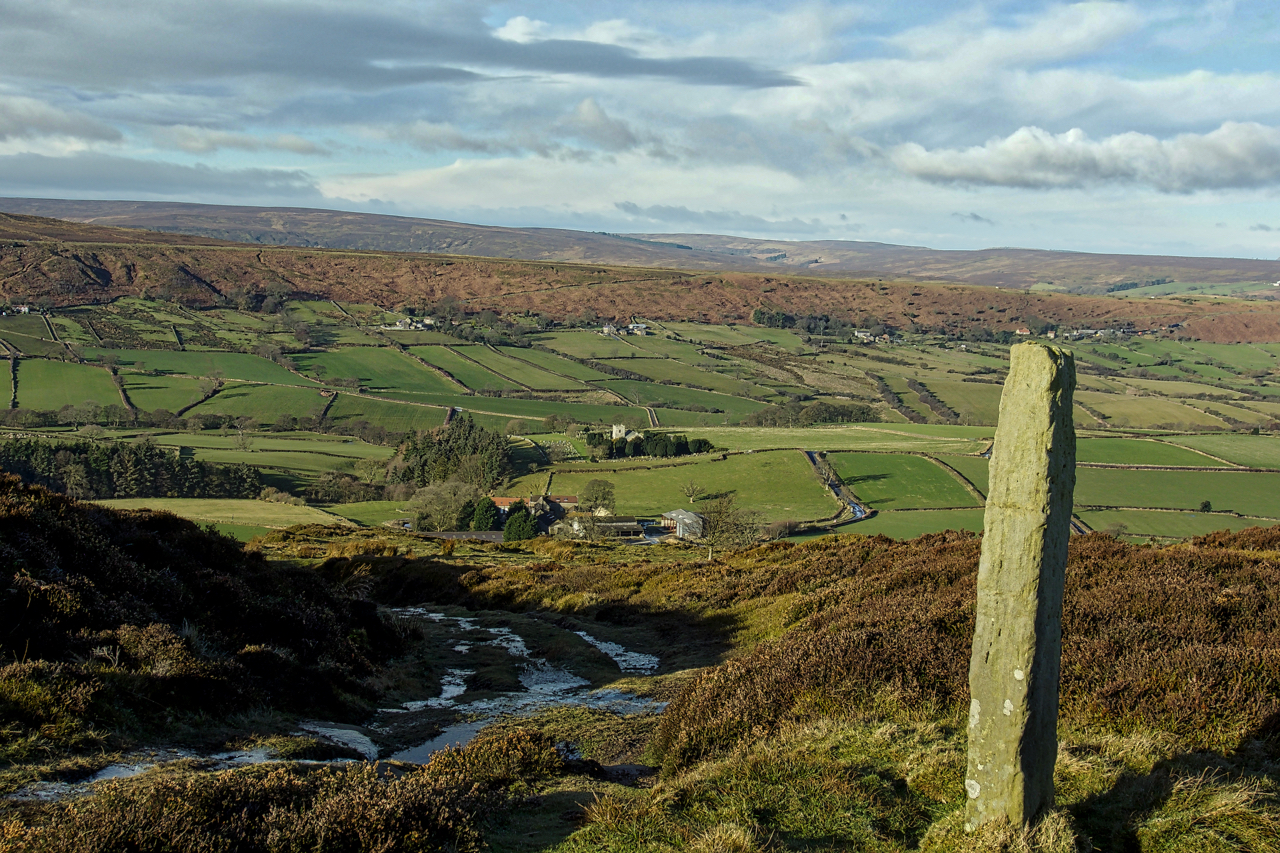
Church Way, Ainthorpe Rigg
I often find I visit a stretch of moor that I haven’t been to for years then, a short time later, I’m back on that very same moor. So it was today, I found myself back on Ainthorpe Rigg, and on the Old Hell Road, the old corpse road. This would have been the final…
-

Red sky in the morning, sailors’ warning.
“Red sky at night, shepherds’ delight. Red sky in the morning, sailors’ warning.” So goes one version of the old saying based on generations of observations of farmers and seafarers. A saying that was first documented in the Bible although probably in use long before that. In Matthew (ch. 16 v. 2), When it is…
-

Halfway up the Incline
The halfway gate, good fresh snow and blue skies. Magic. The mile-long incline, maximum gradient 1 in 4½, came into operation in 1861 to transport ore from the Rosedale Ironstone Mines. At the peak of ironstone production 1000-1500 tons was hauled down daily, operations continuing throughout the night. The incline was self acting, that is,…
-

The Bones of Winter
Such a wonderful phrase for which I can not claim credit nor provide a quotation, it’s just one of those phrases which I’ve read and has stuck in my mind. And it certainly felt as though winter had been defleshed today on Eweing Knoll, Dromonby Bank. I’m on the jet miners track which contours Cringle…
-

The Grey Squirrel
A cute little furry thing but scorned by wildlife managers and conservationists. Native to North America the grey squirrel was introduced into Britain by Victorian landowners to enhance their gardens and estates and is now common and widespread. It is considered an invasive non-native species, causes damage to our woodland and wildlife and has pushed…
-
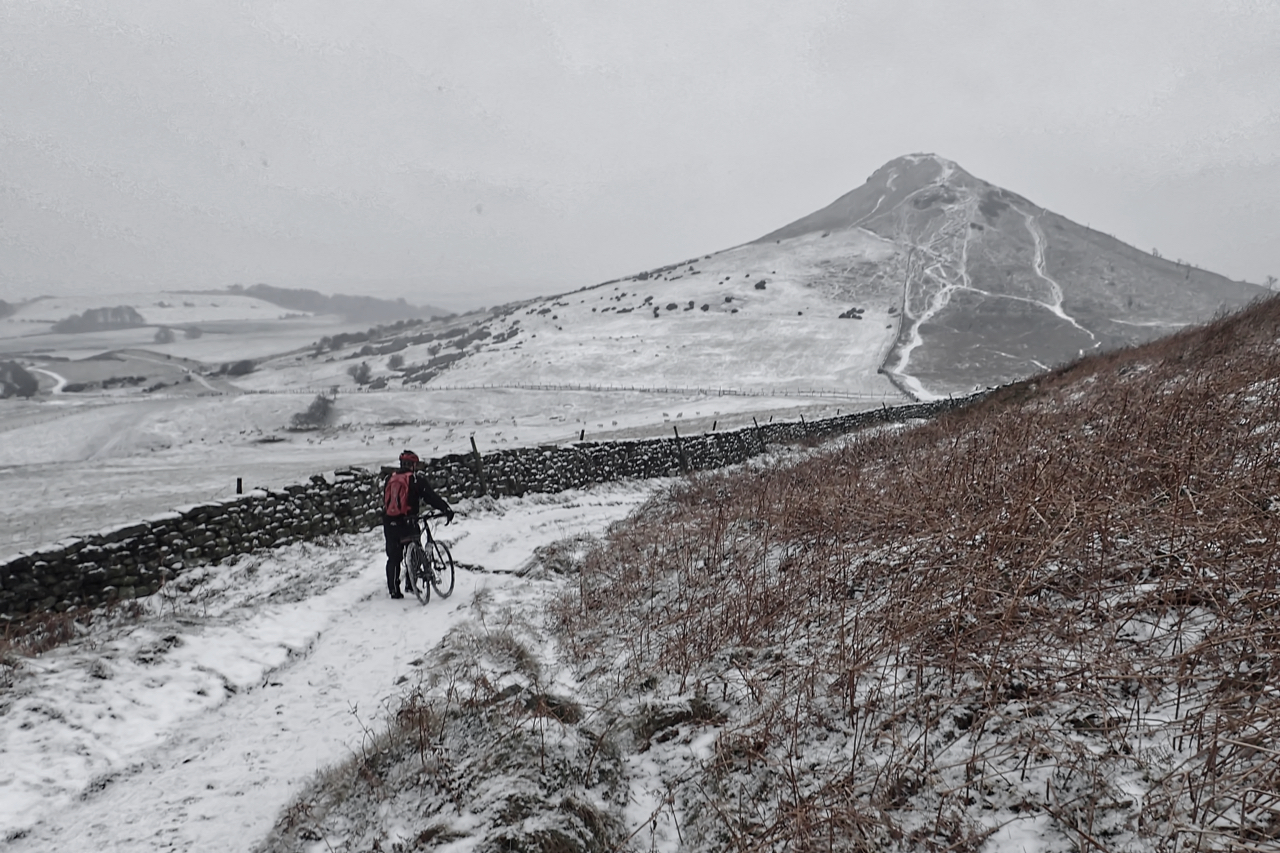
Britain’s 23rd Favourite Walk
A disappointing snowfall. Threatening but just a flindrikin. Roseberry Topping wasn’t so much wearing a cap but a grey veil. Didn’t see a soul except for this lone cyclist pushing his bike down the hill. Why? And a gravel bike at that. Roseberry, recently placed 23rd in a ITV list of Britain’s favourite walks. Part…
-

Trennet Bank Plantation
Climbing from William Beck Farm. Across Bilsdale the overnight snowfall picks the remains of the Trennet Bank Plantation, an unsightly conifer woodland that was felled by the National Park Authority in 2015/6 under their Trennet Bank Project. The plantation of Sitka spruce and Lodgepole pine dates from the 1970s. It was planted close to the…