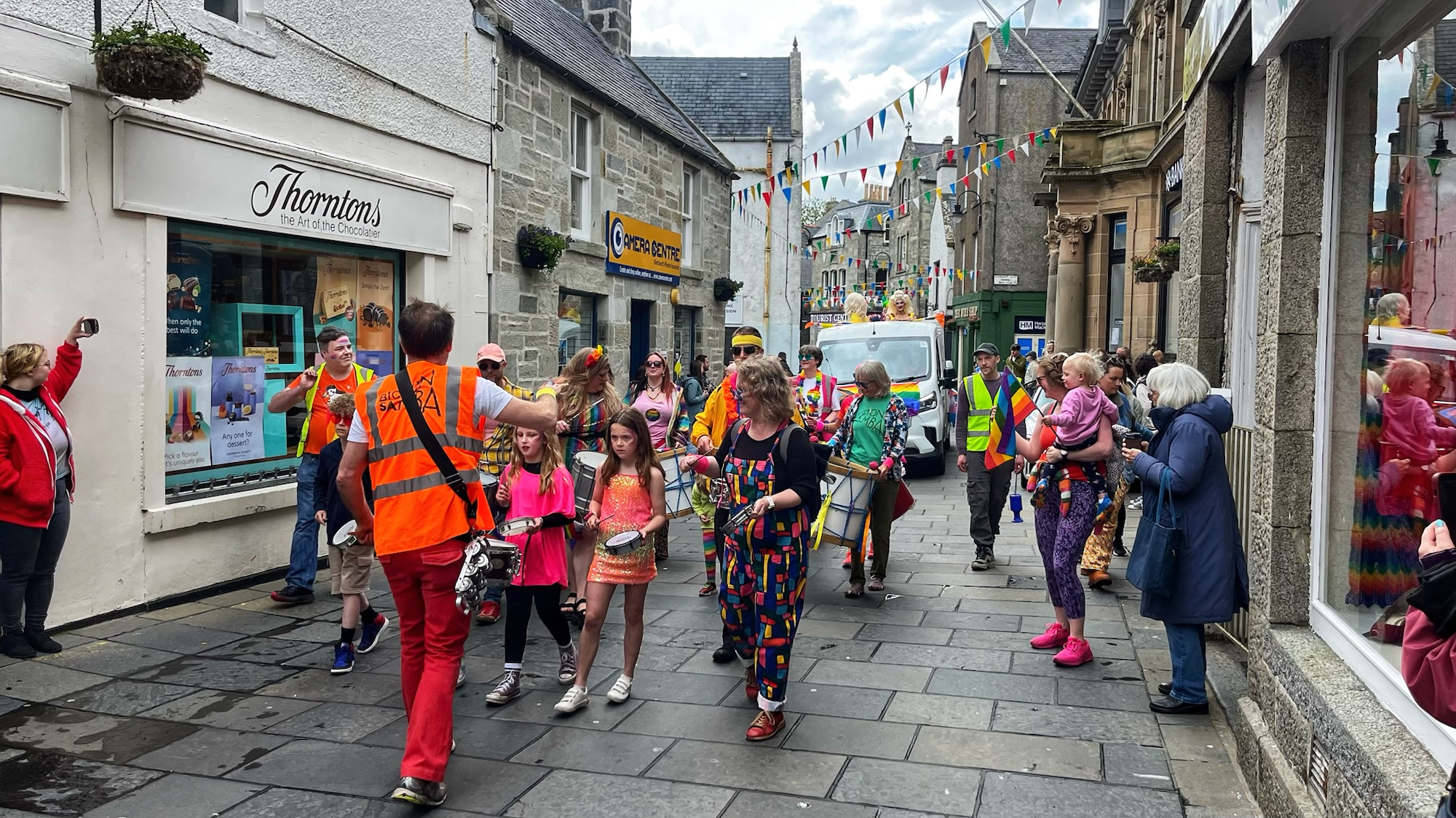
Killing time before the Aberdeen ferry, we turned a corner in Lerwick and walked straight into their Pride March. Shetland, June 2026. Granite streets, rainbow bunting, children playing snare drums under a rain-filled sky. A reminder that this all started somewhere very different.
The first Pride was not a parade. It was a brawl.
On 28 June 1969, New York police raided the Stonewall Inn — a Mafia-run bar in Greenwich Village. They expected compliance. They got bottles, coins, and a parking meter used as a battering ram. The riots lasted six days.
A year later, people marched in New York, Los Angeles, San Francisco, and Chicago to mark the anniversary. Nobody called it Pride yet. They called it liberation.
London followed in 1972. Then AIDS arrived and the marches carried coffins as well as banners. Corporate sponsors arrived in the 1990s. The politics quietly thinned.
Today Pride exists in over 100 countries. In some, attendance requires courage most of us will never need. In others, the council provides the marshals.
Lerwick would soon provide the rain.