Tag: medieval
-
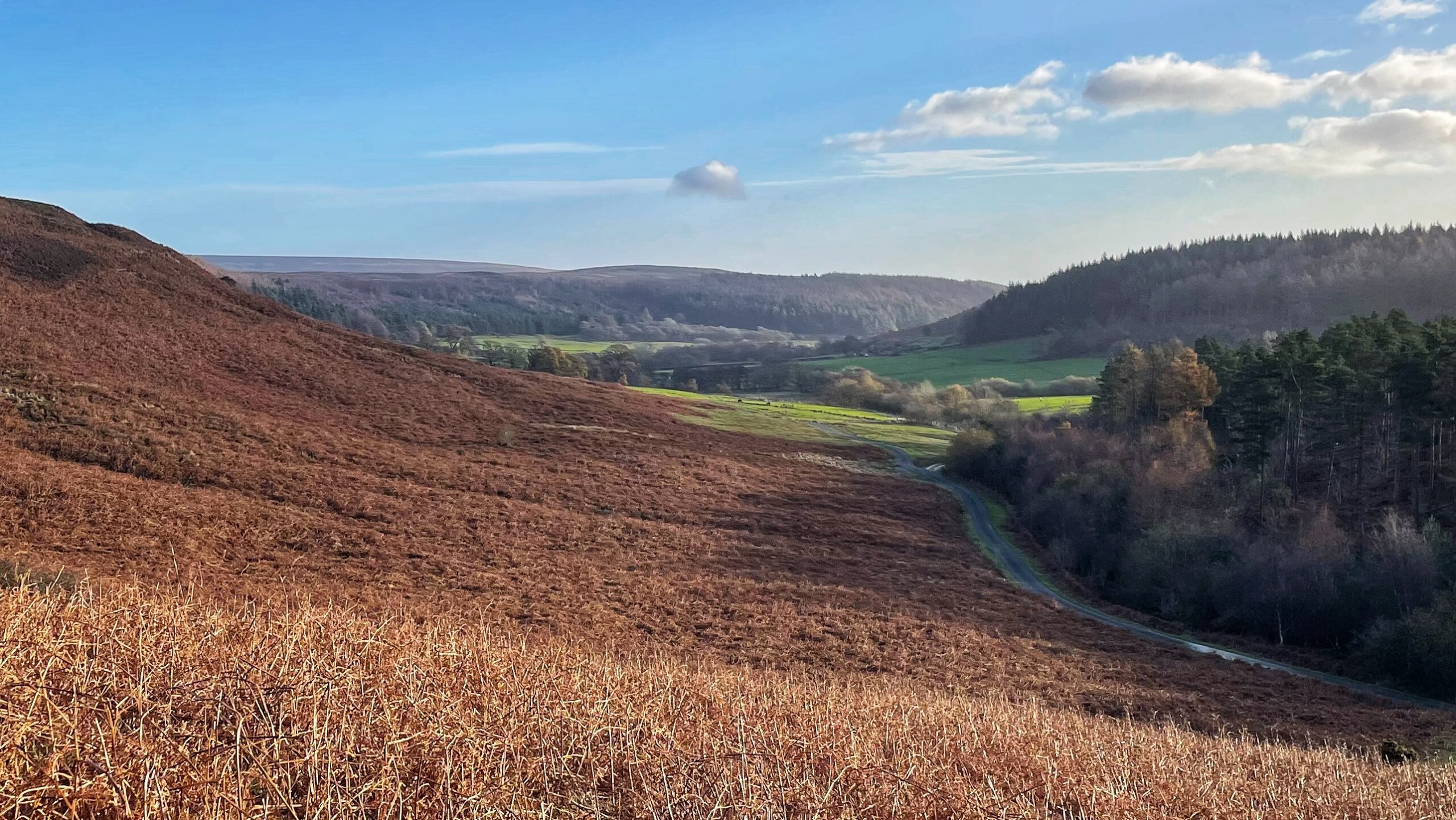
Winter Colour beyond Gribdale Gate
A photograph dominated by bracken in its dry, reddish-brown winter state. From Gribdale Gate, the narrow road winds down beside the beck which marks the parish boundary between Great Ayton and Kildale. In the shadowed south side of the dale, the conifers of Coate Moor plantation rule. This abundance of bracken across the northern slope…
-

The Tofts and the Wandels: Echoes of the Deserted Medieval Village of Danby
One of the most striking features of Danby Dale is its parish church, standing rather alone about three kilometres from the present village. Castleton and Ainthorpe sit a little closer, yet the church remains a solitary figure in the landscape. In the photograph, it can be seen just to the right of centre, north of…
-
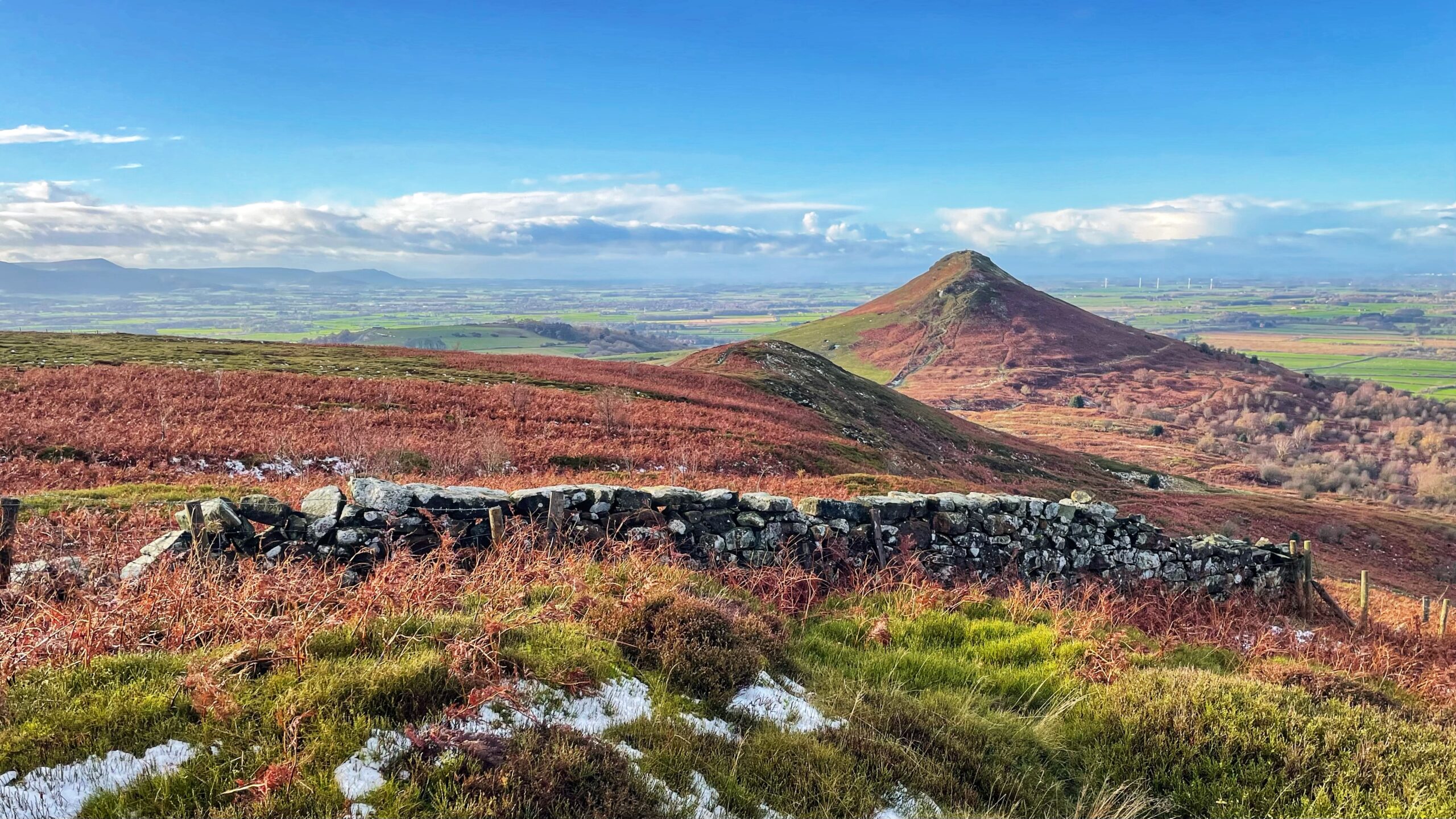
Little Roseberry and an Echo of Old Norse
From this viewpoint on Ryston Bank the knoll of Little Roseberry takes on a presence rather more commanding than its shy appearance on the O.S. Map, where it is denied even a ring contour. If the name Roseberry grew out of “Othenesberg”, the Old Norse for Odin’s Hill, it seems a touch peculiar that its…
-

The Priory Gatehouse: Overshadowed but Not Forgotten
I had reason to visit Guisborough today and took the chance to walk around the old priory. I have posted before of its great east wall—impressive as it is, it remains only a fragment of what must once have been a formidable complex. The priory met its end in 1540 with the Dissolution. Ten years…
-

A Hidden Hollow-Way on Coleson Bank
This morning’s constitutional threw up a surprise. I have used the so-called ‘Green Lane’ on Coleson Bank before, climbing out of Battersby, and even posted about it. You can just make out a glimpse of it in the photo. But I do not go that way often. The narrow gulley attracts off-road motorbikes, which makes…
-

Ardtornish Castle
After a smooth and unexpectedly quiet crossing of The Minch, with only dolphins or porpoises for company, the Sound of Mull offered a surprise: Ardtornish Castle. Once a key stronghold of the Lords of the Isles—descendants of Somerled and rulers of the Western Seaboard until the late 1400s—this ruined 13th-century fortress stands at the tip…
-

Taigh a’ Bheannaich
A ruined chapel, vanishing huts, and a handful of monks who chose isolation on the edge of the Atlantic. Taigh a’ Bheannaich is where faith met the wind and held fast for 1,400 years.
-

A Day Among Norse Horizontal Mills
A day of water-mills—horizontal ones, no less. We visited eight, or so I believe; one quickly loses count. It took me some time to grasp how they worked. The water wheel sits flat in a channel, its blades catching the water and spinning the millstone directly above. No gears, just force and gravity. The mills…
-

The Pannierman Way
A pair of ancient standing stones flank a stretch of weather-worn path known as the Kirby Bank Trod. This marvel of medieval civil engineering forms part of a so-called “Long Trod” — a term employed because it would have required “considerable resource and supra-parochial organisation” to build such an “economic venture of some significance.” The…
-

Wheeldale Lodge: From Shooting to Youth Hostel to Private Residence
My memories of Wheeldale Lodge are, regrettably, a jumble. One of the earliest involves the unremarkable joy of dunking sore feet in Wheeldale Beck after a needlessly long march across the Lyke Wake Walk. This was in 1969, and my 17-year-old self had been trudging for twelve and a half hours. The route comes down…