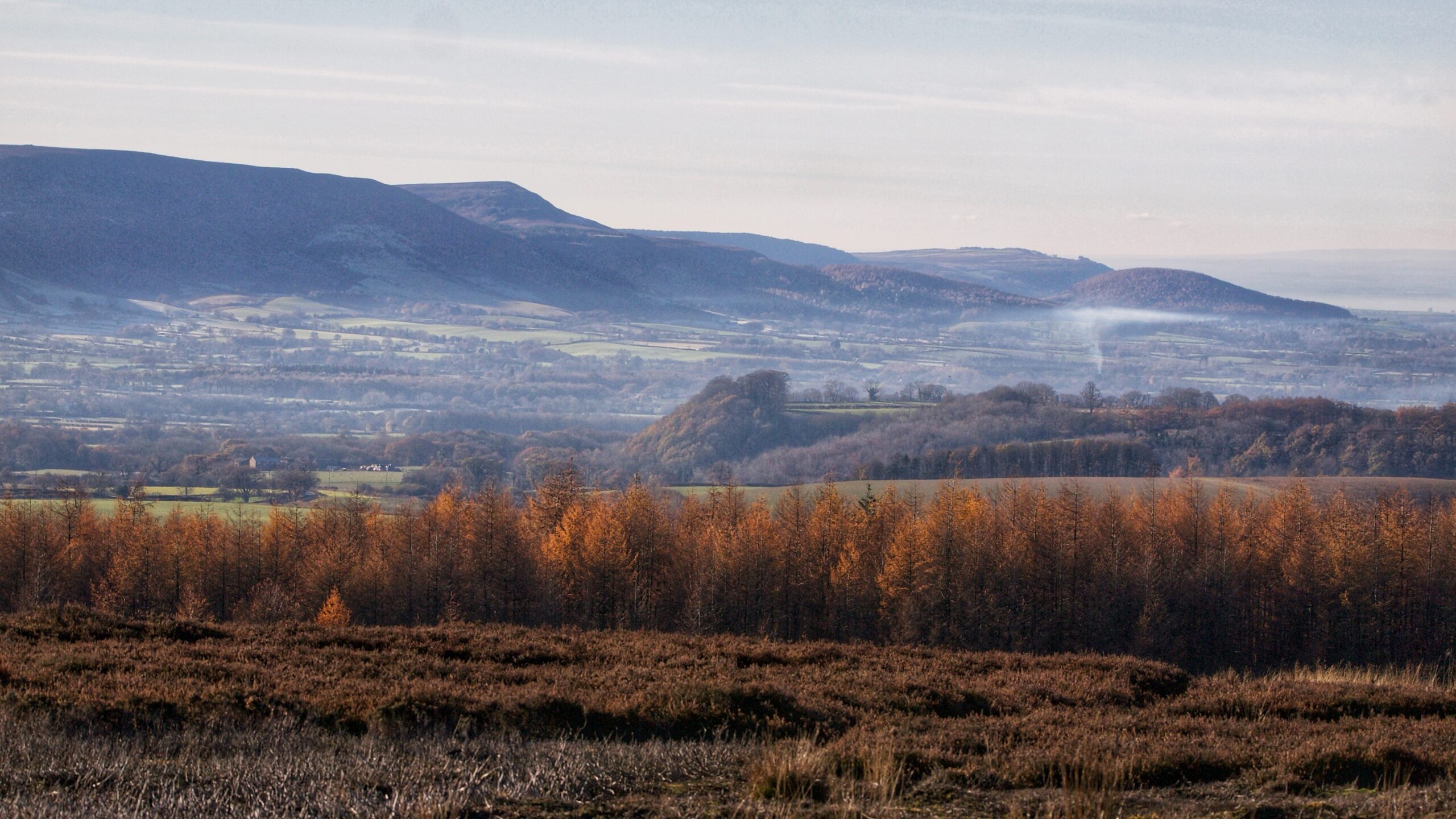
A crisp autumn morning beneath a cloudless sky, though the Cleveland Hills appear faint and hazy, with Whorl Hill standing apart on the right.
Someone has lit a bonfire. Its smoke offers a clue to the haze. A temperature inversion has trapped cooler air beneath a layer of warmer air, preventing the smoke from rising and dispersing. Instead, it spreads parallel to the ground, leaving the air with a faint, musty smell of woodsmoke.
Inversions have other, less obvious effects. Light and radio waves can bounce between the ground and the warmer layer above, while sound travels further and carries more loudly. Airports, roads and railway lines that are normally inaudible may suddenly make their presence felt. With very loud noises, the effects can be more dramatic still.
The inversion also bends light in unusual ways, producing optical illusions. Under normal atmospheric conditions, distant objects appear compressed vertically, which explains the squashed appearance of the setting sun. An inversion can reverse this effect, stretching objects vertically and creating mirages. One particularly striking example is the Fata Morgana, named after the Italian enchantress Morgan le Fay, in which distant objects appear to float above the horizon. Boats and bridges can seem to hover in mid-air.
Temperature inversions are fascinating, but they can also trap pollutants close to the ground. Fortunately, they rarely last long.
Leave a Reply