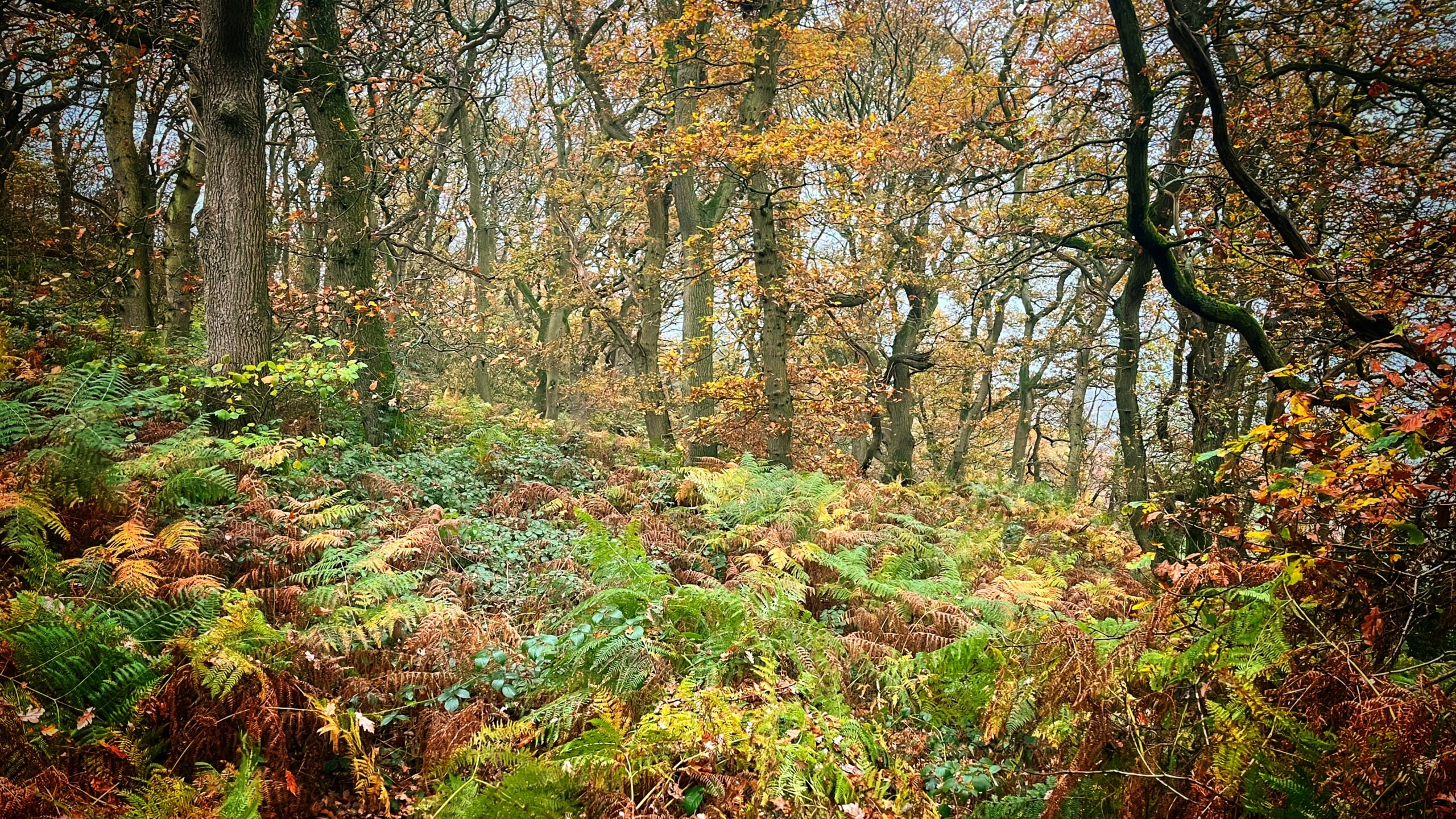
A full-on drizzle with an overcast sky does little to diminish autumn’s display in Newton Wood. Beneath the canopy of predominantly sessile oaks, the woodland floor is ablaze with copper, russet and gold. Bracken, ivy and fallen leaves combine to create a rich tapestry of seasonal colour.
Yet there is considerably more to these ancient trees than their autumn appearance.
The oak is a keystone species, providing the structure and stability upon which much of the woodland’s biodiversity depends. An estimated 2,000 species find a home in oak trees, from moths and butterflies to nesting birds, mammals, lichens and fungi.
Perhaps the most remarkable relationship is the one between oaks and the animals that feed on their acorns. Jays and squirrels bury them for later consumption, but inevitably forget some. Those overlooked acorns become tomorrow’s oak trees. The greys are at least doing some good.
Even death has its purpose. Fallen and decaying timber provides a habitat for fungi and specialist beetles, while autumn leaves return nutrients to the soil.
An oak can live for 300 to 800 years. Its contribution to the woodland extends far beyond its lifetime.
There is something rather reassuring about that.
Source material: Woodland Oaks, Woodlands.co.uk. https://www.woodlands.co.uk/blog/flora-and-fauna/woodland-oaks/
Leave a Reply