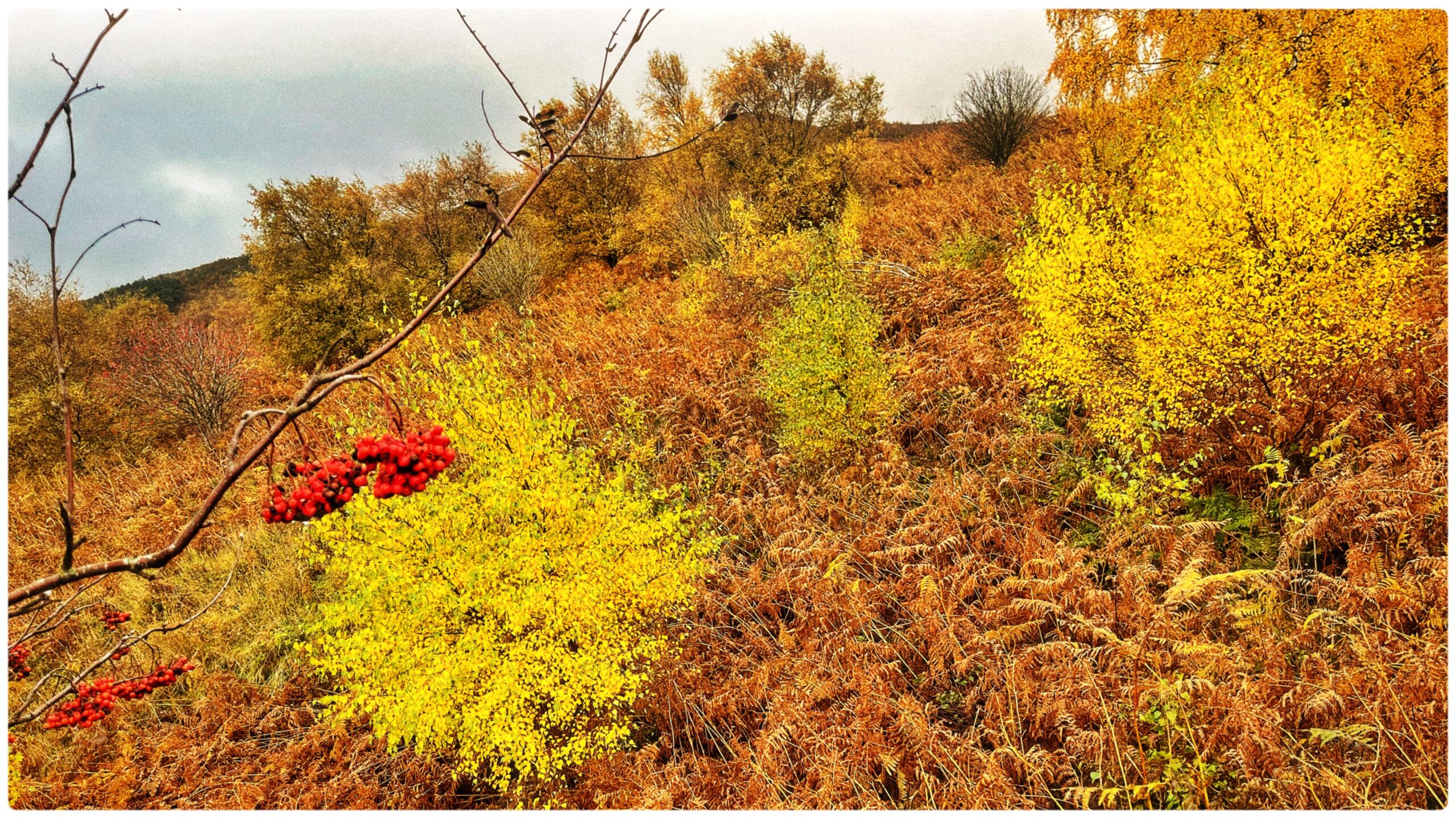
Set against the glowing gold of a yellow birch tree, a heavy crop of rowan berries awaits arriving redwings and fieldfares. The berries seem particularly abundant this year. Each red sphere bears a five-pointed star opposite its stalk. Ancient minds read this pentagram as a natural seal against malevolent spirits. Druids boiled rowan bark to dye their ceremonial robes black.
Moorland folk planted rowans beside doorways to block witches. Many of their farmsteads are now deserted, but wind-bent trees often remain above ruined stone hearths.
Felling a rowan tree released absorbed malice into the parish. Countrymen harvested twigs at midnight without backward glances. Anyone carving an enemy name into the trunk cast a lethal curse, unless the victim shaved off the bark to return the doom upon the carver.
Folk carved rowan wood into milk-stirring spoons to stop milk curdling. Packed with vitamin C, the sour fruit cured scurvy, though cooks must boil the raw berries with apples and sugar to make game jelly.
Sources:
- Glover, Merryn. “Country Diary: The Rowans Are out in Force, Lifting the Autumn Gloom.” The Guardian, 10 Oct. 2024.
- Robinson, Peter. “Notes on the Geology of Staindale and the Bridestones and Related Walk.” Rotunda Geology Group.
- Blakeborough, Richard. “Notes on North Riding Lore. Trees and Plants.” Northern Weekly Gazette, 26 Sept. 1903,
Leave a Reply