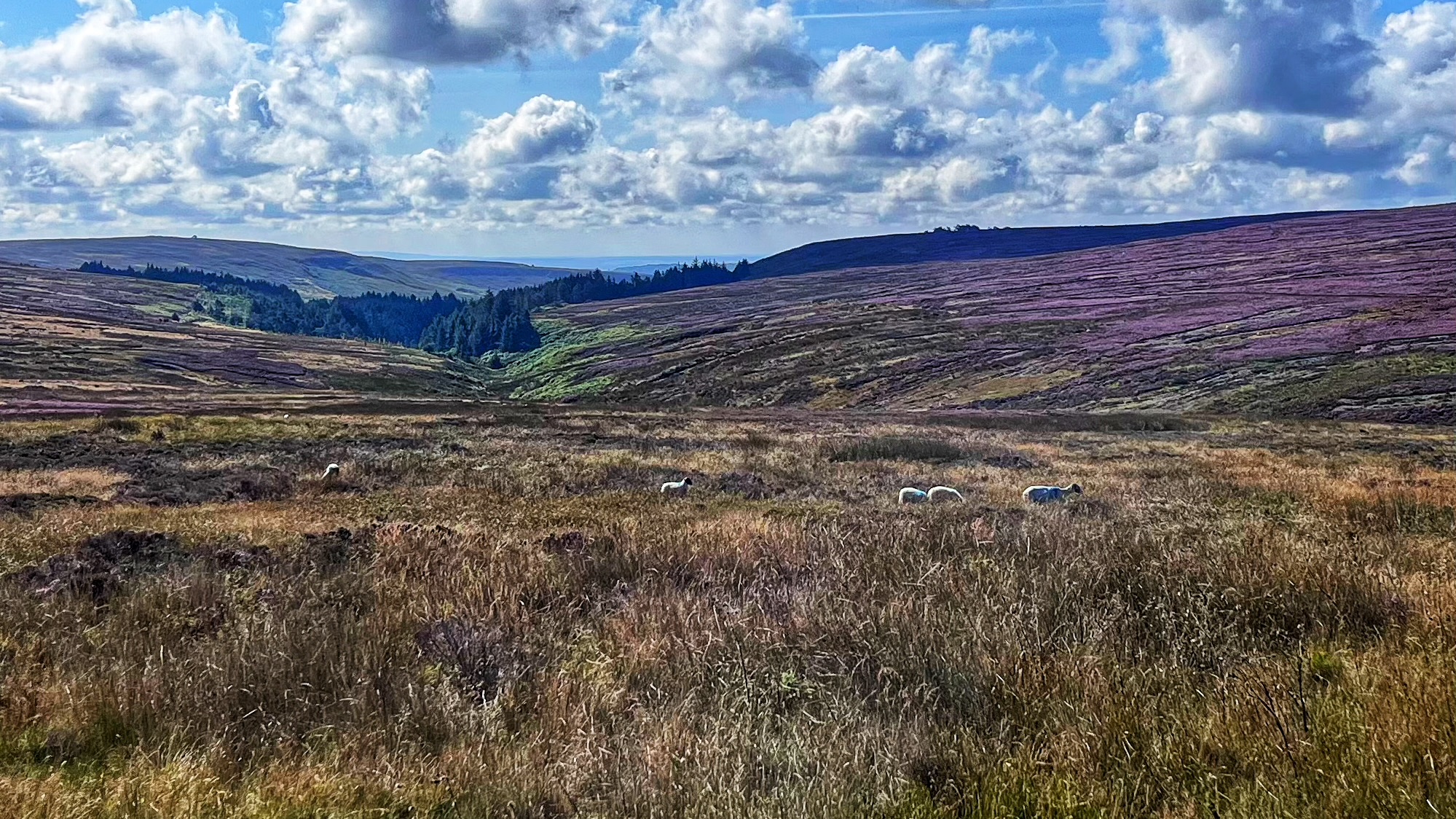
Sheep have shaped the British uplands for centuries. Their grazing, by cattle too and, in the Tabular Hills, rabbits, kept the moors open and thriving1Lindsay, Richard. “After a wildfire Britain’s moors and heaths can be green again within weeks – but the real recovery takes much longer.” The Conversation, 21 Aug. 2026, https://theconversation.com/after-a-wildfire-britains-moors-and-heaths-can-be-green-again-within-weeks-but-the-real-recovery-takes-much-longer-289944.. Now a proper row has broken out over how many sheep the moors can bear.
Farmers say the recent drop in numbers is asking for trouble. Fewer sheep, more gorse and bracken left to pile up, turning the hills into a tinderbox waiting for a spark2Goldsmith, Ben. “Rewilding is the best defence against wildfires.” The Spectator, 2 Aug. 2026, https://spectator.com/article/the-unspoken-truth-about-wildfires/.3“Agri-Brigade.” Private Eye, no. 1682, 21 Aug. 2026.. Grazing matters to them as a living, yes, but more than that, it stops the hills going up in flames4Beeson, Rob. “Fire Cannot Be Removed From the Uplands, Only Managed.” Moorland Association, 4 Aug. 2026, https://www.moorlandassociation.org/post/fire-cannot-be-removed-from-the-uplands-only-managed.5“Agri-Brigade.” Private Eye, no. 1682, 21 Aug. 2026..
Others call heavy sheep farming a disaster in the making. Sheep will not touch Sphagnum moss, the stuff that soaks up water like a sponge, but they flatten it underfoot all the same. Grazing out young trees before they get a foothold leaves the land stuck with nothing but heather, dry as kindling6[6] Goldsmith, Ben. “Rewilding is the best defence against wildfires.” The Spectator, 2 Aug. 2026, https://spectator.com/article/the-unspoken-truth-about-wildfires/..
Perhaps the answer lies in grazing more suited to a warming climate. Some want fewer sheep and more cattle and hardy ponies roaming the hills instead. Left to wander as they please, these animals leave behind a patchwork of vegetation, and a patchwork does far more to stop a fire than the occasional firebreak ever could7Goldsmith, Ben. “Rewilding is the best defence against wildfires.” The Spectator, 2 Aug. 2026, https://spectator.com/article/the-unspoken-truth-about-wildfires/.8Glentworth, Joe. “How rewilding could help stop the spread of Britain’s wildfires.” The Conversation, 4 Aug. 2026, https://theconversation.com/how-rewilding-could-help-stop-the-spread-of-britains-wildfires-288968.. The goal is a landscape that bends without breaking, where fire cannot simply sweep through unchecked.
- 1Lindsay, Richard. “After a wildfire Britain’s moors and heaths can be green again within weeks – but the real recovery takes much longer.” The Conversation, 21 Aug. 2026, https://theconversation.com/after-a-wildfire-britains-moors-and-heaths-can-be-green-again-within-weeks-but-the-real-recovery-takes-much-longer-289944. ↩︎
- 2Goldsmith, Ben. “Rewilding is the best defence against wildfires.” The Spectator, 2 Aug. 2026, https://spectator.com/article/the-unspoken-truth-about-wildfires/. ↩︎
- 3“Agri-Brigade.” Private Eye, no. 1682, 21 Aug. 2026. ↩︎
- 4Beeson, Rob. “Fire Cannot Be Removed From the Uplands, Only Managed.” Moorland Association, 4 Aug. 2026, https://www.moorlandassociation.org/post/fire-cannot-be-removed-from-the-uplands-only-managed. ↩︎
- 5“Agri-Brigade.” Private Eye, no. 1682, 21 Aug. 2026. ↩︎
- 6[6] Goldsmith, Ben. “Rewilding is the best defence against wildfires.” The Spectator, 2 Aug. 2026, https://spectator.com/article/the-unspoken-truth-about-wildfires/. ↩︎
- 7Goldsmith, Ben. “Rewilding is the best defence against wildfires.” The Spectator, 2 Aug. 2026, https://spectator.com/article/the-unspoken-truth-about-wildfires/. ↩︎
- 8Glentworth, Joe. “How rewilding could help stop the spread of Britain’s wildfires.” The Conversation, 4 Aug. 2026, https://theconversation.com/how-rewilding-could-help-stop-the-spread-of-britains-wildfires-288968. ↩︎
Leave a Reply