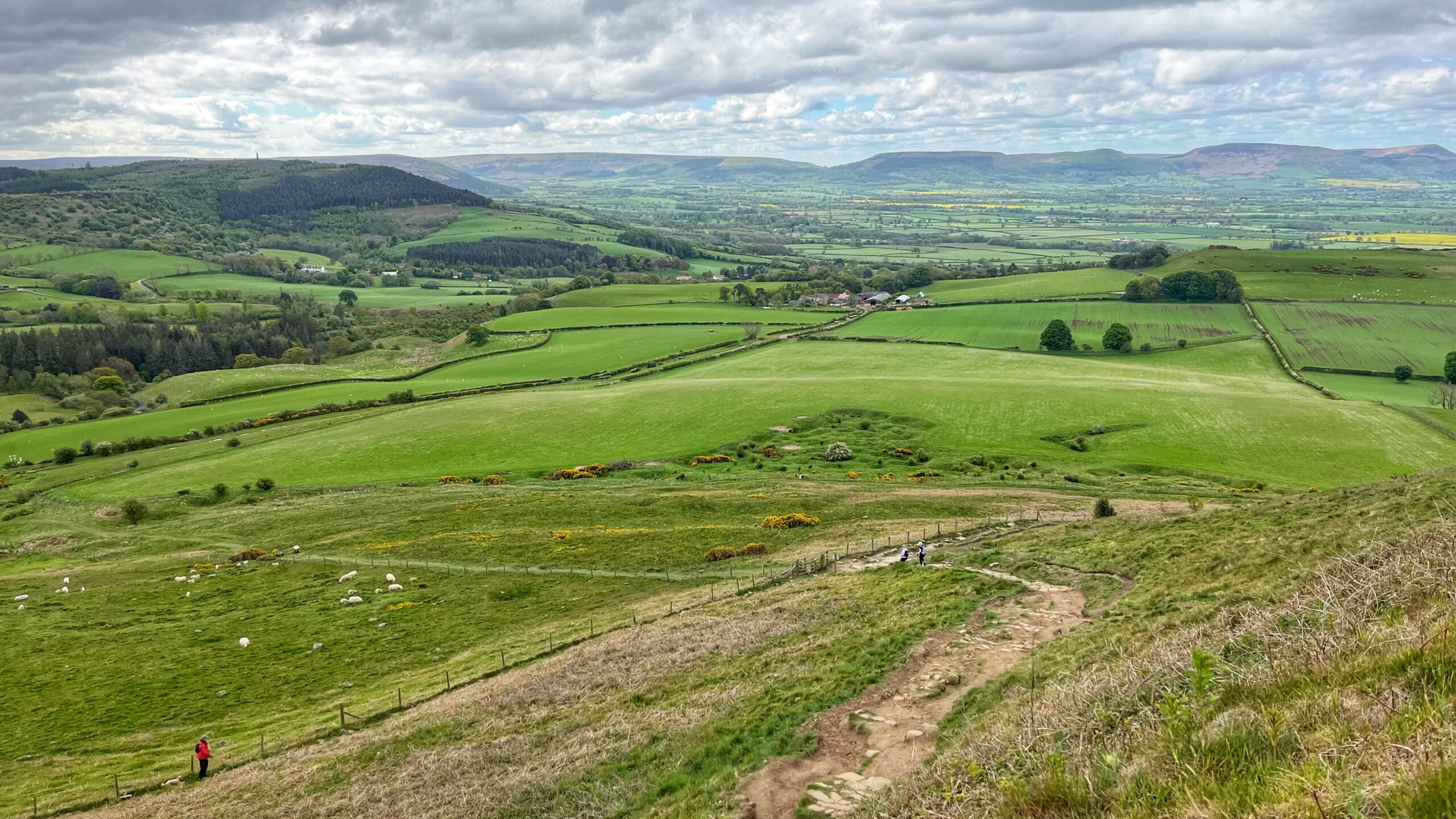
Yesterday I climbed Roseberry Topping with no firm ideas, but found one on the way down. This worn path down the southeast flank is scheduled for upgrading. Not this year, perhaps, but soon enough. I wanted a record of it as it is.
The path along the fence line — the one the solitary walker in the red jacket is treading — is earmarked too. It serves as a quiet short-cut between the Cleveland Way and the Folly, useful for those wishing to sidestep the rather busy summit.
My feelings on all this are, frankly, mixed.
Path improvement is a necessary business. Without it, erosion wins, and what begins as a narrow trail ends as a wide scar. Better surfaces also mean the hills become open to people who would otherwise find them rather unwelcoming. That is no small thing.
Yet something is lost too. A worn path has character. It is honest about how many boots have passed over it.
This month, the Countryside Code turns 75. First issued in 1951, its three principles — respect other people, protect the natural environment, enjoy the outdoors responsibly — have not shifted in three quarters of a century. The landscape around them has changed enormously. The message has not needed to.
It is, in its quiet way, rather remarkable.
We improve paths so that more people can use them. More people using them is precisely why the Countryside Code still matters. The question worth sitting with is this: can we make the countryside more accessible without loving it to death?
Leave a Reply