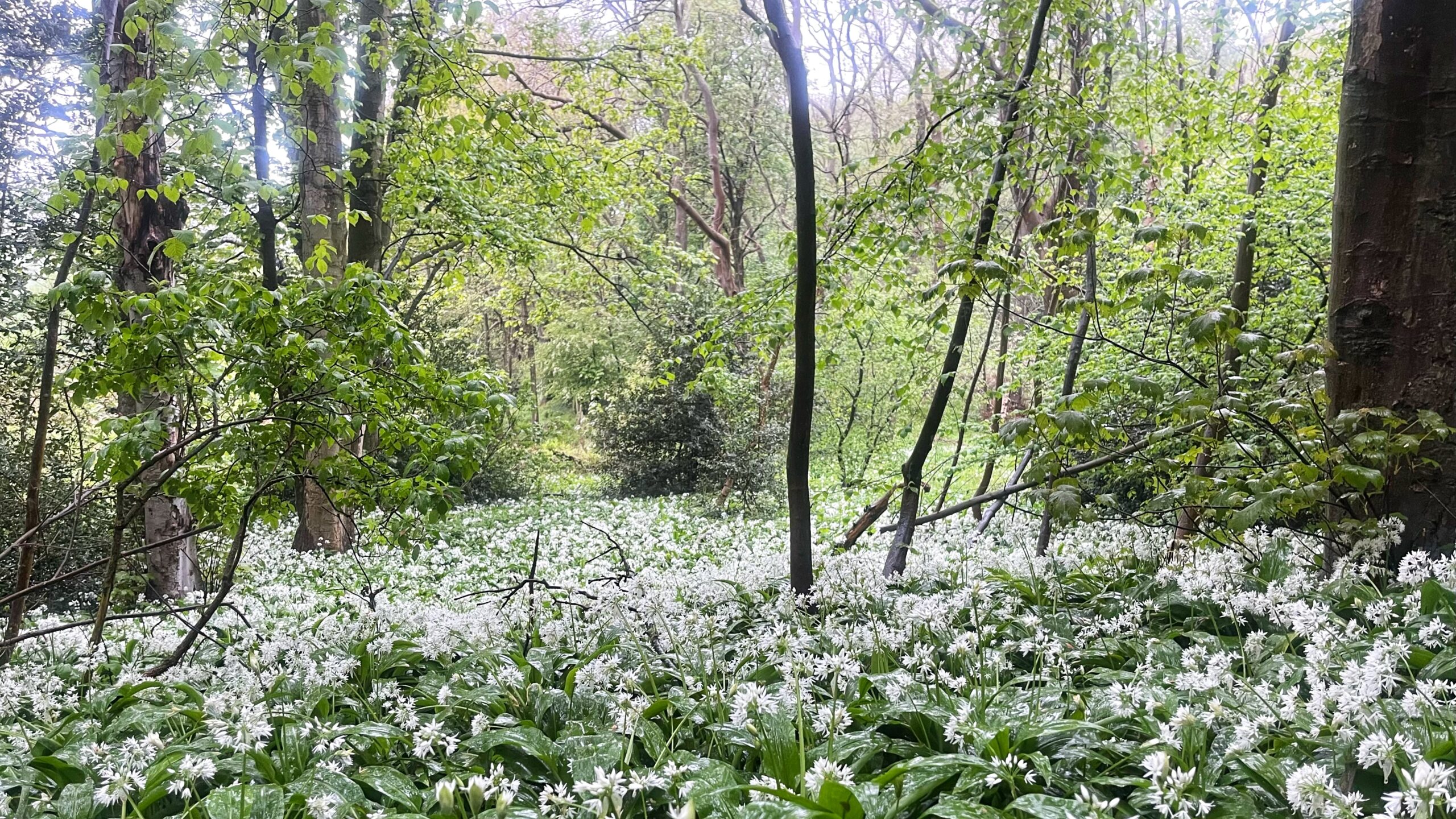
You will smell ‘em before you see ‘em. A whole wood reeking of garlic — this is wild garlic, or Ramsons, doing its thing for a couple of months each spring.
The Old English word “brmsa” gave its name to places still on the map today: Ramsbottom, Ramsey, Ramsdell, Ramshorn. In AD 944, a royal land charter fixed a boundary at a “wild garlic wood.“ A thousand years on, these pungent patches are still hard to forget.1This post entirely cribbed from: Mabey, Richard. Flora Britannica. Sinclair-Stevenson, 1996, pp. 404–406.
On the Isle of Man, TT race spectators stand in it all day in May. They go home smelling so bad their friends avoid them. During the Second World War, one family evacuated to Ayrshire posted bundles of it to a neighbour in bomb-battered Liverpool. The neighbour was pleased. The postman was not.
One eight-year-old boy from Bristol, spotting the dome-shaped flowers, was absolutely certain they were called “Daleks.“ He was wrong. But you can see his point.
Despite the smell, Ramsons taste surprisingly mild. The leaves work in salads, soups, and stews. Oliver Rackham, the great woodland historian, put them in peanut butter sandwiches. An Italian chef in Buckinghamshire used them instead of basil in pasta sauce.
So here is a plant that named half of England, survived a world war, and ended up on a Tuscan menu in the Chilterns. And a great excuse for a photograph on a very wet May day.
- 1This post entirely cribbed from: Mabey, Richard. Flora Britannica. Sinclair-Stevenson, 1996, pp. 404–406. ↩︎
Leave a Reply