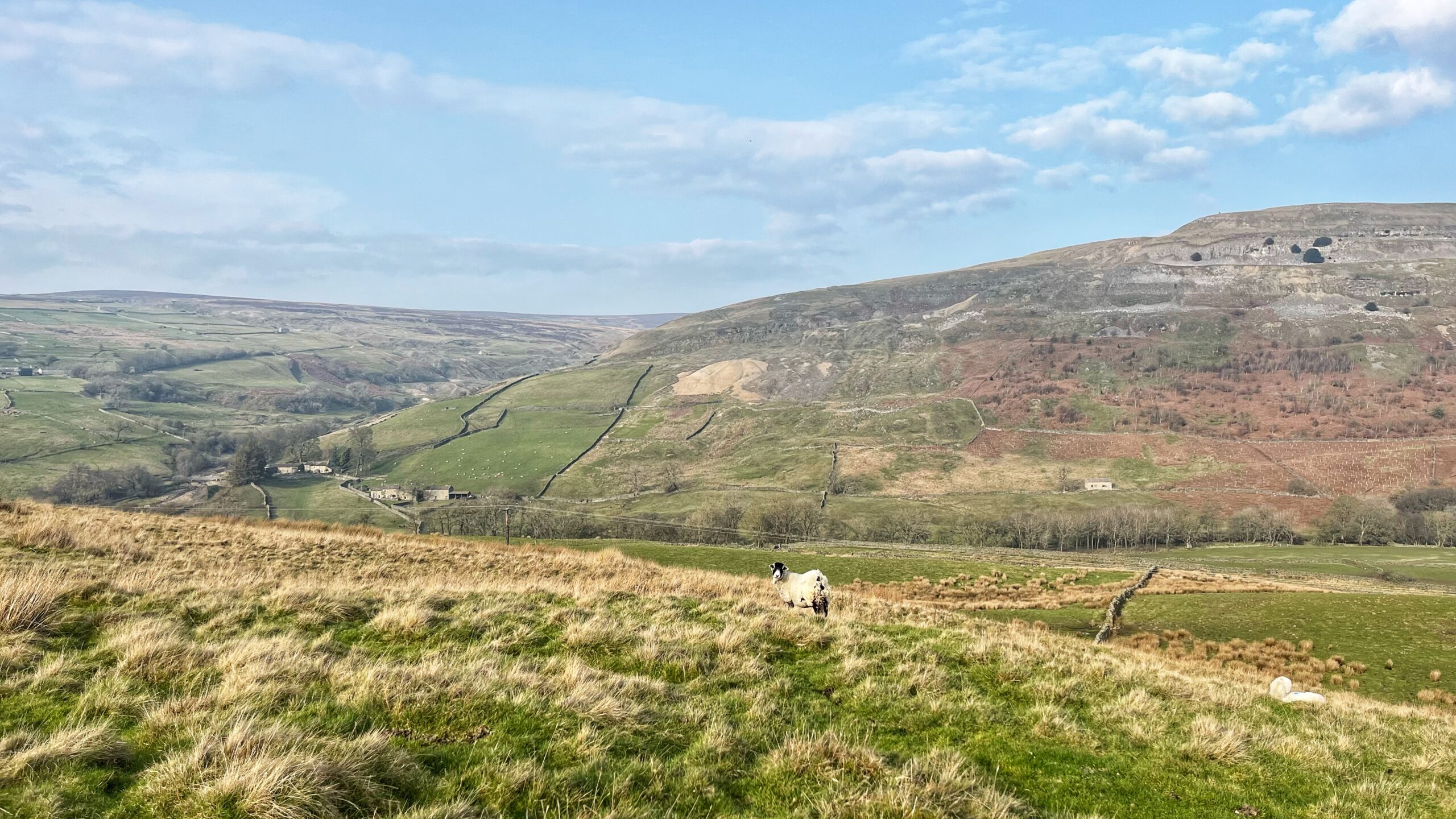
A view from Reeth Low Moor looking across at the scars gouged onto Fremington Edge. Those wounds in this hillside are not the work of nature. They are what happens when industry decides it needs something badly enough.
Chert quarrying in Swaledale ran from around 1900 to approximately 1950, driven almost entirely by the pottery industry. The potteries needed a hard, high-silica stone to grind flint into a fine powder to mix with clay. Swaledale chert was particularly prized because, unlike cheaper supplies from Derbyshire and North Wales, it had a higher silica content. Further up Arkengarthdale, the Hungry Hush chert reached 95.69% silica — very nearly pure.
Up until 1922, every scrap of quarried chert in the region came from Fremington Edge above Reeth. To get it to market, it had to travel all the way to Richmond railway station — a painful and expensive journey. Operators looked for deposits closer to Richmond but found the quality too poor. A scheme to extend the railway to Reeth never came to anything either.
Here is the odd part. The potteries packed round tubs with chert blocks, then used more chert blocks as grinding stones to pulverise flint inside them. Because flint is itself a form of chert, the worn grinding blocks did not contaminate the final product. It was a perfectly circular arrangement — chert destroying chert, for the sake of your dinner service.
In the 1950s, more efficient ball mills arrived. The market for chert collapsed almost immediately. All those scars on the hillside, all that toil — rendered obsolete in rather short order by a piece of industrial machinery. Fremington Edge has been quiet ever since.
Source: Eastmead, Stephen. Hungry Chert Quarries, Mouldside, Arkengarthdale: A Discussion and Pictorial Record. ©SWAAG 2014.
Leave a Reply