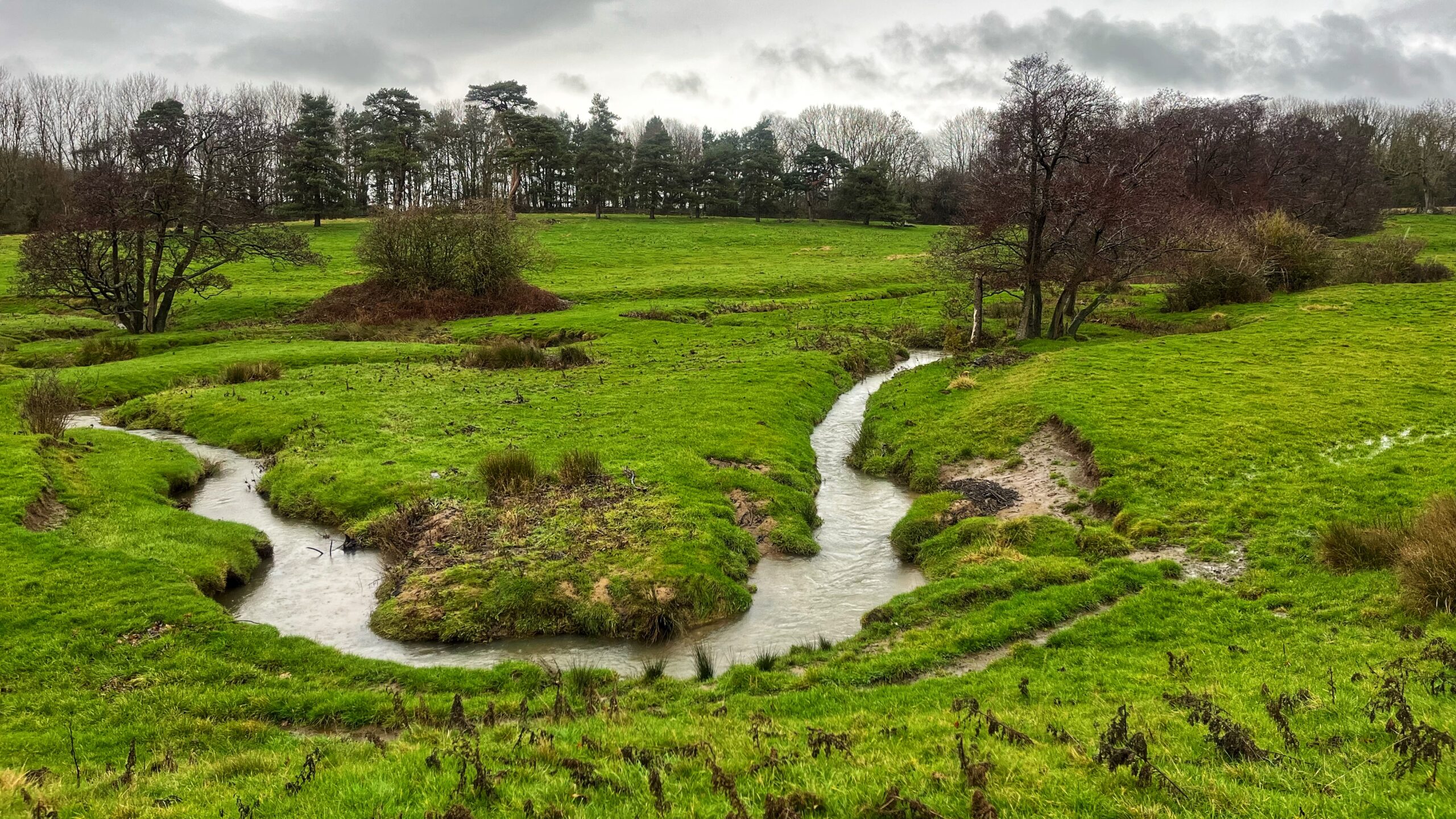
Scan this green pasture of Parva Broctune and you will spot the neat ‘S’ of Little Broughton Beck slicing through a quilt of humps and bumps. It looks gentle enough. It is not. Those undulations are the bones of a village. The land keeps its own ledger, and it does not forget.
Wind the clock back seven centuries. The grass fades. The mud returns. Geophysics now works like an X-ray for the earth, showing us the streets without lifting a spade. In Parva Broctune you would live in a long house of timber and smoke. Your family at one end. Your cattle at the other. Heat, breath, and stench all under one roof. That was home.
Outside, bondmen bent their backs over 210 acres of ridge and furrow. They were tied to the soil as firmly as fence posts. Even the mill, noted in 1131, came at a price. Tenants had to roof it as part of their rent. Feudal duty was not a hobby. It was a fact of life.
LIDAR and geophysics strip away the turf as cleanly as chalk from a slate. You can trace raised banks where timber walls once stood. You can follow sunken back lanes worn deep by oxen hauling their loads. You can see the neat crofts that marked each family plot. The plan of the village lies there as plain as day, written in the earth.
By 1334 it was already little more than a hamlet. Then came plague and Scottish raids. The rest is silence. What remains is a Scheduled Monument, a field that keeps its counsel. A time capsule of a settlement on its last legs.
It leaves a blunt thought. If your street slipped back into the soil tomorrow, would your house leave a hump or a bump for someone to puzzle over in 2726?
Sources
- Historic England, Medieval settlement of Little Broughton (List Entry 1018921), 2025.
- Parva Broctune. June Hodgson. 2005.
- Little Broughton and the Medieval Village Heritage Trail. Kirby, Great Broughton & Ingleby Greenhow Local History Group. Sept. 2013.
Leave a Reply