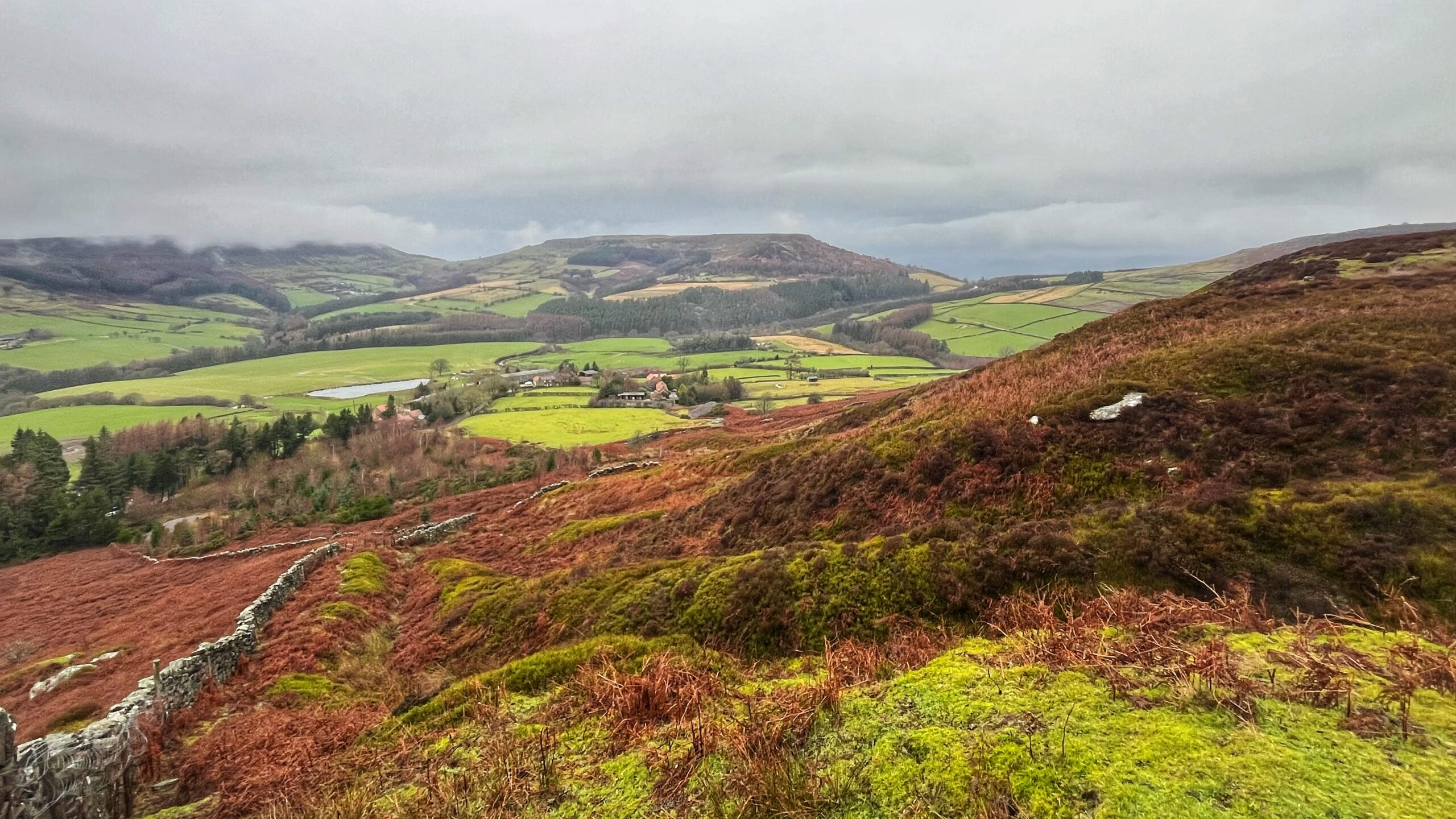
In windswept Bilsdale, a ring-fence of bank and ditch at Garfitts and a scatter of medieval sherds tell a story not often told. This was not always a quiet dale of lonely farms. For a brief, brittle spell it was a proving ground, a place where organised power tried to turn moor and forest into profit and permanence.
The thirteenth century made Bilsdale a hard edge. Monastic landlords pushed settlement uphill and north, testing how far people, animals and timber could be driven before the land pushed back. It is a lesson in modesty. Progress here was never a march. It was a series of small steps taken on wet ground, always liable to slide.
By the late 1200s the dale was split. The southern two thirds, Bilsdale Rievaulx, ran as a tight system of granges, orderly and controlled. In the two northern forks, Kirkham Priory and the de Ver family tried something riskier. They planted new hamlets and stocked them with skilled hands. The names in the records tell the tale. Forester, Carpenter, Tanner, Cooper. These were not surplus mouths but specialists, chosen to wrest value from upland waste.
“For half a century, from about 1270, small task-forces of volunteers made a resolute effort to occupy and subdue the marginal uplands of Bilsdale and to bring them into productive use.”
Life depended on assarting, the slow, punishing clearance of woodland. Above the 250 metre line, under the plateau of the high moors, families lived close to the bone. Holdings were tiny, often less than nine acres of arable. These were not rounded farms. They were narrow enterprises tied into a wider system, trading timber and livestock rather than grain. That made them efficient, but dangerously exposed. When markets faltered, there was no slack to take the strain.
Then came the reckoning. A colder climate, the Great Famine of 1315 to 1322, and pressure from Scottish raids turned advance into retreat. The landscape thinned out. Complexity gave way to simplicity. Urra endured, saved by its place on the route over Hasty Bank. Others did not. Hamlets emptied, tracks faded, and clustered settlement dissolved into the scattered farms that now seem timeless.
Bilsdale is a quiet warning. Human ambition can be bold, clever and well funded, and still lose. The land keeps the last word, and it speaks slowly. What looks permanent today can become tomorrow’s scatter of sherds, a footnote in the heather, waiting for someone to notice.
Source
McDonnell, John. 1986. ‘Medieval Assarting Hamlets in Bilsdale, North-East Yorkshire’, Northern History, 22.1: 269–79.
Leave a Reply