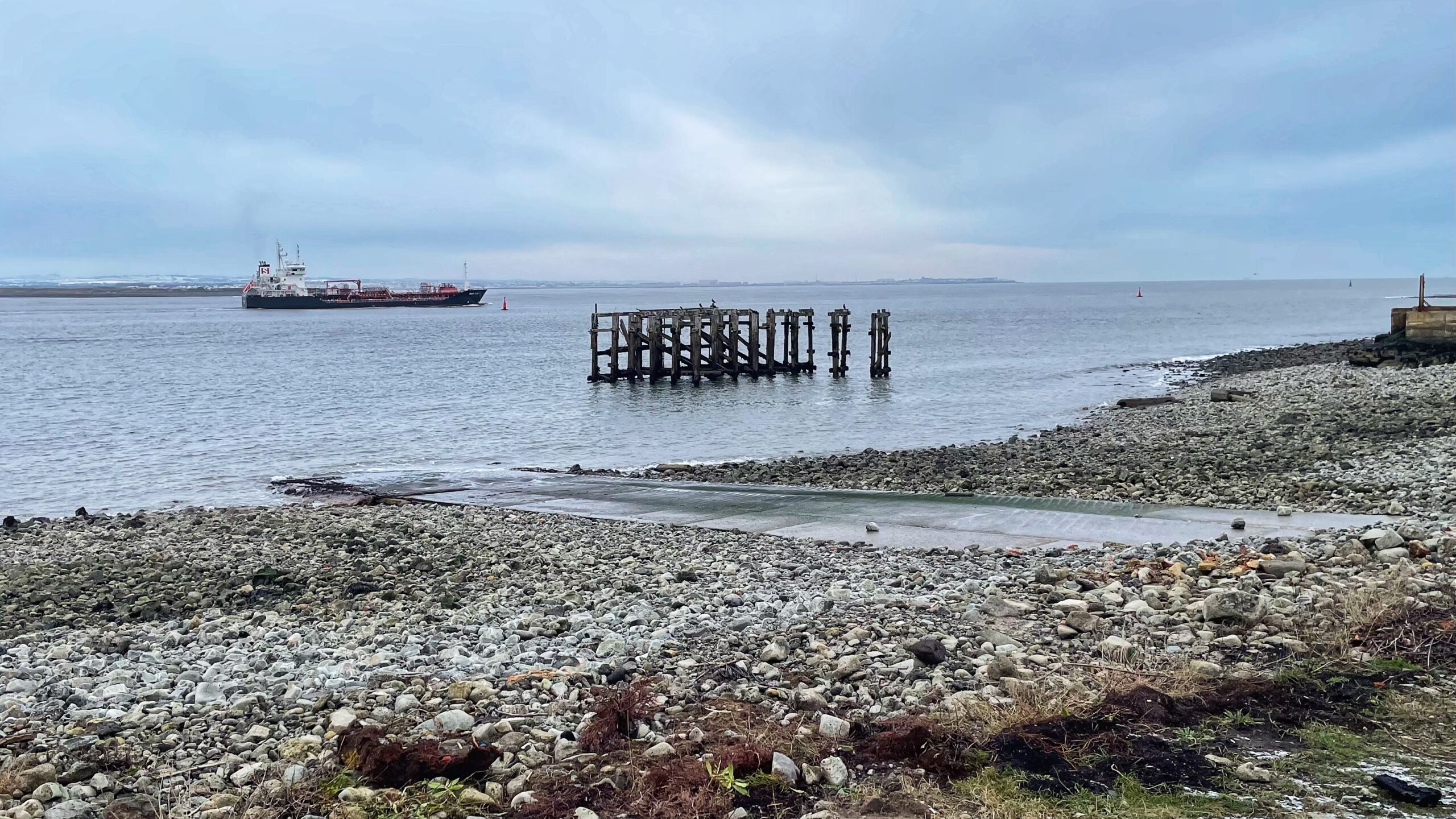
The tanker Stolt Auk slips past a derelict wooden jetty at South Gare, heading for Rotterdam. The jetty is older than the Gare itself, built before 1888, and once served the North Riding (Fortress) Royal Engineers as part of the river’s coastal defences. It now stands abandoned, a relic of an industrial past that never quite goes away.
Keeping the Tees open for modern shipping means constant dredging of the navigation channel. The material scooped from the riverbed is dumped offshore in designated disposal grounds. That necessary routine opens the door to a far more awkward and controversial subject.
Alongside this maintenance dredging, there is also so-called Capital Dredging. This takes place when large-scale excavations are needed for new developments, such as the South Bank quay at the Teesworks site. Unlike routine dredging, these deeper and more aggressive methods cut into long-buried layers of sediment. Critics argue that this has disturbed historic industrial pollutants, including polychlorinated biphenyls, chemicals that settled into the riverbed decades ago and were best left there.
PCBs are linked to harbour seal deaths and to the mass crab die-off recorded in autumn 2021. To understand the risk, picture the Tees as an old industrial attic coated in thick dust. Left alone, the dust sits quietly. Deep dredging is like switching on a powerful fan. The dust is blasted into the air, where it can be breathed in by everyone unlucky enough to live there. In the river, that dust becomes toxic sediment swirling through the water column and into marine life.
After the 2021 crab deaths, further reports followed of unusually high mortality among crabs and seals along the lower Tees and its coastline. Official investigations, including those from DEFRA, largely pointed to a harmful algal bloom. Independent researchers, however, have argued that this explanation does not fully account for the scale or pattern of the deaths. Their work suggests a stronger link to pollution, industrial contaminants, and sediment disturbed by dredging and ground works at Teesworks.
The Teesworks development itself sits uncomfortably at the centre of these concerns. The site has already been associated with specific risks, including a 200-tonne oil spill and the disposal of dredged material at sea. Questions remain over whether the Marine Management Organisation’s sampling regime, and the UK’s application of the OSPAR Convention, are robust enough to detect and manage the hazards posed by contaminated sediment.
Local critics and campaigners, including the North East Fishing Collective, have called for dredging to be paused until these risks are properly understood. Their research points to a development racing ahead under Freeport status and lucrative energy projects, while environmental safeguards struggle to keep up. It is progress at full tilt, with the river left to absorb the consequences.
Source:
North East Fishing Collective. https://northeastfc.uk/doku.php?id=start
Leave a Reply