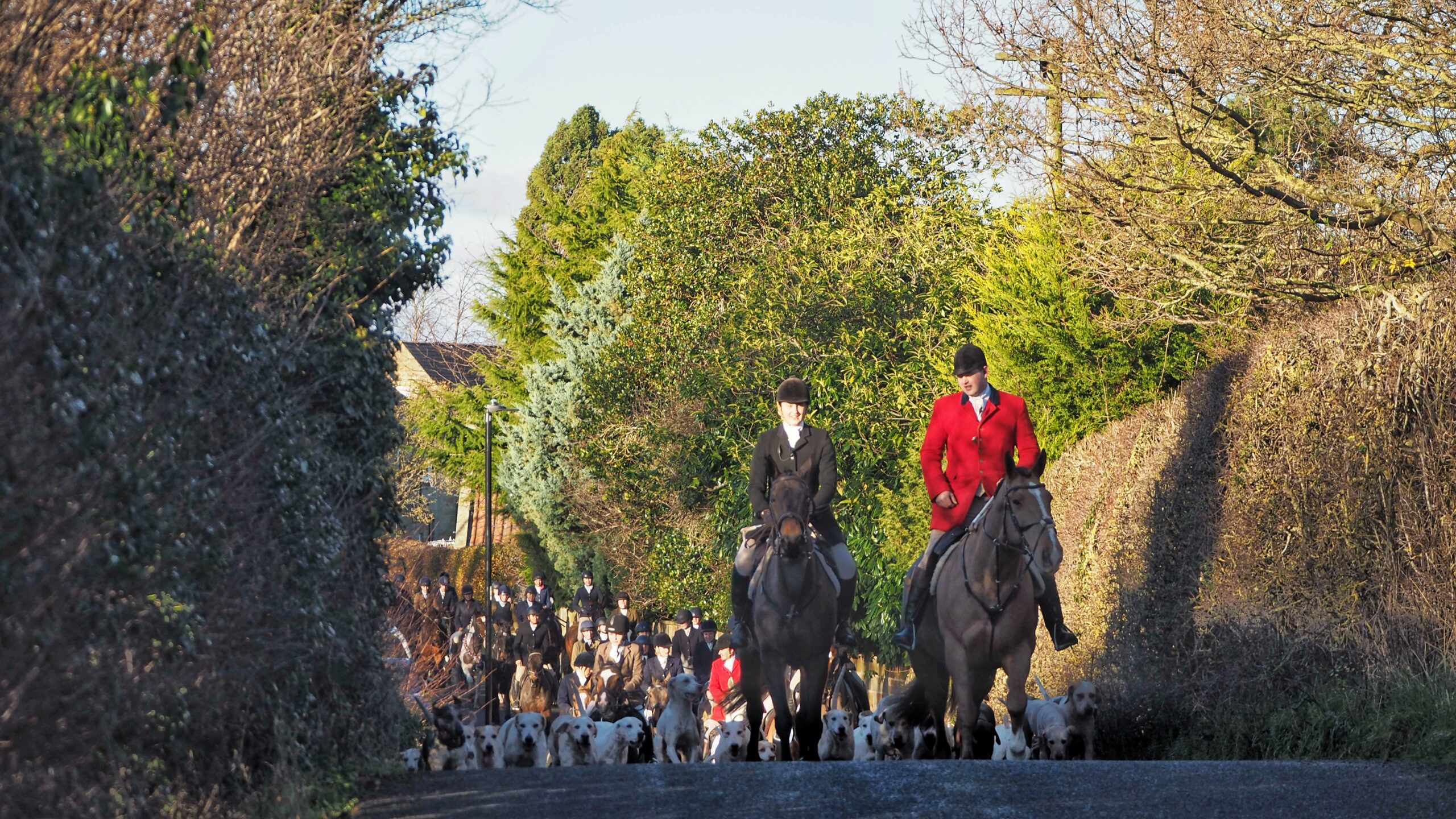
In 2004, hunting foxes with dogs was banned. This did not, however, end the “sport”. It merely trimmed it back and left three flavours of “hunting” on the menu.
First comes trail hunting. This involves following a scent of animal urine laid on a route that is meant to be unknown to the riders. In theory, it is all neat and lawful. In practice, there is ample evidence that hounds can and do wander off to follow real animals. A less trusting observer might note that they are not always rushed back with great urgency.
Next is drag hunting. Here the scent is synthetic and the route is known in advance. If the hounds lose their way, the whippers-in can steer them back on course. It is controlled, predictable, and about as close to foxhunting as a flight simulator is to war.
Then there is so-called Clean-boot hunting. Again, this follows a neutral scent, sometimes even a human one, but the route may be unknown. The chances of switching to a real animal are slim. This is not new. I remember, in the early 1980s, being tempted to join a hunt as one of the hunted. It never happened. There were too many clashes with races, and the enthusiastic recruiter, a stalwart of our running club, Tom Flory, unexpectedly passed not long after.
The ban Labour promised in its manifesto applies only to trail hunting. The claim is that trail hunting has become a smokescreen for continued foxhunting, and there is plenty of evidence to back that up.
Drag hunting and clean-boot hunting would remain legal. Riders could still dress up in their pinks, ride out, and gallop across the countryside behind their hounds. What would change is the likelihood of stumbling upon an actual fox. With properly trained dogs, that risk is very low, possibly zero.
So the wailing about this ending riding out altogether is plain fearmongering. Great Ayton’s Boxing Day hunt would carry on if these proposals take effect, just as it did after 2004.
The real objection is simpler and less noble. Some people still want to chase real animals and kill them. They always have.
Next year, though, a new line of attack may appear. The ground is already being tested.
UNESCO Convention for the Safeguarding of the Intangible Cultural Heritage
This convention was signed in 2003, but it took the United Kingdom until January 2024 to ratify it, a delay that suggests no great sense of urgency. From cheese rolling to bagpiping: UK launches search for traditions that define our communities1Department for Culture, Media and Sport. 5 December 2025. https://www.gov.uk/government/news/from-cheese-rolling-to-bagpiping-uk-launches-search-for-traditions-that-define-our-communities [Accessed 25 December 2025].
So next year there will be a sudden enthusiasm for celebrating cultural traditions and their value to communities and the economy. Pancake Day, cheese rolling, and Highland dancing may all be recognised as part of our “Living Heritage”. Communities are being invited to submit cherished traditions across seven areas, from oral expressions to culinary practices.
Into this steps the argument that rural field sports, especially hunting with dogs and trail-hunting, should count as “indigenous” cultural heritage and deserve legal protection. Falconry is wheeled out as an international example. One claim on a Facebook posting is that these activities are being squeezed out by urban-majority politics and multiculturalism2Hunting Kind Facebook Group“Dr Nick Fox OBE”. 3 May 2025. https://www.facebook.com/100064926691019/posts/pfbid02tEdPzGanhronEjeTXsDN1tSNjHAsASiSw2SKBmrReGbq1K13Ajso9djTcDcS93wYl/[Accessed 25 December 2025].
This is a thinly veiled attempt to defend foxhunting by borrowing the language of minority rights. The idea that hunting culture should be protected under the Equality Act like an ethnic or religious group is a stretch worthy of a long reach across a muddy field. Hunting is not an immutable identity, nor is it subject to systemic discrimination. An urban majority is not oppression. It is how elections work.
Comparisons with falconry or Romani culture do not help. Falconry does not usually involve packs of dogs chasing mammals for miles while the country argues about it. Pointing to cats killing wildlife as a justification for bringing back hunting with dogs is another dodge. If suffering were the real concern, regulating pets would not lead neatly to reviving a blood sport.
The tone drifts into misty-eyed nostalgia, with mutterings about multiculturalism and city dwellers as if change itself were an enemy. By blending legal claims with cultural grievance, the argument trips over its own feet. Personal preference is dressed up as victimhood, and no amount of heritage varnish quite hides the bloodstain underneath.
- 1Department for Culture, Media and Sport. 5 December 2025. https://www.gov.uk/government/news/from-cheese-rolling-to-bagpiping-uk-launches-search-for-traditions-that-define-our-communities [Accessed 25 December 2025]
- 2Hunting Kind Facebook Group“Dr Nick Fox OBE”. 3 May 2025. https://www.facebook.com/100064926691019/posts/pfbid02tEdPzGanhronEjeTXsDN1tSNjHAsASiSw2SKBmrReGbq1K13Ajso9djTcDcS93wYl/[Accessed 25 December 2025]
Leave a Reply