Scar, scarp and escarpment have a knack for muddling people. The landforms overlap, and to add to the fun a scarp can carry several scars on its own back.
Despite how they look, scar is not related to the other two. It comes from the Old Norse “sker”, meaning crag, with a nod to “sgeir”. Scarp and escarpment both trace back to the Italian “scarpa”, a word that once meant both slope and shoe. Scarp walked straight into English, while escarpment took the scenic route through France and arrived with a bit more baggage. These days the pair are, for most purposes, much of a muchness.
Scars though are usually ruled by a single rock outcrop. As cliffs they can look like escarpments in miniature, but they may just as well be rocky hilltops or tight gorges.
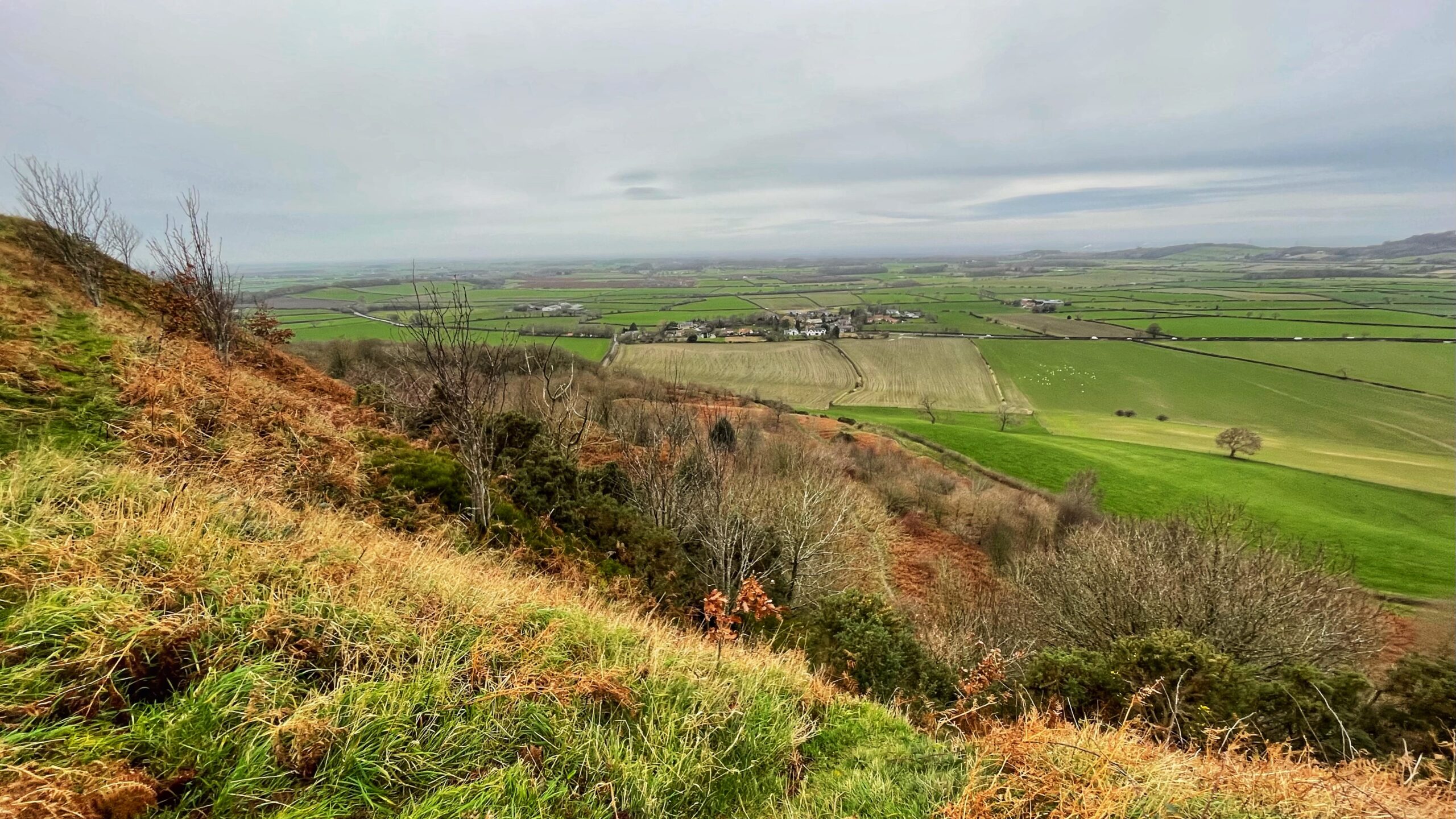
That brings us to Cockle Scar, a steep bit of Roseberry, not the steepest perhaps, that would be the summit crag itself. But hardly a cliff!
A few centuries ago it would likely have cut a more imposing figure. The sharp change in slope on this north-western face of Roseberry would have looked proper daunting to anyone coming in from Newton-under-Roseberry, were it not now softened by oak woodland, gorse and other growth.
Cockle Scar is cut from the Staithes Sandstone Formation, which stands up better to erosion than the Redcar Mudstone Formation beneath it. When the ice sheets of the last ice age swept down the Cleveland Plain from the north-west, the softer mudstone wore away more easily, leaving the edge behind. Staithes sandstone lies in thin beds and was never much use for building, so it escaped quarrying. That is unlike the cap of Roseberry, made of the Saltwick Sandstone Formation, which was quarried with enthusiasm.
Leave a Reply