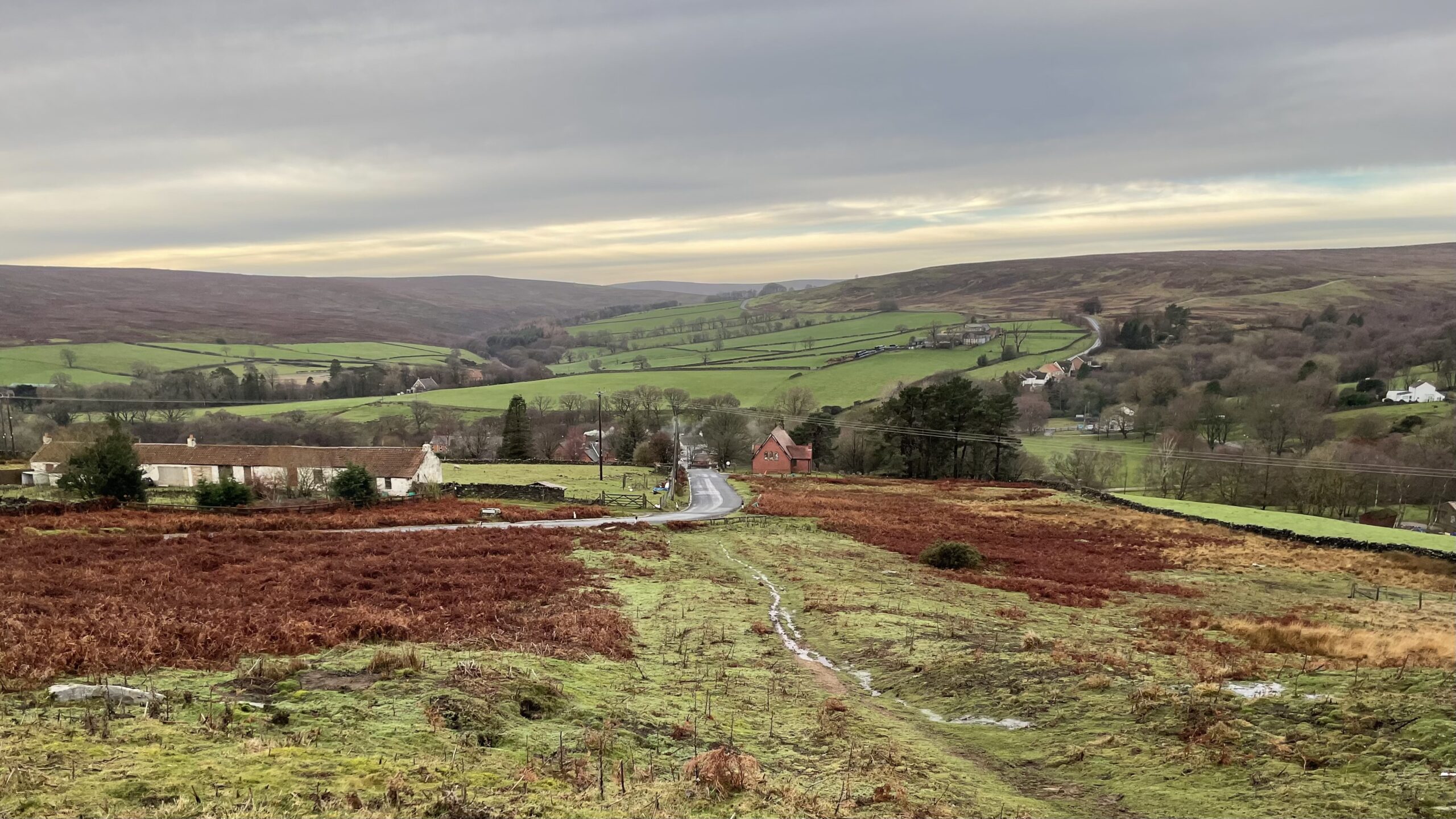
Commondale is a quiet village now, the sort that seems still half asleep by mid-morning. It was not always like this. The arrival of the railway changed everything. A brickworks followed, then a pottery, turning out objects of real quality. When pottery declined, production shifted again. Sanitary ware was made in volume, along with facing bricks, terracotta, chimney pots, and almost everything needed to build houses and supply modern sanitation.
By the time the First World War arrived, Commondale’s clay industry had become part of a much larger story. Its role is rarely mentioned, yet it mattered. A glimpse of that time comes from Joseph Ford, who was a schoolboy living in Danby, writing later in his “Some Reminiscences and FolkLore of Danby Parish and District”1Some Reminiscences and FolkLore of Danby Parish and District by JOSEPH FORD. HORNE & SON LIMITED, WHITBY. 1953..
Ford describes watching Zeppelins in the dead of night, drifting across a clear, starry sky on their way to Skinningrove, using the coast as a navigational ‘handrail’. On still nights they were easy to spot, their engines giving them away. Soon after, the searchlights at Skinningrove would rake the sky, catching the airships in their glare, while anti-aircraft guns boomed across the dale. The target was clear. The Germans were keen to destroy the Skinningrove works, knowing exactly what they were.
In time, these sights and sounds became strangely familiar to the people of the dales. War intruded on village life, yet work went on. In Commondale, skilled clay workers were busier than ever. Modern warfare had embraced poison gas, a new and brutal weapon on the Western Front, and clay products were essential to its storage and handling. Despite repeated efforts, German attacks failed to destroy the large gas stores at Skinningrove.
In 1914 the world lurched into chaos. Dreams of glory did not last long once Europe slid into four years of slaughter with little precedent. Amid that calamity, as gas clouds rolled across battlefields, the clay workers of Commondale played their part. It was a small village, but its contribution to the war was anything but small.
- 1Some Reminiscences and FolkLore of Danby Parish and District by JOSEPH FORD. HORNE & SON LIMITED, WHITBY. 1953.
Leave a Reply