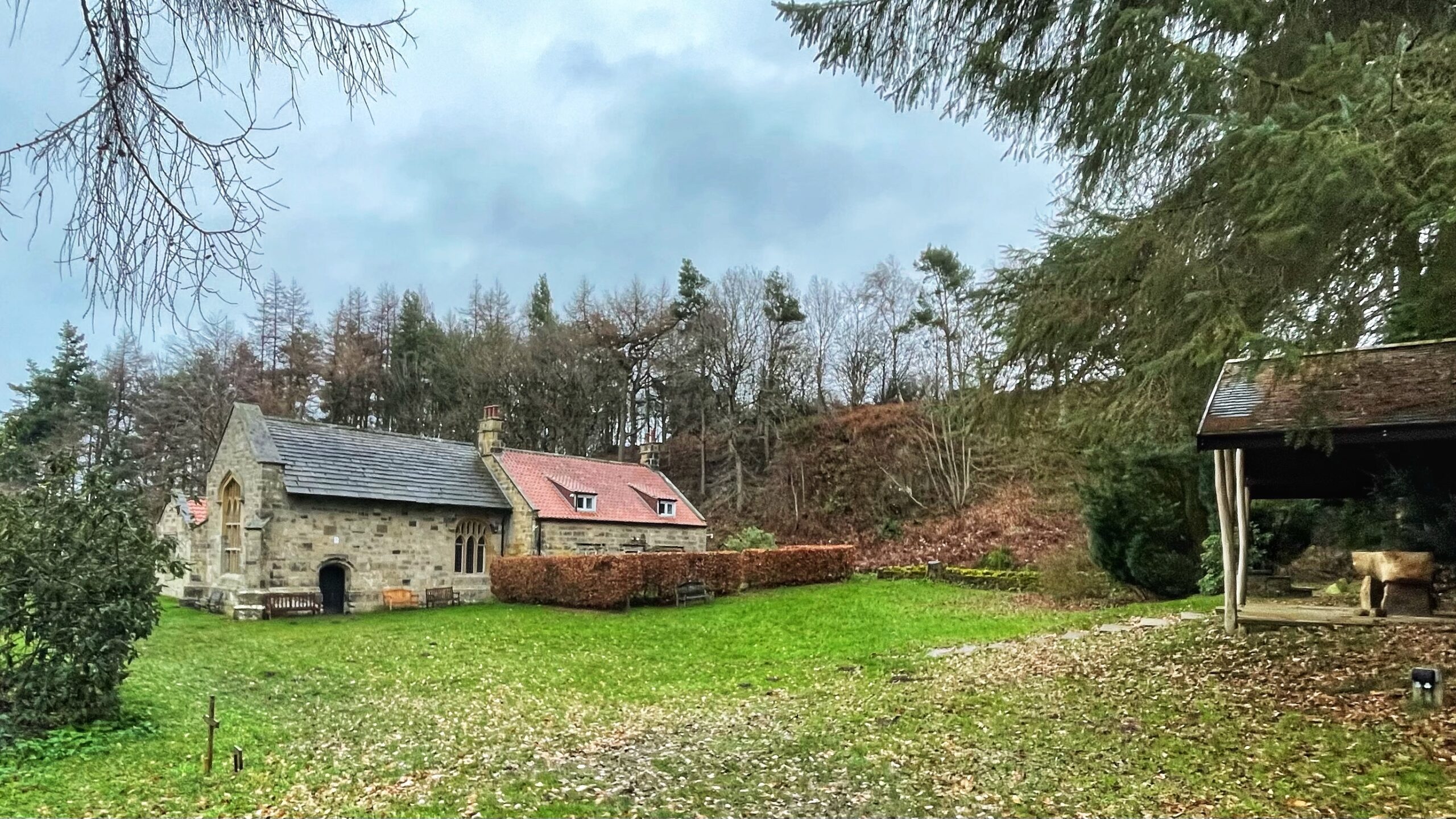
The precise beginnings of this agreeable little chapel tucked into the trees are lost to time, which is how such places like it. What we do know is that by 1397 a licence had been granted for Mass to be said here, neatly separating it from the later Mount Grace Priory, a Carthusian house nearby. A year later the land and chapel were handed over to the Priory’s founders. The monks are thought to have rebuilt or refurbished the chapel in the fifteenth century, perhaps as a hermitage or a private place of devotion. This sits rather oddly with the Carthusian habit of fierce solitude, an order famous for keeping itself to itself, but monasteries have always had a talent for quiet contradictions1THE LADY CHAPEL. History. https://www.ladychapel.org.uk/history/ [Accessed 14 December 2025].
In 1515 the chapel enjoyed royal favour when Catherine of Aragon, first wife of Henry VIII and still very much in credit at the time, supported the hermitage and installed a former Franciscan, Thomas Parkinson, as its resident. The good times did not last. After Henry’s break with Rome and the Dissolution of the Monasteries in 1539, Mount Grace was closed, and the chapel slid into neglect, eventually losing its roof and much of its dignity.
Even as a ruin, the place refused to fade away. During the times of the Penal Laws, when being Catholic was a dangerous hobby, the chapel became a quiet rallying point for local Recusants. There are accounts of secret midnight pilgrimages, the sort of thing guaranteed to annoy the authorities. In 1614 sixteen people were arrested for praying here, a reminder that persistence often comes at a price. In 1665 Lady Juliana Walmsley founded a Franciscan friary in Osmotherley, at the Old Hall, specifically to provide priests for pilgrims drawn to the ruined Lady Chapel. The faith, like a weed in a well swept yard, carried on regardless.
For centuries the chapel remained largely a picturesque wreck, though devotion never quite gave up. Serious restoration finally began in the mid twentieth century, starting in 1959, with stone brought in from Rosedale Abbey. The result is what you see today: a small building with a long memory, quietly unimpressed by the passing centuries and still doing its job.
- 1THE LADY CHAPEL. History. https://www.ladychapel.org.uk/history/ [Accessed 14 December 2025]
Leave a Reply