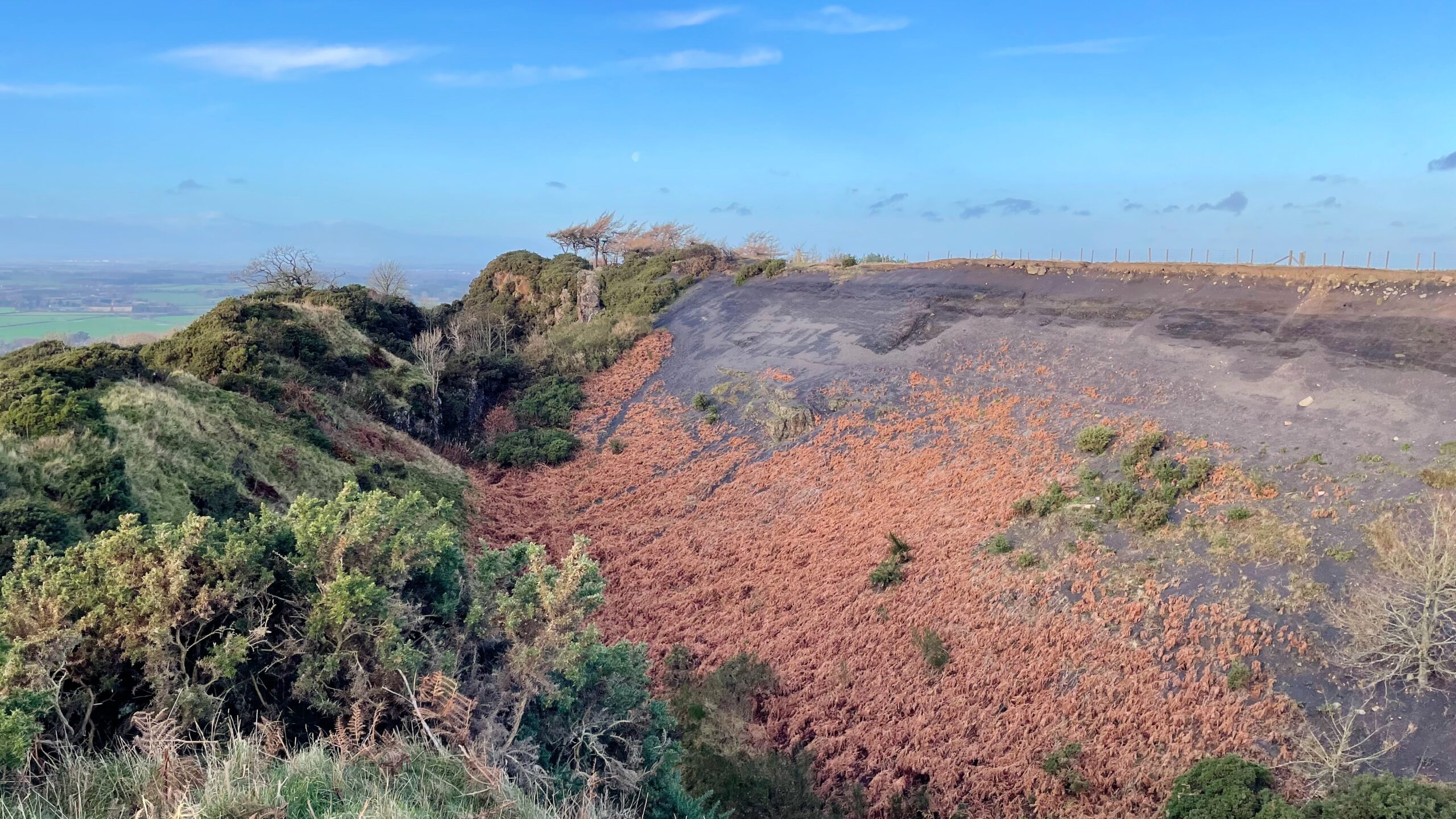
A dreich veil hung over North Yorkshire this morning, so I look back instead to yesterday, when the sky was clear, the air still, and the sun at least toyed with the idea of shining.
Cliff Rigg Quarry looms above Great Ayton, a cavernous rent in the hillside left behind by an industry that has long since given up the ghost. This was once a place of pounding hammers and echoing toil, carved open by generations who wrestled whinstone from the bedrock. That dark, stubborn stone, forged in ancient fire, found its way into the cobbled streets of Leeds, each block a tiny piece of the earth’s volcanic temper pressed beneath the stride of the present day.
The whinstone belongs to the Cleveland Dyke, a molten spear driven through the crust some fifty-eight million years ago, flung out from a volcano on the Island of Mull. It slashed its way from Scotland to Yorkshire, surfaced in scattered outcrops, then slipped under the North Sea near Whitby as if nothing had happened. What lies at Cliff Rigg now is the quarry’s cold, immobile heart, the last whisper of an old planetary rage and the human hunger that once dug into it on this lonely rise.
Leave a Reply