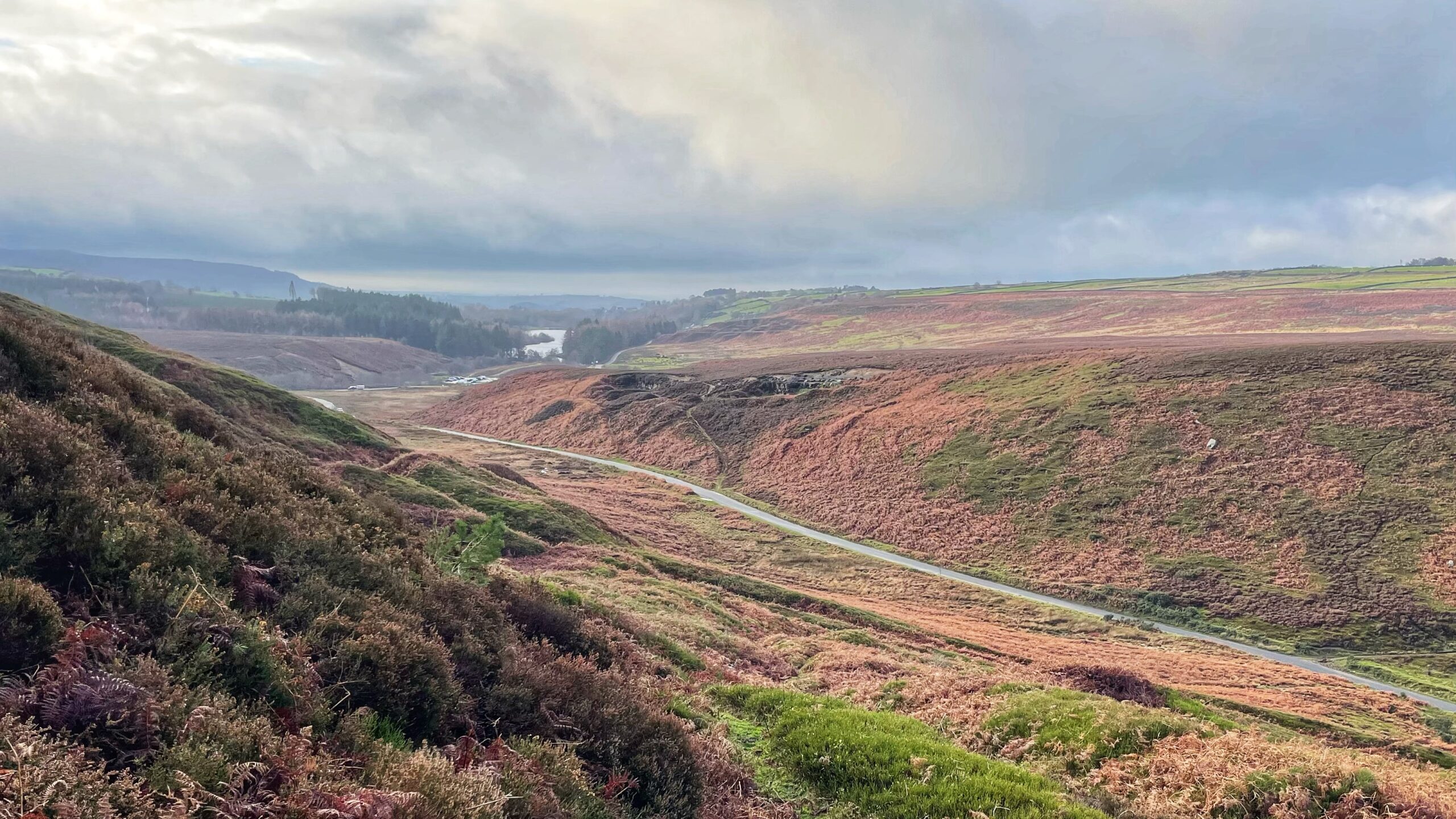
Scarth Nick, a dry trench bordered by steep banks of bracken and heather, stands as a striking reminder of the fierce sculpting of the great Ice Age. Around fifteen to twenty thousand years ago, a glacier from the north spread across the vale of Cleveland and pushed an icy tongue deep into Scugdale. As it moved, it scattered sands, clays and gravels filled with boulders carried all the way from Scotland. A lake formed in front of the ice, its waters climbing until they reached a depth of about three hundred metres, draining only through Holy Well Gill.
At some dramatic moment the waters forced a new escape. They burst out at Scarth Nick in a violent rush of water, mud, earth and stone. This torrent carved the trench, gouging it deeper as it swept everything before it. The debris was flung into the Crabdale Beck valley, where it formed the prominent mound now known as Round Hill, south-west of the present car park.
With its waters gone, Scarth Nick was left without a stream and remains to this day one of the most impressive glacial features in Cleveland.
The first hunter-gatherers almost certainly used the Nick as a passage through the hills. Until the Romans laid their roads across the Vale of York, it was likely the main prehistoric route between the Humber and the Tees.
Well into the railway age, the track through the Nick and over the Hambletons continued to serve cattle drovers and panniermen leading donkeys and pack horses burdened with coal from Durham.
Leave a Reply