-

Graffiti, Landslips, and Bonfires
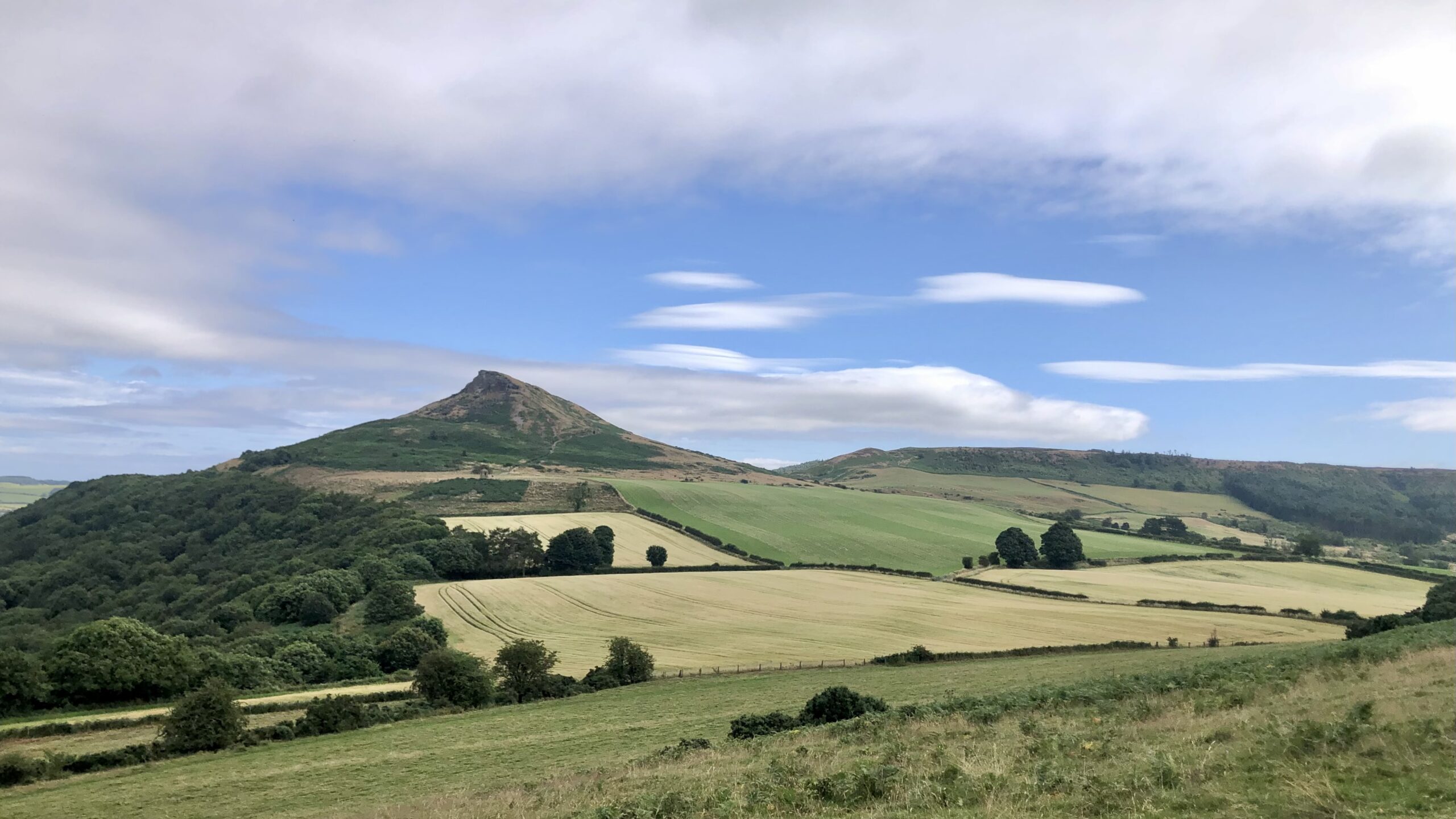
Standing alone atop Roseberry Topping is a rare privilege. From this vantage point, Guisborough lies in the distance, with the North Sea stretching beyond. The crags of the summit are scarred by decades of graffiti, the soft sandstone inviting visitors from the towns of Teesside to carve their names into history. Many of these inscriptions…
-

Hartlepool’s Medieval Town Wall
Today, only a fragment of Hartlepool’s medieval town wall endures. Rising 18 feet high and six feet thick, it overlooks the Fish Sands and includes the pointed arch of the Sandwell Gate. Though this is but a small portion, it still offers a splendid glimpse of the town wall’s former defences. The wall had originally…
-

Purple Haze: Ling’s Role in Yorkshire’s Past
For a brief spell each year, the North York Moors are transformed into a sea of iconic purple. The ling, or heather, is not quite at its peak yet; it remains patchy, especially here on Great Ayton Moor. Some may argue that these vast stretches of purple moorland lack diversity and serve only the grouse…
-

Hemmell Stones — Raising the Harvest
Hemmell stones served to raise barns, granaries, hayricks, and beehives off the ground, protecting them from damp and vermin. Usually comprising a separate head and base, these stones gave them a distinctive mushroom-like appearance. In other parts of the country, they are more commonly known as ‘staddle’ or ‘steddle’ stones, with variations in design depending…
-

Echoes of Disaster: The Kettleness Landslide
Kettle Ness, as seen in the photograph across Runswick Bay, presents a grim and barren face, stripped of vegetation. I have read that, with care and a sharp eye, one might discern the dark line of the jet seam, beneath which lies the greyer alum shale, and lower still, just above the wave line, two…
-

The Alum Industry of Carlton Bank
It is difficult to imagine that 250 years ago this tranquil scene was a hub of intense industrial activity. For over a century, Jurassic shales were quarried here to produce alum crystals, which were essential as a mordant in dyeing textiles and as a curing agent in tanning. A comment on a previous post about…
-

Saint Julian’s Park: a testament to the passage of time
A view across West Beck reveals the medieval Saint Julian’s Park, now known simply as Julian Park. Once a striking landscape feature, this park has transformed greatly over the centuries. Eight hundred years ago, visitors would have encountered a circular boundary enclosing the park, a segment of the so-called ‘Roman road’ crossing it, a grand…
-
A Nation’s Shame — Reckoning with Racism
A walk of reflection following the shocking scenes from Middlesbrough and other towns and cities over the weekend. For the first time in almost half a century, I find myself fearing for my family’s safety. My two lovely daughters, both adopted and of mixed race, were born in the North of England. Throughout their upbringing,…
-

Coastal Reverie: From Saltburn to Cattersty Sands
With the tide in my favour, I set off on an early morning walk from Saltburn along the coast. The conditions were almost too favourable, rendering the barnacle-encrusted scar an easy path. Before long, I found myself nearing Cattersty Sands. After passing Seal Goit, a name hinting at visits from marine mammals, I glanced back…
-

Osmotherley Show, Thimbleby Hall and the Barwick Lineage
Among my most popular posts this year is ‘From Barbados to Morrisons—The history of Thimbleby and its owners.’ An observant reader noted that I had overlooked a significant chapter in this chronicle.Today, Thimbleby Hall opened its grounds for the Osmotherley Show, allowing the fell race to Black Hambleton and back. And an opportunity for me…
Care to comment?